FitFlop has become a familiar name in UK comfort footwear, particularly for women’s footwear and sandals designed to cope with long days on foot. The brand has built its reputation on cushioned soles, easy-wearing shapes and styles that sit somewhere between practical footwear and casual fashion for everyday wear.
This review assesses comfort, construction, fit, durability, price and everyday usefulness rather than repeating product claims. Because the brand is well known for providing all-day comfort, it successfully bridges the gap between practical use and style, though comfort remains personal; no pair of shoes can replace treatment or individually prescribed support from a qualified clinician.
The images in this article are clearly labelled AI-generated illustrations and display at the same width as the article text on desktop and mobile screens.
Key Takeaways
- Biomechanically Designed Comfort: FitFlop is best known for its proprietary midsole technology, which uses multi-density foam to diffuse pressure and reduce fatigue during everyday standing and walking.
- Versatile Style Options: The brand successfully balances ergonomic support with modern aesthetics, offering everything from polished leather sandals like the Lulu to casual iQushion flip-flops and contemporary fashion trainers.
- Consider Individual Fit: Because comfort is highly personal, users should be aware that soles may feel firm initially and fits can vary significantly between closed trainers, open sandals, and seasonal boots.
- Realistic Expectations: While these shoes are excellent for commuting and light walking, they are not designed for technical hiking, rugged terrain, or heavy-duty wet-weather protection.
- Strategic Sourcing: Purchasing online provides the widest access to seasonal colours and specific styles, but buyers should measure their feet carefully to account for variations in width and instep height.
What makes FitFlop different from ordinary sandals and shoes?
FitFlop launched in 2007 and became known for sandals with unusually substantial soles. Its early history and founder Marcia Kilgore are outlined in this company profile. The central idea remains straightforward: these are biomechanically designed shoes built to reduce the harsh impact of everyday walking through layered cushioning under the foot.
Many core styles use the brand’s Microwobbleboard midsole. This multi-density foam construction does not feel uniformly soft; instead, it combines firmer and softer areas across the sole to create pressure-diffusing soles. In practice, this produces a slightly springy platform that spreads weight across a wider part of the foot. Some people find that it reduces tiredness during ordinary errands, commuting or sightseeing. Others find it too firm at first.
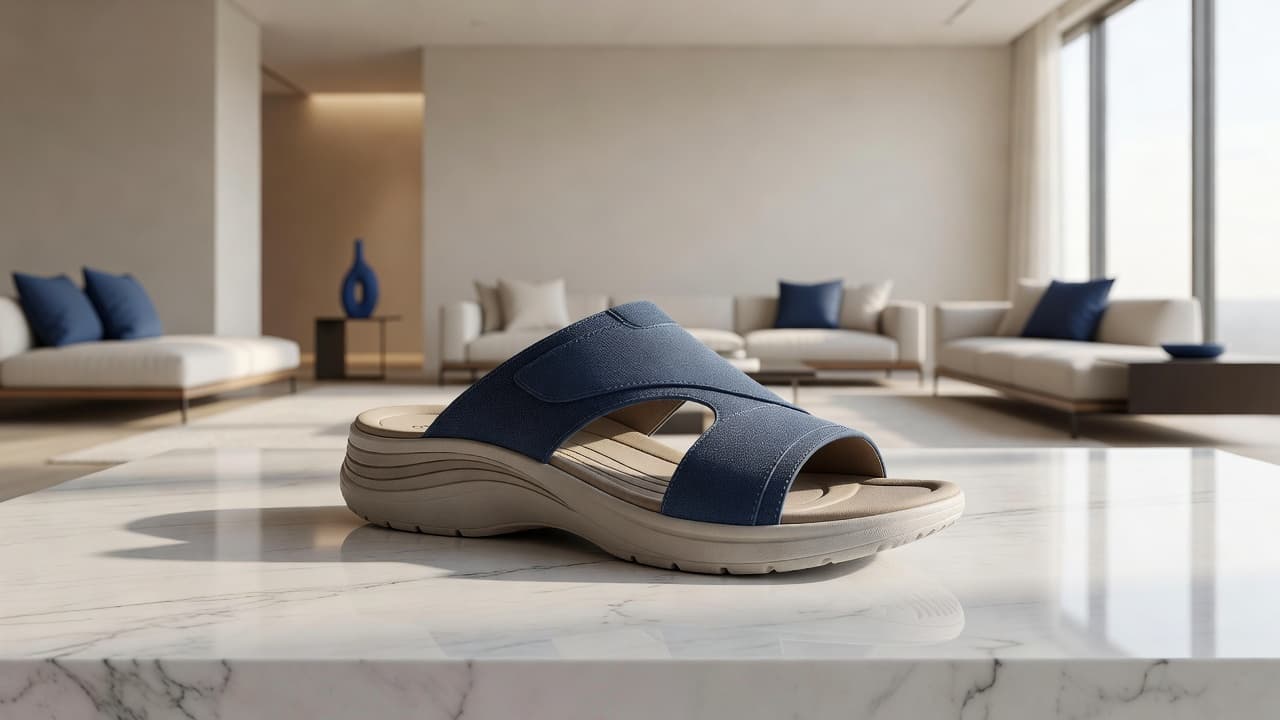
AI-generated illustration of cushioned sandals in a contemporary setting.
The brand’s strongest designs balance a broad footbed with straps that look more polished than traditional orthopaedic footwear. That matters because a sandal may feel excellent but still spend most of its life in a cupboard if it does not suit the rest of a wardrobe. Furthermore, many podiatrists recognise the brand for its commitment to promoting better foot health through effective impact reduction. By applying principles of biomechanical engineering, these designs aim to support the natural movement of the foot more effectively than standard high-street options.
Grip, upper material and footbed shape vary more than the branding suggests. Rubber sandals are light and practical near pools or on holiday, while leather and suede styles feel smarter but need more care. A raised sole can also give shorter wearers extra height, though it may feel less stable on uneven ground.
| FitFlop category | Construction | Intended use | Comfort features | Typical weaknesses |
|---|---|---|---|---|
| Sandals | Open upper, cushioned platform sole | Holidays and daily summer wear | Broad footbed, impact cushioning | Limited weather protection |
| iQushion styles | Lightweight foam construction | Poolside, travel, short walks | Very light, water-resistant materials | Less structured support |
| Trainers | Closed upper with cushioned sole | Casual walking and commuting | Padding, flexible movement | Not built for technical trails |
| Clogs | Slip-on, thick sole | Garden, beach and relaxed wear | Easy on and off, roomy feel | Casual appearance, exposed heel |
| Boots and shoes | Closed leather or textile uppers | Cooler weather and workwear | Cushioned footbeds, smarter finish | Fit and waterproofing vary |
Cushioning can make walking feel easier, but it does not automatically provide arch support, ankle stability or medical relief.
The FitFlop products worth knowing about
The Lulu sandal is the brand’s clearest must-have, with the Lulu slide remaining a particularly popular variation for those who prefer an effortless, open-toe style. Its crossed upper looks neater than a standard flip-flop and works well with dresses, linen trousers, shorts and relaxed jeans. Versions with leather, metallic finishes or embellished straps can travel from daytime shopping to an informal dinner. The platform sole remains recognisable, but the upper avoids the bulky look of many comfort sandals.
For wet changing-room floors, city breaks and suitcase packing, iQushion sandals are also strong contenders. They are exceptionally light and often easier to rinse clean than leather styles. Their foam-like construction has less structure than a Lulu, however, so they suit casual use better than all-day pavement walking.
AI-generated illustration of casual footwear similar to FitFlop models.
F-Mode trainers are worth trying for people who prefer a modern, thicker-soled trainer. They tend to offer more cushioning and a more substantial shape than minimalist plimsolls. If you are looking for a reliable balance of style and comfort, the Rally sneaker is another essential silhouette within the brand’s collection of trainers. These shoes work well for commuting, museum days and ordinary walking. Yet they are fashion trainers, not walking boots, and their tread, upper support and weather resistance should not be treated as hiking equipment.
The Gogh clog and the Shuv clog are other distinctive products. They are useful for garden jobs, summer travel, quick trips outside and for people who want an unfussy slip-on. The practical appeal is obvious, but the shape is informal and will not suit every wardrobe. For cooler months, FitFlop’s slippers, boots and closed shoes offer the most versatility. Leather ankle boots can work with trousers and knitwear, while ballet-flat and loafer-like styles suit offices with relaxed dress codes.
What customers tend to like about FitFlop
Customer feedback often returns to the same qualities: soft underfoot cushioning, easy slip-on wear and less foot fatigue after ordinary walking. Many users who suffer from conditions like plantar fasciitis report that the brand’s signature cushioned midsole provides welcome relief during their daily activities. The range also has a wider mix of colours, metallic finishes and strap shapes than many comfort-led brands.
Sandals are often the strongest performers because the cushioned sole is paired with breathable uppers. People who dislike stiff leather shoes may also appreciate the flexible feel of iQushion products and softer trainer styles.
Experiences vary sharply by foot width, instep height and walking habits. A pleasant cushioned sensation is a genuine comfort feature. Claims that any shoe corrects posture or treats pain need more caution.
Where FitFlop products can disappoint
The same sole that feels supportive to one wearer can feel unfamiliar or firm to another. Some models need a short break-in period, especially where a raised footbed alters the usual walking position. Fit can also differ between open sandals, trainers and boots, even when the stated size is the same.
Straps deserve close inspection. Thin embellished straps may show wear sooner than a robust leather upper, particularly after frequent summer use. Soles also wear down with mileage, and lighter foam styles are unlikely to last like heavier leather footwear.
FitFlop shoes are not natural choices for formal occasions, serious hill walking or sustained wet-weather use. Cushioned soles are not waterproof soles, and open sandals offer little protection on rough paths. Prices may also look high beside basic high-street sandals, especially where the design is simple.
How to choose the right FitFlop size and style
Accurate sizing begins with both feet. Measure each foot while standing, preferably late in the day when feet are at their largest, then use the longer measurement against the brand’s current size guide. A small gap in front of the toes is useful in sandals, but excessive space can cause the foot to slide forward. If you have broader feet, look for the brand’s wide fit options, which provide extra room in the toe boxes for maximum comfort.
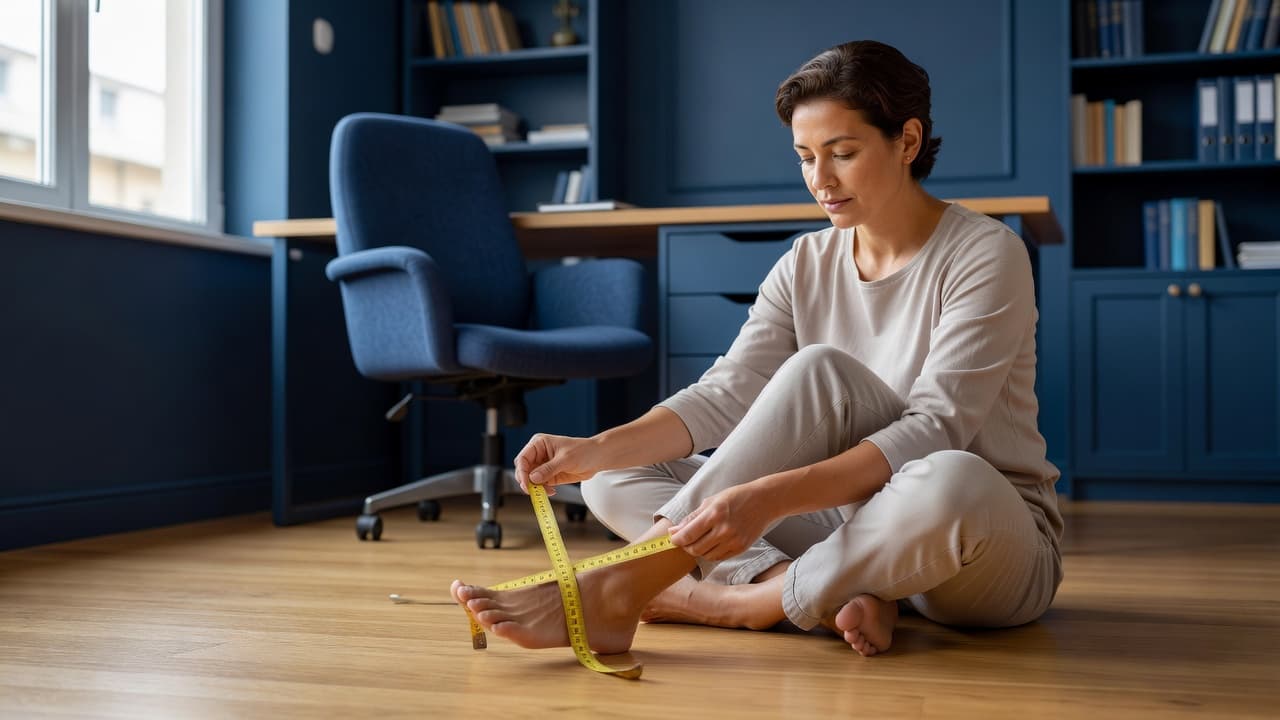
AI-generated illustration of measuring foot length before ordering footwear.
Sandals with adjustable buckles or touch-fastening straps offer more flexibility for wider feet, higher insteps, or swelling during hot weather. When browsing for supportive sandals, ensure the design features adequate heel support and consistent arch support to keep your gait aligned. Fixed cross straps look cleaner but allow less adjustment. Trainers need enough room for socks, while boots should be assessed with the thickness of socks likely to be worn in winter.
For commuting and city breaks, a closed trainer or a pair of supportive sandals makes more sense than a pool-style slide. Holidays favour light iQushion options, particularly where luggage space is tight. People who stand at work may prefer a closed shoe with a secure heel and a comfortable cushioned midsole over a backless clog.
UK weather changes the calculation. Leather boots may cope with a cool, dry day, but checking whether a model is described as water-resistant or waterproof is essential before relying on it through rain. Materials, care guidance, delivery terms and the returns policy should be checked before ordering.
Is FitFlop good value, and is buying online worthwhile?
The true value of FitFlop footwear lies less in the initial price than in the long-term comfort provided by the ergonomic technology used in their construction. A pair of sandals that works for a holiday, daily errands and warm weekends is often a better investment than a cheaper alternative that causes discomfort after just one hour. Conversely, paying extra for a fashion colour with delicate straps makes less sense if the shoes will only appear a few times each summer.
Online shopping gives customers access to a broader spread of sizes, colours and discontinued seasonal shades across the entire FitFlop range. It also makes it easier to compare full prices, watch for reductions and read detailed product information before you commit to a purchase. The drawback is obvious, as you cannot properly assess the fit of your new shoes until they arrive at your door.
| Buying factor | Online purchase | In-person purchase |
|---|---|---|
| Selection | Wider choice of Sandals, Boots and Trainers | Limited to available stock |
| Price comparison | Easier to compare total costs and reductions | Less immediate comparison |
| Fitting | Requires careful measurement and returns planning | Can assess fit before payment |
| Returns | Depends on stated terms and unworn condition | Often simpler to resolve on site |
| Convenience | Useful for remote areas and busy schedules | Useful for immediate collection |
A careful online order starts with confirming the exact style name, colour and material. Product photographs can sometimes make suede, leather and synthetic finishes appear similar. When budgeting, the full cost should include delivery and any return charge, rather than relying solely on the headline price.
Buyers should always check seller details, avoid offers that appear implausibly cheap and retain the order confirmation. On arrival, inspect the stitching, straps, soles and size labels indoors before wearing them outside. Under UK distance-selling rules, most online purchases have a 14-day cancellation period after delivery, although the item must usually remain in a resalable condition. Please note that terms can differ for personalised goods and other exceptions.
Frequently Asked Questions
Are FitFlop shoes suitable for foot conditions like plantar fasciitis?
Many customers report finding relief from discomfort associated with conditions like plantar fasciitis due to the brand’s signature cushioned soles. However, it is important to remember that these are not medical devices, and you should consult a qualified clinician for personalised treatment or prescribed support.
How do I ensure I get the right fit when buying online?
Always measure both feet while standing, preferably at the end of the day when your feet are at their largest. Use the measurement of your longer foot against the specific size guide provided by the brand, and consider choosing wide fit options if you have broader feet or high insteps.
Do FitFlop sandals provide good arch support?
While the thick, biomechanically designed platforms offer excellent impact cushioning and pressure distribution, they do not automatically provide the same rigid arch support found in specialised orthopaedic footwear. The level of support can also vary depending on the specific model and the design of the straps.
Can I wear FitFlop shoes in the rain or on rugged terrain?
FitFlop trainers and boots are generally not intended for sustained wet-weather use or technical hiking. You should check the product specifications for water-resistant properties, and avoid wearing open sandals on rough or uneven paths where you require additional stability and protection.
Final assessment
FitFlop is most persuasive for people who prioritise cushioning in casual footwear and who expect to spend long periods walking or standing. The brand succeeds by offering a unique blend of biomechanical engineering and fashion, ensuring that style never comes at the expense of support. The Lulu sandals remain the most versatile must-have, while their range of boots, iQushion styles, F-Mode trainers, and Gogh clogs each suit narrower practical roles.
The brand’s comfort-first sole design remains its main distinction. Yet a strong purchase still depends on fit, intended use, materials, and realistic expectations about weather resistance and wear. Ultimately, all-day comfort is the primary goal of the brand’s midsole innovations, which are designed to support your natural stride.
Comfort cannot be judged from a logo, a thick sole, or a product photograph. It becomes clear only when the shape of the shoe, the surface underfoot, and the individual wearer all agree.
Explore our Buyers Guides and Reviews
For a list of our main buyers guides use the drop-down menu at the top of the page. Topics related to this article are:
–
Explore Our Blog Categories for Expert Buying Advice
- AI Powered Product Finder Tools (24)
- Expert Buying Guides & Shopping Tips for UK Shoppers (1,152)
- Brands & Designer Products (Men, Women & Electronics) (226)
- Designer Fashion Brands: Buyer’s Guides & Reviews (119)
- Electronic Brands: Buyers Guides & Reviews (69)
- Apple Products Buyer’s Guides & Reviews (23)
- Brands – Phones, Laptops, PC”s, Tablets | Buyer’s Guides & Reviews (37)
- Electronics – Tablet & iPad Reviews and Buyers Guides (10)
- Kitchen Appliance Brands: Buyer’s Guides & Reviews (19)
- Laptop Brands & MacBooks Buyer’s Guides & Reviews (6)
- Phone Brands & iPhones Buyer’s Guides & Reviews (21)
- Car Buying & Financing Made Easy | Expert Guides for the UK (85)
- Clothing, Fashion & Accessories Buying Guides UK (330)
- Beauty, Health & Wellness | Perfume, Skincare, Makeup & Wellbeing Guides (122)
- Footwear: Trainers & Shoes Buyers Guides (34)
- Jewellery: Expert Reviews, Trends & Buying Guides (58)
- Men's Clothes — Buyers Guides & Reviews (37)
- Men’s Clothes, Fashion & Accessories Guides UK | Latest Trends & Smart Shopping (121)
- Women's Clothing Buyers Guides — Dresses, Tops & More (118)
- Women’s Clothes, Fashion & Accessories Guides UK | Latest Trends & Smart Shopping (278)
- Electronics, Tech & Gadgets: Reviews, Deals & Buying Guides UK (155)
- Furniture Buyer’s Guides | Home & Garden & Styling Tips (270)
- Bedroom Furniture Guides UK | Expert Tips & Best Value Deals (88)
- Garden Furniture, Landscaping & Garden Rooms Guides UK | Expert Tips & Best Value Deals (131)
- Home Furniture, Décor & Interior Design Guides UK | Styling Tips & Inspiration (149)
- Living Room Furniture, Design & Décor Guides UK | Styling Tips & Inspiration (52)
- Holidays & Travel: Hotels, Villas, UK Breaks & Skiing (143)
- Insurance & Protection: Travel, Landlord, Gadget & More UK (156)
- Gadget Insurance UK | Expert Guides, Reviews & Smart Protection Tips (32)
- Home Emergency Cover UK | Expert Guides, Reviews & Practical Protection Tips (21)
- Landlords Insurance UK | Expert Guides, Reviews & Smart Protection Tips (31)
- Travel Insurance UK | Expert Guides, Reviews & Money-Saving Tips (34)
- Pets: Guides, Tips & Inspiration (24)
- Brands & Designer Products (Men, Women & Electronics) (226)
- Gifts for Everyone: Ideas for Every Occasion & Budget (31)