A Tote Bag has become one of the few accessories that can move from office commute to food shop to weekend train trip without much adjustment. In the UK, where a day often mixes rain, public transport and a stop at the supermarket, that range has real value.
The appeal is not only visual. A well-chosen wardrobe staple and daily companion can offer strong cost per wear, easy styling with women’s and men’s clothing, and a practical answer to the move away from disposable carrier bags. The harder question is which kind will still make sense once it is packed, carried and used every day.
Key Takeaways
- Tote bags offer versatile, practical capacity for daily tasks like commuting, shopping and errands, bridging the gap between handbags, crossbodies and backpacks.
- Material choice drives durability and style: canvas for light, affordable use; leather for structure and polish; recycled fabrics for sustainable options with water resistance.
- Base width and depth matter more than height for real capacity; features like zips, internal pockets and strong handles enhance everyday usability.
- Buy wisely online by prioritising measurements, customer photos, reviews and returns policies over flattering main images.
What makes a tote bag useful in the first place?
The tote bag remains popular because the design is plain and direct. It usually has a wide opening, two shoulder straps and spacious proportions for the mess of daily life. That sounds simple, but the simplicity is the point. A tote bag can carry a laptop, lunch, papers, gym clothes or supplies from running errands without looking like specialist kit.
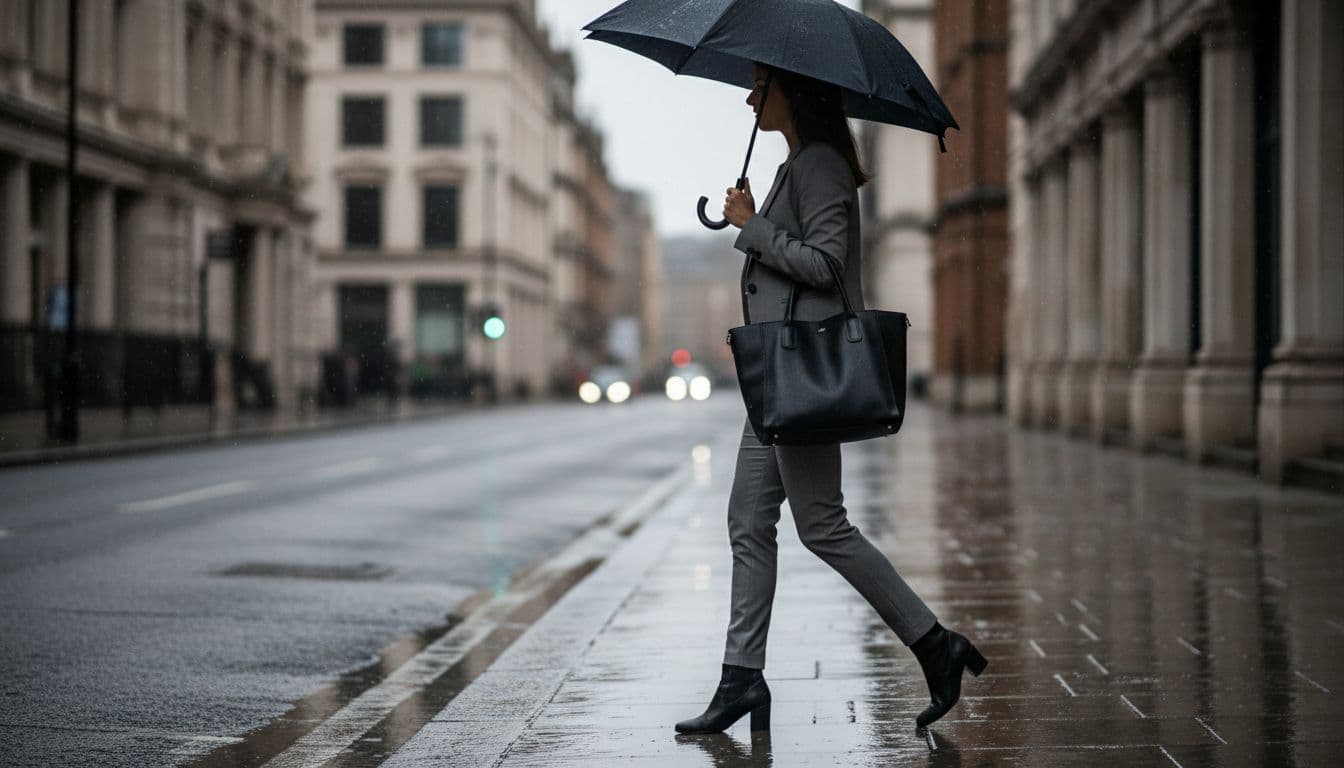
AI-generated image: a tote bag used for a city commute.
A short comparison helps place it amongst other common bags.
| Bag type | Best use | Main drawback |
|---|---|---|
| Tote bag | Work kit, shopping, day trips | Can feel heavy if overpacked |
| Crossbody bag | Essentials, hands-free use | Often too small for books or laptops |
| Backpack | Heavier loads, longer walks | Less polished with tailoring |
| Handbag | Smart events, lighter daily carry | Limited capacity |
A tote bag sits in the middle of these options. It is roomier than a handbag, smarter than many backpacks, and less restrictive than a crossbody.
The everyday jobs a tote bag is expected to do
Real use shapes good bag design more than trend cycles do. For some people, the bag must hold a tablet, A4 papers and a water bottle. For others, it needs room for baby wipes, snacks, a cardigan and a small toy. Many carry lunch, chargers, sunglasses and a spare layer, all at once.
That is why capacity matters, but so do access and durability. A wide base stops the contents tipping into a pile. Strong handles matter more than decorative hardware. A reinforced bottom helps when the bag carries groceries one day and a laptop the next. Even a casual fabric carrier should cope with repeated lifting, because a bag that strains at the seams stops being useful quickly.
Why the shape is so easy to wear
Versatile styles work with clothing because their lines are usually clean. A bag sits well with downtime denim, knitwear, tailoring and outerwear. A structured leather version can look right with loafers, a coat and a sophisticated outfit. A softer canvas style fits relaxed dressing, trainers and a lightweight jacket.
Neutral colours tend to hold their place across seasons. Black, tan, navy, stone and olive rarely feel dated. Simple trims help too. When a bag avoids loud hardware and busy prints, it becomes easier to wear with jewellery, scarves, perfume-heavy evening dressing, or a plain weekday uniform. In other words, the bag supports the outfit rather than competing with it.
Which tote bag materials are worth paying attention to?
Material changes almost everything about a tote: weight, shape, care, price and how long it holds its form. Two bags can look similar on a product page and behave very differently once filled. Buyers often focus on colour first, but fabric, lining and handle finish tell a more useful story.
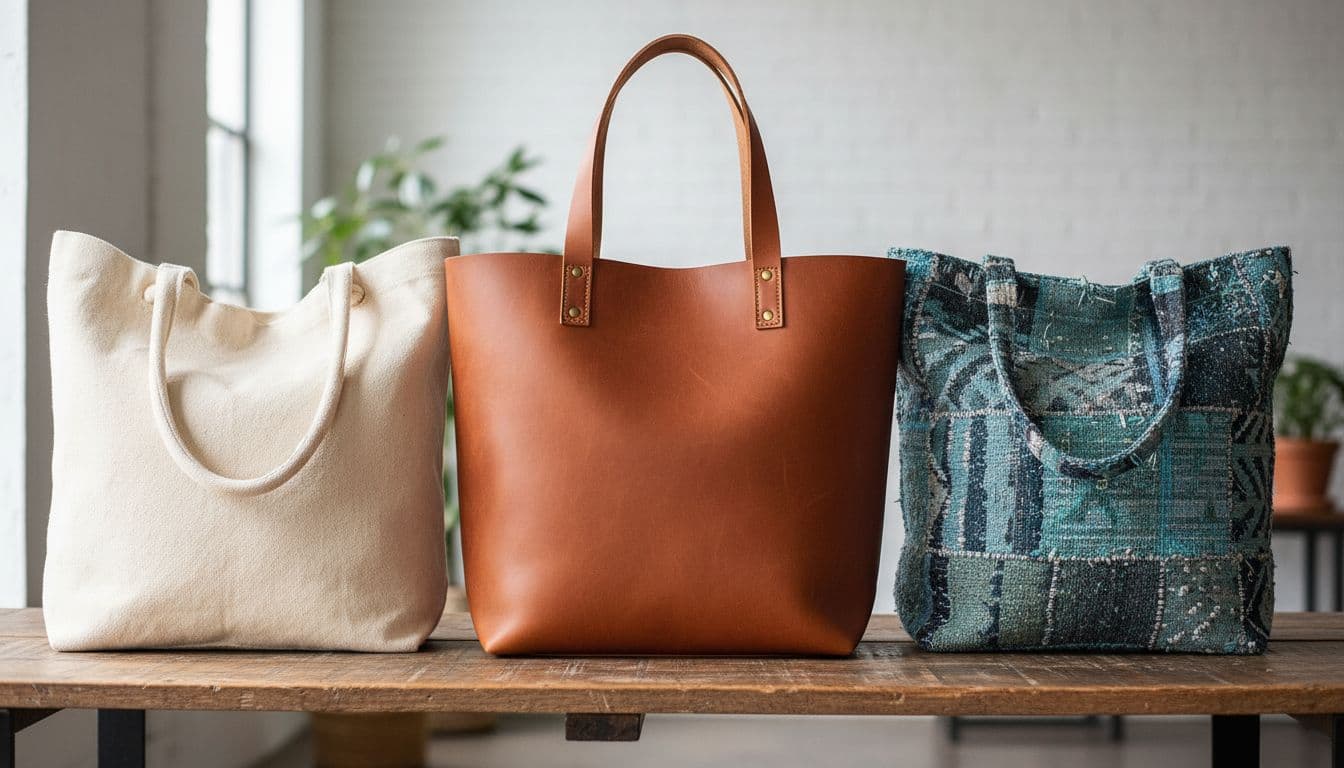
AI-generated image: three common tote materials compared side by side.
The details matter. A light outer fabric with a flimsy lining can sag fast. Thin metal fittings may scratch or loosen. Raw cut edges on straps often wear sooner than folded or bound finishes. Product quality often hides in those small construction choices.
Canvas Tote Bags, cotton and fabric totes for light everyday use
Cotton and canvas tote bags are usually the lightest and cheapest option. They fold easily, store well, and make sense as a second bag kept for shopping or short commutes. They are also easy to pair with casual clothing, especially in summer or at the weekend; raffia and straw summer accessories provide a breezy, natural alternative for warmer days.
Their limits show up under strain. Thin cotton can stretch, stain and lose shape after repeated use. Pale colours mark faster, especially in wet weather. Denser canvas lasts better, and a lined version with a reinforced base is less likely to collapse when loaded with books or groceries. Fabric totes make sense when the load is modest and the bag does not need to look polished all day.
Leather Tote Bags and faux leather totes for a smarter finish
Leather tote bags give a tote more structure, weight and presence. Woven leather adds texture and durability for varied styles. It often works better with office wear, smarter coats and tailored menswear because it keeps a cleaner outline. Over time, good leather can soften without falling apart, though it needs care and usually costs more up front.
Faux leather offers a similar look at a lower price, but the finish varies a lot. Some versions hold up well for occasional use. Others crack at the corners or along the handle joins. Product details should mention stitching, edge paint, lining, zip quality and handle attachment. If those areas look weak in photos, the bag is unlikely to improve in person.
Sustainable Materials and Recycled Materials to look out for
Recycled polyester, recycled nylon and mixed-fibre fabrics now appear in many tote ranges, including practical nylon totes. Some shoppers also look for responsibly sourced leather or certified cotton. Those sustainable materials can make sense, but the language around them is often broad.
What matters is the actual information provided. Fibre content, country of manufacture, lining materials and care guidance say more than vague green claims. A recycled materials tote may be practical, water-resistant and lighter than canvas. It may also feel stiffer or less natural in the hand. A more informed choice comes from reading the specification, not from assuming every “sustainable” label means the same thing.
How to choose the right tote bag size, shape and features
Size names are unreliable. One brand’s “large” tote may be another’s medium. Measurements tell the truth, and so does the base, particularly with high-quality craftsmanship. Height looks impressive in photos, but base width and depth decide what the bag can hold without turning awkward.
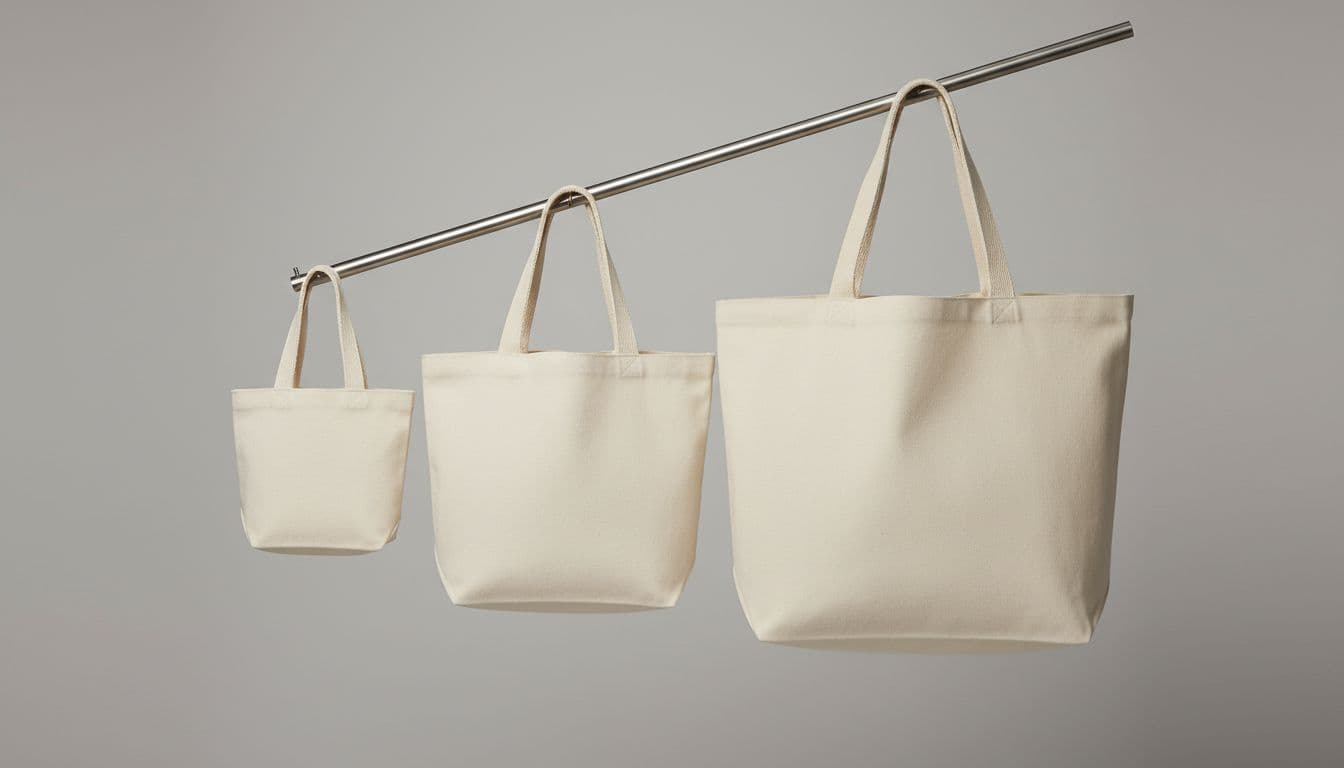
AI-generated image: small, medium and large tote bag sizes compared.
A few features make daily use much easier: a secure closure, internal pockets, Laptop Space if needed, and Adjustable Straps. On a crowded train or in a winter coat, these details matter more than a clever product name.
Finding a size that matches the real load
A small tote usually suits essentials, a purse, keys, phone, sunglasses and a compact water bottle. Medium works for most daily use, including a notebook, lunch and light layer. Large is best for work kit, travel extras or family days out, but it can become heavy fast.
Buyers often misjudge size online because the main image flatters the bag. Model shots help, yet they can mislead if the model is unusually tall or petite. Review photos usually tell a truer story. For work use, the safest method is simple: compare the listed width and depth against the actual laptop, folder or lunch box the bag needs to carry.
Open tops, zips and magnetic closures each suit different habits
Open-top designs are easy to live with. They suit quick errands, shops and settings where fast access matters. They also give the bag a lighter feel. The trade-off is clear. Contents are more exposed to rain, theft and the usual chaos of buses and trains.
A Zip-top Design adds security, which matters for commuting and travel. Magnet Fastenings sit in the middle. They are quicker than zips but less secure when the bag is full. People who carry small valuables often solve the problem with an Interior Zip Pocket or a separate pouch. That keeps the tote practical without asking it to do every job at once.
Structure versus slouch, and why it changes the whole look
A structured tote feels more formal because it keeps its shape even when half empty. It also protects papers, tablets and cosmetics better. Slouchier bags look easier and more relaxed, but they can swallow smaller items and sit less neatly against the body.
This choice affects styling. A firm tote pairs better with suiting, loafers and a sharper coat. A softer version suits denim, oversized knitwear and casual trainers. Neither is better in the abstract. The decision depends on how the bag will be worn, and what it will carry.
How to spot better value when buying a tote bag online
Online shopping often gives buyers a wider choice of colour, finish and price than the high street can offer, including designer tote bags and women’s tote bags. It also makes comparison easier. That matters when a tote bag can look excellent in one photo and disappoint in every practical detail.
Measurements matter more than product names.
The strongest online purchase is rarely the one with the best main image. It is usually the one with the clearest description, the most useful customer photos and a return policy that does not punish caution.
Reading product details instead of relying on the main photo
The main photo sells mood, not function. The useful details sit further down the page. Width, height and depth are obvious, yet handle length matters nearly as much. A tote that fits over a shirt may not fit over a thick coat. Lining also deserves attention, because an unlined bag may feel lighter but wear faster. Lightweight construction suits hybrid working and commuting and travel needs particularly well, since it keeps the bag practical without excess bulk.
Buyers should also check pocket layout, closure type, material weight and how the straps are finished. A polished image can hide weak seams, narrow handles or a base that collapses. If the description avoids these details, the bag may not be as solid as it looks.
Why reviews and returns policies matter so much
Reviews often reveal what the product page omits. They can show whether the colour is true in daylight, whether a 14-inch laptop fits, or whether the handles dig into the shoulder once the bag is full. Customer photos are even more useful because they show scale without studio styling.
Returns matter because tote bags are physical objects with awkward proportions. A bag can look balanced on screen and feel wrong when packed. Clear return windows, fair postage terms and simple refund rules lower the risk of buying online. For UK shoppers, that often makes online buying the better route, not because it is easier, but because it allows more careful comparison before money changes hands.
Frequently Asked Questions
What makes a tote bag useful for everyday UK life?
Tote bags handle mixed demands like rainy commutes, supermarket shops and office kits with their wide openings, strong straps and spacious shapes. They avoid the limits of smaller crossbodies or less polished backpacks, offering good cost per wear as a wardrobe staple. Simplicity lets them pair with casual denim or tailoring without competing with outfits.
Which tote bag material suits my needs best?
Canvas or cotton totes work for light, casual loads and fold easily for weekends, though denser versions last longer under strain. Leather provides structure for work and smarter dress, softening over time with care, while faux options mimic the look cheaper but vary in durability. Recycled polyester or nylon adds sustainability and weather resistance, but check specs like lining and stitching for quality.
How do I choose the right tote bag size?
Ignore vague size names and focus on base width and depth to match your laptop, lunch or groceries without bulk. Small suits essentials, medium covers most days, and large fits heavier loads but can feel heavy. Use customer photos and compare measurements to your items for an accurate fit.
What should I check when buying a tote bag online?
Look beyond main photos to handle length, lining, pocket layout and closure type in the description. Customer reviews and photos reveal real scale, colour accuracy and wear issues like sagging bases. A clear returns policy reduces risk, making online shops ideal for comparing options.
Conclusion
The tote bag lasts because it does ordinary work well. It carries more than a handbag, looks cleaner than a backpack in smarter settings, and offers versatile styles that adapt to both men’s and women’s wardrobes without much fuss.
The best choice comes down to use. Material affects weight and wear. Size affects comfort. Closures and pockets decide whether the bag suits a quick shop, a rainy commute or a full workday.
That is why the best tote is rarely the one that looks most impressive on a product page. It is the one that still feels right when packed, carried and repeated across the week. In fashion, that sort of staying power tends to outlast trend talk.
Explore our Buyers Guides & Money Saving Tips
For a list of our main buyers guides use the drop-down menu at the top of the page. Topics related to this article are:
Designer Handbags Buyers Guides
–
Explore Our Blog Categories for Expert Buying Advice
- AI Powered Product Finder Tools
- Expert Buying Guides & Shopping Tips for UK Shoppers
- Brands & Designer Products (Men, Women & Electronics)
- Designer Fashion Brands: Buyer’s Guides & Reviews
- Electronic Brands: Buyers Guides & Reviews
- Apple Products Buyer’s Guides & Reviews
- Brands – Phones, Laptops, PC”s, Tablets | Buyer’s Guides & Reviews
- Electronics – Tablet & iPad Reviews and Buyers Guides
- Kitchen Appliance Brands: Buyer’s Guides & Reviews
- Laptop Brands & MacBooks Buyer’s Guides & Reviews
- Phone Brands & iPhones Buyer’s Guides & Reviews
- Car Buying & Financing Made Easy | Expert Guides for the UK
- Clothing, Fashion & Accessories Buying Guides UK
- Beauty, Health & Wellness | Perfume, Skincare, Makeup & Wellbeing Guides
- Footwear: Trainers & Shoes Buyers Guides
- Jewellery: Expert Reviews, Trends & Buying Guides
- Men's Clothes — Buyers Guides & Reviews
- Men’s Clothes, Fashion & Accessories Guides UK | Latest Trends & Smart Shopping
- Women's Clothing Buyers Guides — Dresses, Tops & More
- Women’s Clothes, Fashion & Accessories Guides UK | Latest Trends & Smart Shopping
- Electronics, Tech & Gadgets: Reviews, Deals & Buying Guides UK
- Furniture Buyer’s Guides | Home & Garden & Styling Tips
- Bedroom Furniture Guides UK | Expert Tips & Best Value Deals
- Garden Furniture, Landscaping & Garden Rooms Guides UK | Expert Tips & Best Value Deals
- Home Furniture, Décor & Interior Design Guides UK | Styling Tips & Inspiration
- Living Room Furniture, Design & Décor Guides UK | Styling Tips & Inspiration
- Holidays & Travel: Hotels, Villas, UK Breaks & Skiing
- Insurance & Protection: Travel, Landlord, Gadget & More UK
- Pets: Guides, Tips & Inspiration
- Brands & Designer Products (Men, Women & Electronics)
- Gifts for Everyone: Ideas for Every Occasion & Budget