A table lamp can do more than light up a corner. It enhances the interior aesthetic, making a bedroom feel calm, turning a living room into a cosy place to unwind, and stopping you squinting at a book or laptop. The right table lamp makes all the difference.
The tricky part is that small choices matter. A lamp that’s too tall can glare in your eyes, and one that’s too dim becomes pointless. The shade can soften the light or throw harsh shadows. Even the switch position can be the difference between “handy” and “annoying”.
This guide keeps things simple. You’ll learn how to choose the right size, light output, shade, bulb type, and features, so your next lamp feels right from the first evening you switch it on.
How to choose the right table lamp for your room
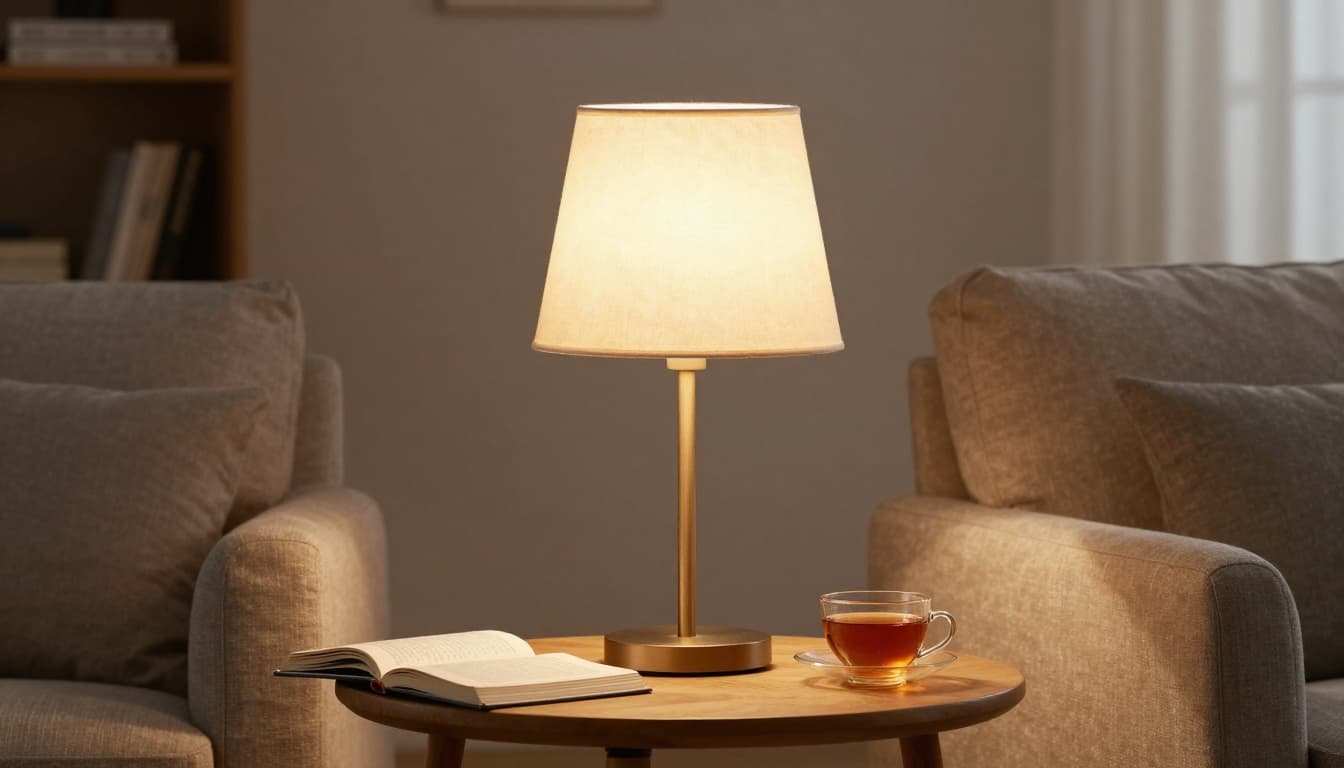 An everyday living room set-up with a table lamp for comfortable, local light, created with AI.
Start with the job you want the lamp to do. Most table lamps in UK homes fall into one (or two) of these roles:
Task Lighting: reading, sewing, paperwork, working from home.
Ambient lighting: soft glow that makes the room feel warm, not “lit like a showroom”.
Accent lighting: a lamp on a hallway console, sideboard, or shelf to add shape and balance.
Match the lamp to the room’s habits:
- Bedroom: bedside table lamps should be easy to switch on half-asleep and gentle on the eyes.
- Living room: aim for pools of light near seating, rather than one bright spot in the middle that ceiling lights might create.
- Hallway console: a smaller lamp can make the space feel welcoming without blasting light.
- Home office: brightness and colour matter more for task lighting, glare matters too.
When the size or brightness is wrong, you feel it fast. Too bright looks harsh and creates shiny reflections on screens. Too dim makes you lean forward and strain, even if the table lamp looks lovely.
Best table lamp heights and sizes, so it looks right and feels comfortable
 Photo by cottonbro studio
A good rule is simple: you shouldn’t see the bare bulb when you’re seated. If you can, the lamp is likely too tall, the shade is too short, or it’s placed too high.
Use these quick guidelines as a starting point:
- Next to a sofa or armchair on side tables: the bottom of the shade should sit around your eye level when seated, or slightly below. This stops glare and still lights a book.
- On a bedside table: bedside table lamps often look best with the top of the shade around shoulder height when you’re sat up in bed. If it’s much higher, the light can feel distant.
- On a sideboard or large console: you can go taller and wider, because it needs to hold its own against a bigger piece of furniture, much like floor lamps do.
Base size matters as much as height. A wide base on a tiny bedside table looks cramped and steals usable space. A slim base on a big sideboard can look lost. As a rough check, leave some clear surface for real life (your phone, a mug, a book), not just styling.
Shade shapes and materials that control glare and mood
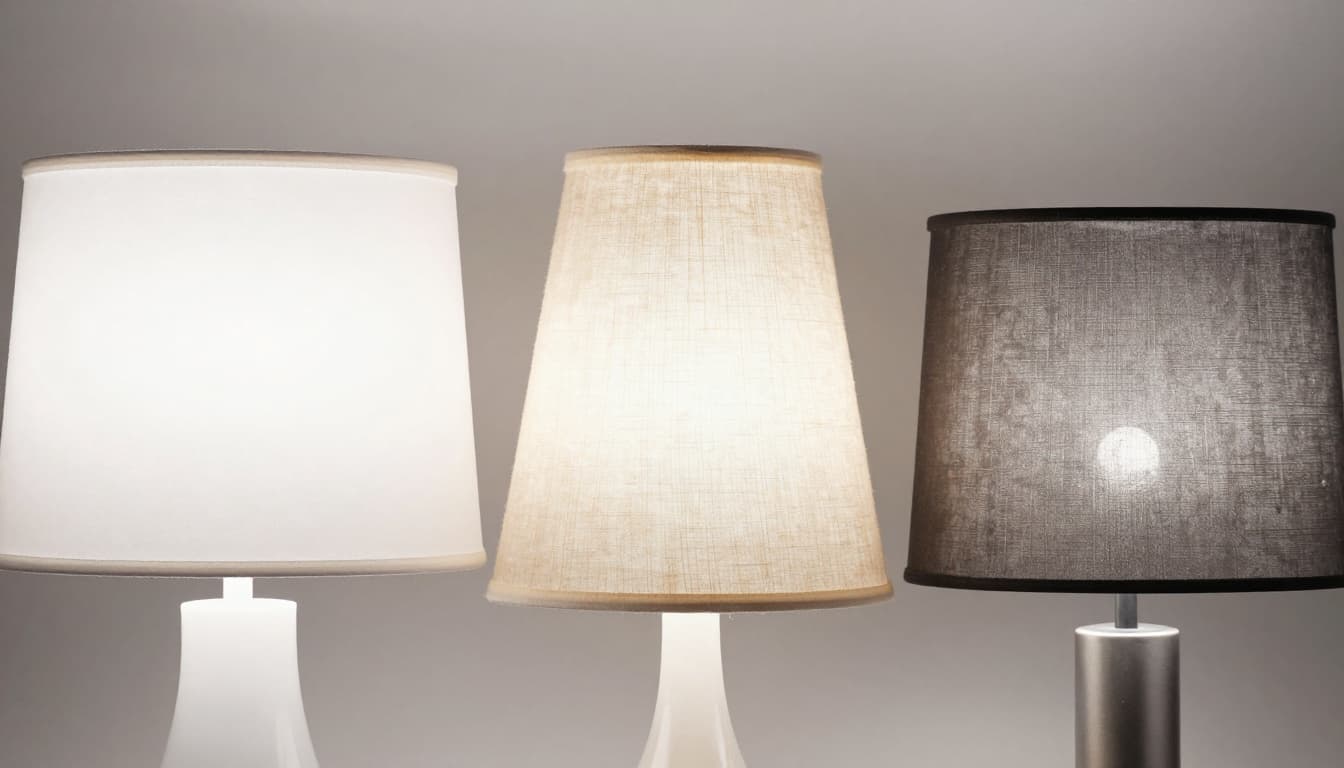 Different shade shapes and finishes that change how light spreads, created with AI.
The shade is the lamp’s “filter”. It changes where light goes, how soft it feels, and whether the room looks warm or flat. Lamp shades come in various styles to suit your space.
Common shade shapes and what they do:
- Drum shades: give an even glow and suit most rooms in contemporary style. Great for living rooms and general lighting.
- Tapered shades: a bit more focused, often a classic choice for a traditional table lamp as a bedside option.
- Square shades: can look modern and neat with industrial table lamps, especially on consoles and side tables, but they can feel more directional.
Materials change the feel too, and Tiffany style lamps often highlight this:
Light-coloured fabric or linen: brighter output, softer shadows, easier to live with day to day.
Dark shades: more mood, less practical for reading unless the bulb is brighter.
Paper: warm and gentle, but can mark easily and needs careful cleaning.
Glass: easy to wipe, can be bright (sometimes glaring) depending on finish.
Metal: tough and often dramatic, but it tends to direct light rather than diffuse it.
If you want one lamp to do “cosy” and “useful”, pick a lamp shade that diffuses light (fabric, light linen) and pair it with a bulb that suits the task.
Light output and bulbs made simple (brightness, colour temperature, and running costs)
Lighting terms can sound technical, but you only need a few to buy well. This bulb guide covers the essentials.
- Lumens tell you brightness. Higher lumens mean more light.
- Colour temperature tells you how warm or cool the light looks.
- Fittings in the UK are often B22 (bayonet) or E27 (screw) for table lamps using light bulbs, with smaller lamps sometimes using E14 light bulbs.
For running costs, LED bulbs and LED table lamps are the everyday choice. They use less electricity than older bulb types, making them energy efficient, and run cooler, which is a comfort and safety win.
Lumens for table lamps, how bright is bright enough
Here’s a practical guide that works for most UK rooms. Your shade and wall colour can change how bright a lamp feels (dark walls and dark shades soak up light). Modern energy efficient LED table lamps meet these lumen levels with lower wattage requirements.
Use caseSuggested lumens (per lamp)What it feels likeSoft ambient glow (evening)100 to 300 lmGentle light, good for moodLiving room side lamp (general)300 to 600 lmComfortable, not harshBedside reading400 to 800 lmClear enough for pagesDesk tasks (paperwork, crafts)600 to 1,000 lmBright, focused help
In a living room, two medium table lamps often feel better than one very bright one. You get more even light, fewer harsh shadows, and a calmer look.
Warm white vs cool white, choosing the right colour for each room
Colour temperature is usually shown in Kelvin (K), helping you decide between warm or cool white options:
- Warm white (around 2700K to 3000K) looks cosy and relaxed.
- Neutral white (around 3500K to 4000K) looks clean and balanced.
- Cool white (around 5000K and up) looks crisp and can feel clinical at night.
Simple room matches:
Bedrooms and living rooms: warm white suits winding down.
Home office or study corner: neutral white helps you stay alert without looking blue.
Craft tasks: neutral to cooler can make colours easier to see.
Mixing light in one room can work well. Keep the main “cosy” lamps warm, then use a slightly whiter desk lamp when you need it. This stops the room feeling cold while still making tasks easier.
Safety, features, and value checks before you buy a table lamp
A table lamp is a daily-use item for mood lighting or decorative lighting, so little practical details matter more than you’d think.
Before buying, check the basics:
Stability: a heavy or weighted base is safer and feels better quality.
Switch placement: you should be able to find it easily in low light.
Cable length: short leads force awkward extension leads and messy routing, while a battery operated table lamp offers cord-free flexibility.
Cleaning: modern texture shades look great, but can be dust magnets.
Also think about where the plug will go. UK sockets can be in awkward places behind sofas, and a lamp that only reaches with an extension lead can become a trip risk. Rechargeable table lamps sidestep this issue entirely.
Switch types, cable length, and smart features that make everyday use easier
Switch choice sounds small, but it changes how you use the lamp for everyday mood lighting.
Inline switch: common and cheap, but it can end up behind furniture.
Base switch: easy to reach on a bedside table or desk lamp setup, unless the base is tucked back.
Touch table lamps: great for bedrooms (tap to change brightness), but some people find them too sensitive.
Pull cord: useful if the lamp sits behind a sofa, less common in modern styles.
A few features can add real value for decorative lighting:
- Dimmers: helpful for evenings in a dimmable table lamp, but check compatibility. Some dimmers need dimmable LED bulbs to avoid flicker.
- USB charging: handy on a bedside table or desk lamp, but only if the socket is easy to reach.
- Integrated LED vs replaceable bulb: integrated LED can look sleek, but a replaceable bulb is simpler if you want to change brightness or colour later.
Touch table lamps with integrated LED make a sleek statement lamp option. Smart bulbs can be a good compromise. You keep a normal lamp fitting, and you can set schedules, dim levels, and colour temperature from an app, if that’s your thing.
Stability and safety at home (kids, pets, heat, and where to place it)
If you’ve got children, pets, or both, stability matters more than style, especially for desk lamps in busy office spaces.
Place lamps where they’re less likely to be knocked, and avoid narrow tables that wobble. Keep cords tidy and tucked back. If you need an extension lead, route it along skirting boards rather than across walkways.
Heat is another factor. LEDs run cooler than older bulbs, which helps when a shade is close to the bulb. Still, make sure there’s space inside the shade and nothing is pressing against it (like bedding, curtains, or a throw draped over the table).
For maintenance, a quick routine helps:
Dust the shade every couple of weeks, especially fabric and paper.
Wipe the base with a slightly damp cloth, then dry it.
Check the cord now and then for kinks or damage, particularly near the plug.
Conclusion: a quick table lamp checklist you can use today
The right choice comes down to a few smart checks: purpose first, then size, then light. Pick a shade that suits how you want the room to feel, choose the right lumens and colour temperature, and double-check the bulb fitting before you buy.
Measure your table, picture how you’ll use the light, then shortlist a few styles and compare their features and running costs. Get those details right and your Table Lamp won’t just look good, it’ll make the room easier to live in every day.
Explore More Expert Buyers Guides and Reviews
For a list of our main buyers guides use the drop-down menu at the top of the page. Topics related to this article are:
Home and Garden Furniture Buyers Guides
Bedroom Furniture Buyers Guides
living Room Furniture Buyers Guides
Garden Furniture Buyers Guides
–
Explore Our Blog Categories for Expert Buying Advice
- AI Powered Product Finder Tools (25)
- Expert Buying Guides & Shopping Tips for UK Shoppers (1,459)
- Brands & Designer Products (Men, Women & Electronics) (293)
- Designer Fashion Brands: Buyer’s Guides & Reviews (166)
- Electronic Brands: Buyers Guides & Reviews (92)
- Apple Products Buyer’s Guides & Reviews (25)
- Brands – Phones, Laptops, PC”s, Tablets | Buyer’s Guides & Reviews (44)
- Electronics – Tablet & iPad Reviews and Buyers Guides (10)
- Kitchen Appliance Brands: Buyer’s Guides & Reviews (24)
- Laptop Brands & MacBooks Buyer’s Guides & Reviews (9)
- Phone Brands & iPhones Buyer’s Guides & Reviews (23)
- Car Buying & Financing Made Easy | Expert Guides for the UK (89)
- Clothing, Fashion & Accessories Buying Guides UK (509)
- Beauty, Health & Wellness | Perfume, Skincare, Makeup & Wellbeing Guides (187)
- Footwear: Trainers & Shoes Buyers Guides (49)
- Jewellery: Expert Reviews, Trends & Buying Guides (74)
- Men's Clothes — Buyers Guides & Reviews (39)
- Men’s Clothes, Fashion & Accessories Guides UK | Latest Trends & Smart Shopping (172)
- Women's Clothing Buyers Guides — Dresses, Tops & More (201)
- Women’s Clothes, Fashion & Accessories Guides UK | Latest Trends & Smart Shopping (448)
- Electronics, Tech & Gadgets: Reviews, Deals & Buying Guides UK (182)
- Furniture Buyer’s Guides | Home & Garden & Styling Tips (329)
- Bedroom Furniture Guides UK | Expert Tips & Best Value Deals (93)
- Garden Furniture, Landscaping & Garden Rooms Guides UK | Expert Tips & Best Value Deals (170)
- Garden Sofa & Sofa Sets Buyers Guides (11)
- Garden Tables & Chairs: Sets, Individual Tables & Seating Buyers Guides (57)
- Home Furniture, Décor & Interior Design Guides UK | Styling Tips & Inspiration (170)
- Living Room Furniture, Design & Décor Guides UK | Styling Tips & Inspiration (57)
- Sofa & Sofa Beds Buyers Guides (19)
- Sofa Beds Buyers Guides (7)
- Sofa Buyers Guides & Expert Advice (11)
- Holidays & Travel: Hotels, Villas & Flights (162)
- Home & Garden Improvements | Renovations & Outdoor Transformation Guides (106)
- Insurance & Protection: Travel, Landlord, Gadget & More UK (159)
- Gadget Insurance UK | Expert Guides, Reviews & Smart Protection Tips (33)
- Home Emergency Cover UK | Expert Guides, Reviews & Practical Protection Tips (21)
- Landlords Insurance UK | Expert Guides, Reviews & Smart Protection Tips (31)
- Travel Insurance UK | Expert Guides, Reviews & Money-Saving Tips (34)
- Pets: Guides, Tips & Inspiration (28)
- Brands & Designer Products (Men, Women & Electronics) (293)
- Gifts for Everyone: Ideas for Every Occasion & Budget (51)
- AI Powered Product Finder Tools
- Apple Products Buyer’s Guides & Reviews
- Beauty, Health & Wellness | Perfume, Skincare, Makeup & Wellbeing Guides
- Bedroom Furniture Guides UK | Expert Tips & Best Value Deals
- Beds Buying Guides UK | Types, Tips & Best Deals
- Brands – Phones, Laptops, PC”s, Tablets | Buyer’s Guides & Reviews
- Brands & Designer Products (Men, Women & Electronics)
- Car Buying & Financing Made Easy | Expert Guides for the UK
- Car Rental Worldwide: Compare Prices for UK Travellers
- Christmas Essentials: Decorations & Gift Ideas
- Clothing, Fashion & Accessories Buying Guides UK
- Designer Fashion Brands: Buyer’s Guides & Reviews
- Diamond Jewellery Buyers Guides & Shopping Tips
- Electronic Brands: Buyers Guides & Reviews
- Electronics – Tablet & iPad Reviews and Buyers Guides
- Electronics, Tech & Gadgets: Reviews, Deals & Buying Guides UK
- Europe Holidays & Hotels: Destinations Guides & Flights
- Expert Buying Guides & Shopping Tips for UK Shoppers
- Flooring: Wood, Laminate, Carpets and Floor Tiles Buyers Guides
- Footwear Brands: Reviews & Buyer’s Guides
- Footwear: Trainers & Shoes Buyers Guides
- Furniture Buyer’s Guides | Home & Garden & Styling Tips
- Gadget Insurance UK | Expert Guides, Reviews & Smart Protection Tips
- Game Reviews — PlayStation, Xbox, Nintendo & PC
- Gaming Buyers Guides — Consoles, Games, Keys & More
- Garden Furniture UK: Expert Reviews, Deals & Buying Guides
- Garden Furniture, Landscaping & Garden Rooms Guides UK | Expert Tips & Best Value Deals
- Garden Rooms, Offices & Garden Buildings Guides UK | Expert Tips & Best Value Deals
- Garden Sofa & Sofa Sets Buyers Guides
- Garden Tables & Chairs: Sets, Individual Tables & Seating Buyers Guides
- Gemstone Jewellery Buyers Guides
- Gifts for Everyone: Ideas for Every Occasion & Budget
- Gold Jewellery Buyers' Guides & Shopping Tips
- Holidays & Travel: Hotels, Villas & Flights
- Home & Garden Improvements | Renovations & Outdoor Transformation Guides
- Home Décor, Interior Design & Styling Tips UK | Inspiration & Expert Advice
- Home Emergency Cover UK | Expert Guides, Reviews & Practical Protection Tips
- Home Furniture Guides UK | Expert Tips & Best Value Deals
- Home Furniture, Décor & Interior Design Guides UK | Styling Tips & Inspiration
- Insurance & Protection: Travel, Landlord, Gadget & More UK
- iPhone Buying Guides, Reviews & Comparisons for the UK
- iPhone Insurance UK | Expert Guides, Reviews & Smart Protection Tips
- Jewellery Rings Buyers' Guides & Shopping Tips
- Jewellery: Expert Reviews, Trends & Buying Guides
- Kitchen Appliance Brands: Buyer’s Guides & Reviews
- Kitchen Appliances UK: Buyers Guides, Reviews & Money Saving Tips
- Landlords Insurance UK | Expert Guides, Reviews & Smart Protection Tips
- Laptop Brands & MacBooks Buyer’s Guides & Reviews
- Laptop Brands: Buyer’s Guides & Reviews
- Living Room Furniture, Design & Décor Guides UK | Styling Tips & Inspiration
- Makeup – Expert Buyers Guides & Reviews
- Men's Clothes — Buyers Guides & Reviews
- Men’s Clothes, Fashion & Accessories Guides UK | Latest Trends & Smart Shopping
- Men’s Fragrance Brands: Perfume & Aftershave Reviews & Buyers Guides
- Perfume & Aftershave Brands: Reviews & Buyers Guides
- Perfume & Fragrance: Best Scents, Reviews & Buying Guides
- Pets: Guides, Tips & Inspiration
- Phone Brands & iPhones Buyer’s Guides & Reviews
- Phone Brands: Buyer’s Guides & Reviews
- Phone Insurance UK | Expert Guides, Reviews & Smart Protection Tips
- Skincare — Expert Buyers Guides & Reviews
- Sofa & Sofa Beds Buyers Guides
- Sofa Beds Buyers Guides
- Sofa Buyers Guides & Expert Advice
- Sportswear Brands: Reviews & Buyers Guides
- Supplements Buyers Guides — Expert Tips & Recommendations
- Trainer Brands: Reviews & Buyer’s Guides
- Travel Insurance UK | Expert Guides, Reviews & Money-Saving Tips
- UK Holidays & Hotels: Destinations Guides & Flights
- Women's Clothing Buyers Guides — Dresses, Tops & More
- Women’s Clothes, Fashion & Accessories Guides UK | Latest Trends & Smart Shopping
- Women’s Designer Brands: Buyer’s Guides & Reviews
- Women’s Designer Shoe Brands: Buyer’s Guides & Reviews
- Women’s Dresses | Online Shopping Guides, Style Tips
- Women’s Perfume Brands: Reviews & Buyers Guides