A freezer isn’t just a box that makes things cold. In most UK homes it’s the difference between calm midweek dinners and a mad dash to the shops, between stocked-up bargains and food waste.
Smeg freezers attract people for one big reason: they look good. But you still need the basics to work well, like the right size, the right type (upright, under counter, or integrated), and features that stop ice building up.
If you’ve ever struggled with not enough space, mystery items lost at the back, rising bills, or a noisy appliance in an open-plan kitchen, choosing the right freezer matters more than you’d think.
Are Smeg freezers worth it for your kitchen and budget?
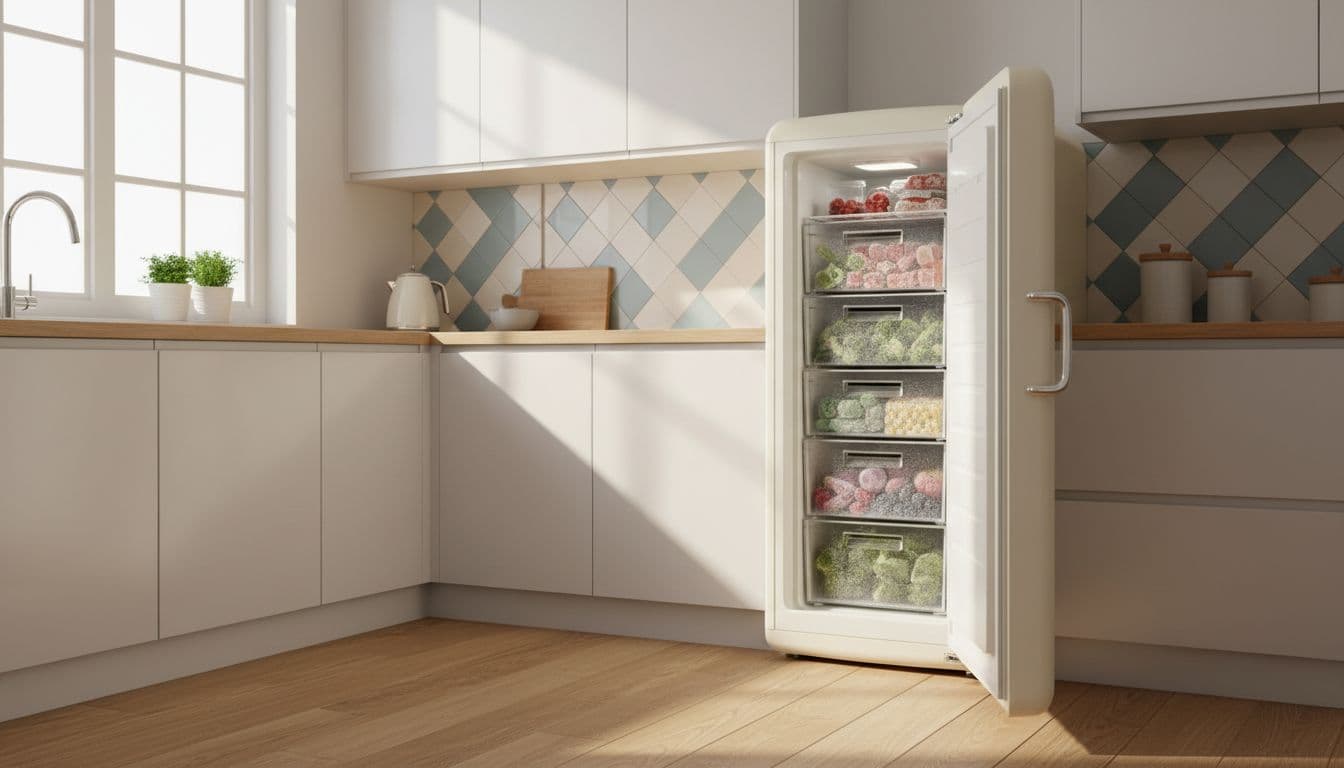 An upright retro-style freezer in a bright kitchen, created with AI.
Smeg sits firmly in the design-led end of the market. You’re usually paying for the look and finish as much as the freezing. Doors feel solid, colours and trims can match the rest of a kitchen, and the styling is often the reason people choose it over a more basic white box.
That doesn’t mean it’s only about looks. A freezer that fits your space well, stays stable in temperature, and is easy to live with can earn its keep for years. Smeg can suit:
- Style-led kitchens, where the freezer is on show
- Smaller households that value day-to-day ease over maximum litres
- People who want a matched set with a Smeg fridge or fridge freezer
If you mainly want the largest capacity for the lowest price, or you need a very specific niche size, you may find better value elsewhere. The trade-off is simple: Smeg often prioritises design and usability over pure litres-per-pound.
What makes Smeg different from other freezer brands?
The biggest difference is the external design. Many Smeg freezers are known for:
Colour choices and finishes: Gloss finishes look great but show fingerprints faster, especially around handles. Matte finishes can hide marks better but still need wiping.
Handle style and door feel: Chunky handles are easier to grab, but they can stick out more in tight galley kitchens. Door swing direction matters too, because a wide-opening door can block a walkway or hit a wall.
Expectations at the price: In the premium bracket, most shoppers expect features like frost control, tidy storage, and decent noise performance. If a model is more style-first, you’ll want to double-check you’re not paying extra while losing everyday convenience.
Common reasons people choose a Smeg freezer (and when it may not suit)
People tend to choose Smeg for practical reasons that happen to come wrapped in a retro look:
- Matching appliances for a consistent kitchen style
- Smaller footprints that work in compact UK kitchens
- Tidy interiors, with drawers that help you keep order
- Quieter operation on many models, which can suit open-plan homes
There are real drawbacks to keep in mind:
Capacity can feel tighter than you expect for the outer size, especially if drawer design eats into usable space.
Higher upfront cost can sting if you only care about storage volume.
Limited niche sizes can make it harder to find a perfect fit if your kitchen is awkward.
Choose the right Smeg freezer type and size for your space
Before you get pulled in by colour, start with format and capacity. In simple terms, your choice depends on layout, household size, and how you shop.
Here’s a quick guide that works for most UK homes:
| Household and habits | Useful freezer capacity (approx.) | Example of what it suits |
|---|---|---|
| 1 person, light use | 80 to 150 litres | Ready meals, bread, leftovers |
| 2 people, weekly shop | 150 to 220 litres | Family packs, batch-cooked portions |
| 3 to 4 people, regular cooking | 220 to 300+ litres | Bulk buys, kids’ staples, meal prep |
If you batch cook, fish for yellow-sticker bargains, or freeze packed lunches, aim higher. If you mostly freeze bread and ice cubes, smaller can be fine.
Whatever the type, measure properly:
Height, width, depth: Include skirting boards and pipe boxing.
Door clearance: Check the door can open without hitting a wall or cabinet.
Ventilation gaps: Some freezers need space at the back or sides for airflow.
Upright freezers: best for easy access and organised storage
Upright freezers are the easiest to live with day to day. You open the door and everything is at eye level, like a filing cabinet for food.
Drawers are great for sorting: veg in one, meat in another, and “quick dinners” in a third. Shelves can help with larger items, but drawers usually stop small bits falling into chaos.
Typical widths often work well in UK kitchens, but the details matter. A door that opens the wrong way can block your fridge or trap you in a corner. Also check handle projection, because a chunky handle can steal precious clearance in a narrow walkway.
Uprights suit people doing weekly shops, because you can load and rotate food easily. You’re less likely to forget what you already have, which helps cut waste.
Under counter freezers: a good fit for small kitchens and extra frozen space
An under counter freezer sits under a standard worktop, which makes it a popular choice for flats, smaller houses, and as a second freezer.
They suit:
Singles and couples who want a simple, compact option.
Busy households that need extra overflow space for bulk buys.
The trade-offs are predictable. Drawers are smaller, and you’ll fill them quickly. That can lead to squashing items in, which blocks airflow and makes it harder to keep things cold evenly.
Fit checks are important here. Measure your worktop height, allow room for the door to open without catching on plinths, and check the back has enough airflow space so the freezer doesn’t run hot and loud.
Integrated Smeg freezers: a seamless look, but measure carefully
An integrated freezer hides behind a cabinet door, so it blends into fitted kitchens. The look is neat, but installation is less forgiving.
Focus on the basics:
Cabinet size: It must match the freezer’s required housing dimensions.
Hinge type: Integrated appliances use specific hinge setups, so you need the right match.
Ventilation: Built-in doesn’t mean sealed in. Poor airflow can raise running costs and shorten lifespan.
Also check door alignment. If the cabinet door sits slightly off, it can rub or fail to close well. And make sure the cabinet can handle the door weight, because a heavy door can strain hinges over time.
Key features to look for in a Smeg freezer (and what they mean in real life)
Specs can read like a foreign language, so it helps to translate them into daily life. These are the features that make the biggest difference in UK homes, especially if your kitchen is open-plan or your freezer is in a warm utility space.
No-frost vs manual defrost: less ice, less hassle
No-frost (sometimes called frost-free) stops ice building up inside. That means drawers slide out smoothly, seals close properly, and you don’t lose space to thick ice on the walls.
Manual defrost models can be quieter and simpler, but you’ll need to switch off and clear ice now and then. If you’re the type who puts it off for months, you’ll hate it.
No-frost can be a bit louder, and in some designs it may use a little more energy. For many homes, the time saved and the space kept makes it worth it.
Energy use, noise, and running costs you will actually notice
Use the UK energy label to compare models. It won’t tell you your exact bill, but it helps you compare like-for-like.
Running costs also depend on where the freezer lives. A hot kitchen corner, a sunny spot by a window, or a tight space with no airflow can make it work harder.
Noise matters more in open-plan homes. If the kitchen shares space with the sofa, a steady hum can get annoying fast. Check the stated noise level, and remember that a freezer can sound louder at night when the house is quiet.
Small habits help too:
- Let hot food cool before freezing.
- Don’t block internal air vents with stacked boxes.
- Keep the freezer reasonably full, but not crammed.
Storage details that make a big difference: drawers, shelves, and big-item space
Storage is where a freezer becomes easy or annoying. Look for:
Clear drawer fronts so you can see what you’ve got.
Easy-glide runners that don’t stick when cold.
A deeper bottom drawer for bulky items like chickens, big bags of chips, or batch-cook tubs.
Also think about real packaging. Can it take pizza boxes flat? Will meal prep tubs fit without you playing freezer Tetris? Does it have space for loaves of bread without crushing them?
Freezing performance and food protection: fast freeze and temperature control
Fast freeze is useful on big shopping days. It drops the temperature quickly, which helps fresh food freeze faster and keeps existing items from warming up.
Stable temperature helps reduce freezer burn. You’ll still need good habits, because packaging matters as much as the appliance.
A simple routine works well:
Label and date items so you actually use them.
Portion meals so you don’t re-freeze leftovers.
Flatten bags of mince or sauce so they stack and freeze quickly.
Reliability, warranty, and aftercare: what to check before you buy
A freezer should be boring, in the best way. Before you commit, check:
Warranty length and what it covers (parts, labour, call-outs).
Service access in your area, because support is only helpful if it’s reachable.
Spare parts availability for drawers, seals, and hinges, because these are the bits that wear.
On delivery day, a quick checklist saves hassle:
- Inspect for dents and scratches before signing off.
- Check the door seals sit flat with no gaps.
- Follow the start-up advice, including letting it stand before switching on if the instructions say so.
Conclusion: a simple way to pick the right Smeg freezer
Smeg freezers make sense when you want a freezer that looks great and feels nice to use, as long as you choose the format that fits your home. Start by picking the type (upright, under counter, or integrated), then choose a capacity that matches your household and shopping habits.
Prioritise no-frost and storage you’ll actually use, then double-check fit, energy label, noise level, and warranty. Measure the space, note your door clearance, and write a short must-have list before you compare options. That small bit of prep stops expensive mistakes later.
Explore More Buyers Guides and Reviews
For a list of our main buyers guides use the drop-down menu at the top of the page. Topics related to this article are:
Kitchen Appliances Buyers Guides
–
Explore Our Blog Categories for Expert Buying Advice
- AI Powered Product Finder Tools (25)
- Expert Buying Guides & Shopping Tips for UK Shoppers (1,463)
- Brands & Designer Products (Men, Women & Electronics) (293)
- Designer Fashion Brands: Buyer’s Guides & Reviews (166)
- Electronic Brands: Buyers Guides & Reviews (92)
- Apple Products Buyer’s Guides & Reviews (25)
- Brands – Phones, Laptops, PC”s, Tablets | Buyer’s Guides & Reviews (44)
- Electronics – Tablet & iPad Reviews and Buyers Guides (10)
- Kitchen Appliance Brands: Buyer’s Guides & Reviews (24)
- Laptop Brands & MacBooks Buyer’s Guides & Reviews (9)
- Phone Brands & iPhones Buyer’s Guides & Reviews (23)
- Car Buying & Financing Made Easy | Expert Guides for the UK (89)
- Clothing, Fashion & Accessories Buying Guides UK (510)
- Beauty, Health & Wellness | Perfume, Skincare, Makeup & Wellbeing Guides (187)
- Footwear: Trainers & Shoes Buyers Guides (49)
- Jewellery: Expert Reviews, Trends & Buying Guides (74)
- Men's Clothes — Buyers Guides & Reviews (39)
- Men’s Clothes, Fashion & Accessories Guides UK | Latest Trends & Smart Shopping (172)
- Women's Clothing Buyers Guides — Dresses, Tops & More (202)
- Women’s Clothes, Fashion & Accessories Guides UK | Latest Trends & Smart Shopping (449)
- Electronics, Tech & Gadgets: Reviews, Deals & Buying Guides UK (183)
- Furniture Buyer’s Guides | Home & Garden & Styling Tips (329)
- Bedroom Furniture Guides UK | Expert Tips & Best Value Deals (93)
- Garden Furniture, Landscaping & Garden Rooms Guides UK | Expert Tips & Best Value Deals (170)
- Garden Sofa & Sofa Sets Buyers Guides (11)
- Garden Tables & Chairs: Sets, Individual Tables & Seating Buyers Guides (58)
- Home Furniture, Décor & Interior Design Guides UK | Styling Tips & Inspiration (170)
- Living Room Furniture, Design & Décor Guides UK | Styling Tips & Inspiration (57)
- Sofa & Sofa Beds Buyers Guides (19)
- Sofa Beds Buyers Guides (7)
- Sofa Buyers Guides & Expert Advice (11)
- Holidays & Travel: Hotels, Villas & Flights (163)
- Home & Garden Improvements | Renovations & Outdoor Transformation Guides (106)
- Insurance & Protection: Travel, Landlord, Gadget & More UK (159)
- Gadget Insurance UK | Expert Guides, Reviews & Smart Protection Tips (33)
- Home Emergency Cover UK | Expert Guides, Reviews & Practical Protection Tips (21)
- Landlords Insurance UK | Expert Guides, Reviews & Smart Protection Tips (31)
- Travel Insurance UK | Expert Guides, Reviews & Money-Saving Tips (34)
- Pets: Guides, Tips & Inspiration (29)
- Brands & Designer Products (Men, Women & Electronics) (293)
- Gifts for Everyone: Ideas for Every Occasion & Budget (51)