If your laundry pile never seems to end, the tumble dryer can feel like a lifesaver. It can also feel like a sneaky bill booster, especially through a damp UK winter when clothes take ages to dry indoors.
The good news is you’ve got two ways to bring costs down. First, choose an energy efficient tumble dryer that uses less electricity per load. Second, use smarter habits so every cycle is shorter, gentler on clothes, and less wasteful.
This guide keeps it practical. You’ll learn what makes one dryer cheaper to run than another, how to read the energy label in seconds, what features are worth paying for, and the everyday changes that cut your running costs straight away.
What makes a tumble dryer energy efficient (and what doesn’t)
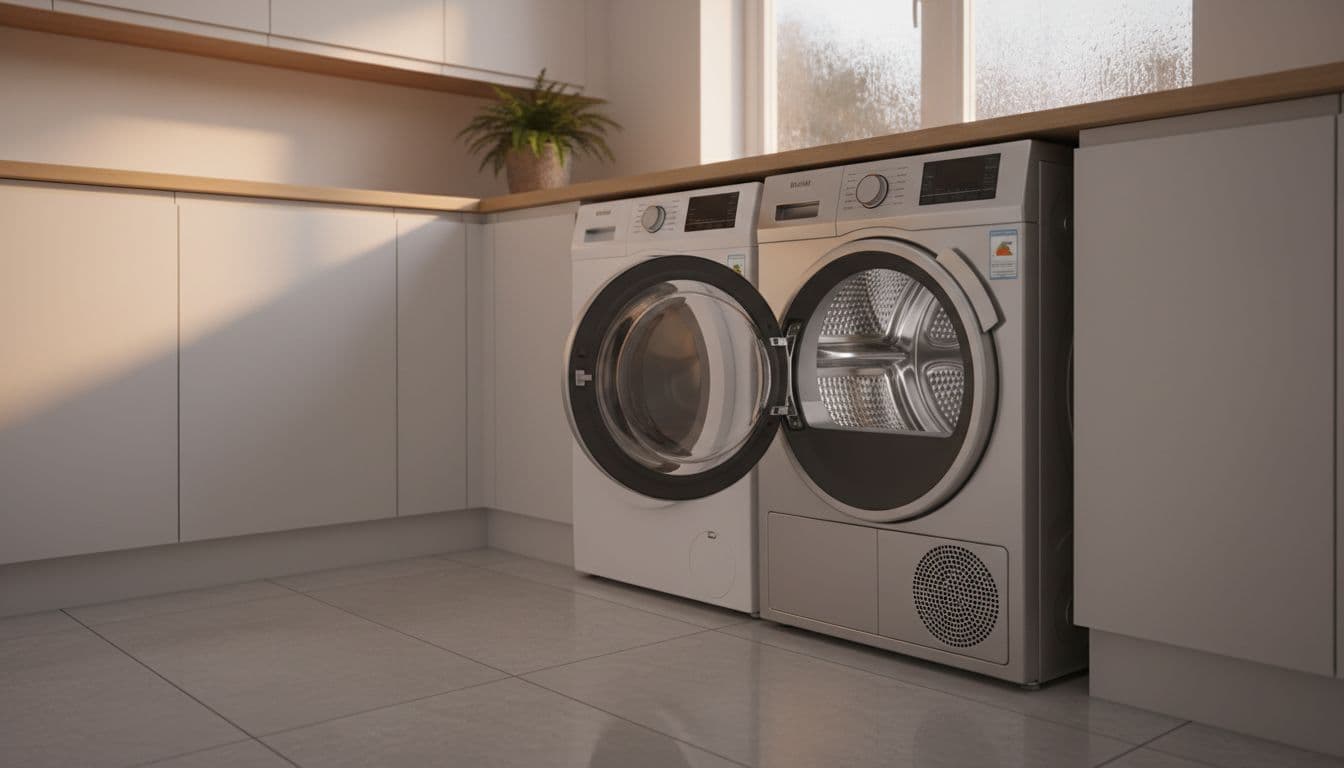 An energy efficient heat pump tumble dryer in a modern UK utility room, created with AI.
A tumble dryer turns electricity into heat, then pushes warm air through wet clothes until the moisture is gone. The differences in running cost usually come down to how the machine makes heat, how well it keeps that heat inside, and how accurately it knows when the load is dry.
Here are the main factors that affect energy use in real homes:
Heat source and heat reuse: Some dryers throw most heat away. Others reuse it again and again, which is why they cost less to run.
Moisture sensing: A dryer that stops when clothes are dry avoids wasting electricity. Timed drying often runs longer than needed.
Airflow and sealing: Strong airflow helps moisture leave the drum quickly. Poor seals, blocked filters, and cramped spaces make drying slower.
Load size and fabric mix: Underloading can waste energy because the machine still heats the drum. Overloading stops air moving through the load, which leads to damp spots and extra cycles.
Drying temperature: Higher heat can dry faster, but it uses more energy and can be tougher on clothes. Lower temperatures often take longer but can still cost less if the machine is designed for it (heat pump models are a good example).
Heat pump vs condenser vs vented: which is cheapest to run?
You’ll usually see three main types in UK shops. They all dry clothes, but they handle heat and moisture in different ways.
Heat pump tumble dryers
These reuse hot air through a heat exchanger, so they don’t need to create as much new heat each minute. They’re usually the cheapest to run, even though cycles can take longer. They also tend to dry at a lower temperature, which is kinder to fabrics.
Condenser tumble dryers
These pull moisture from the air and collect it as water in a tank (or drain it with a hose). They don’t reuse heat as efficiently as heat pump models, so running costs are often mid-range. They’re popular in homes where venting outside is awkward.
Vented tumble dryers
These push warm, damp air out through a hose to the outdoors. They’re often cheapest to buy, but can cost more to run because they typically use more electricity per cycle. They also need a safe, practical route for the vent, which can be tricky in flats.
A quick suitability snapshot:
| Dryer type | Usual running cost | Typical cycle time | Best for |
|---|---|---|---|
| Heat pump | Lowest | Longer | Frequent drying, saving on bills, gentler drying |
| Condenser | Medium | Medium | No easy venting, mixed use |
| Vented | Higher | Often shorter | Homes with easy venting, lower upfront budget |
Energy label basics: how to read the UK energy label fast
Energy labels are useful, but only if you know what to scan for. When you’re comparing models in a shop or online, focus on a few key details:
Energy rating: The letter rating gives a quick sense of efficiency. Still, the numbers matter more than the letter.
Energy use (kWh): Look for the figure shown as energy use per set number of cycles (often per 100 cycles). Lower kWh means less electricity used for the same amount of drying.
Capacity (kg): This is the maximum recommended load for cotton programmes. A bigger drum isn’t automatically better, it only helps if you’ll use it.
Noise (dB): Worth checking if the dryer sits near a living space, a hallway, or an open-plan kitchen.
Rule of thumb: compare the kWh figures between models with the same drum size and the same dryer type. A 9 kg heat pump and a 9 kg vented dryer are not like-for-like on energy use.
How to choose the best energy efficient tumble dryer for your home
Buying the “most efficient” model on paper doesn’t always save you the most money. The best choice is the one that suits how you wash, how often you dry, and where the machine will live.
Start with your space and your routine. If you dry most loads, a heat pump model often pays off over time. If you only tumble dry now and then, you may care more about upfront price, noise, or faster cycles.
A few buying decisions that usually matter most:
Where it will go: Heat pump and condenser dryers don’t need a vent hose out of the window, which is helpful in flats or internal utility rooms. Vented dryers need a safe vent route.
How often you’ll use it: Heavy use puts running cost front and centre. Light use makes features and purchase price more important.
How patient you are with cycle length: Heat pump drying is often slower, but it can be cheaper and gentler.
Pick the right drum size to avoid wasted energy
Drum size sounds boring, but it affects your bills more than many “extra” features.
- 1 to 2 people: around 7 to 8 kg often fits day-to-day loads without wasting space.
- Small families: around 8 to 9 kg is a common sweet spot for mixed laundry.
- Larger households: 9 to 10 kg can help if you’re running frequent loads, especially towels, school uniforms, and bedding.
Try to avoid two common traps:
Underloading: Running a half-empty drum uses energy to heat air and metal, not just clothes. It can still be fine when you’re in a rush, but it shouldn’t be the norm.
Overloading: When clothes are packed tight, warm air can’t move through. You’ll get damp pockets, heavy creases, and the temptation to run another cycle.
Also, think about bulky items. Towels, hoodies, and bedding need room to tumble. A tight drum can turn a duvet cover into a damp ball, which is about as useful as drying an umbrella in a rainstorm.
Must have features that cut running costs
Some features look flashy but don’t save you much. A few, though, can lower your energy use and stop you paying for pointless extra minutes.
Sensor drying (automatic stop): This is the big one. The dryer measures moisture and stops when clothes reach the chosen dryness level. It helps avoid over-drying, which wastes electricity and can make fabrics feel rough.
Delay start: If you’re on an off-peak or smart tariff, delay start lets you run a cycle at cheaper times. It also helps if you want laundry finished when you wake up or get home (just don’t leave damp clothes sitting in the drum for hours).
Anti-crease: This can save money in a quiet way. Less ironing means less time with an energy-hungry iron, plus it can reduce re-wetting clothes to “smooth them out”.
Easy-clean filters and accessible condenser/heat exchanger: If cleaning is awkward, it won’t happen often enough. Blocked filters choke airflow, which makes drying slower and more expensive.
Warranty and parts access: An efficient dryer that lasts longer is better value than a slightly cheaper model that fails early. Look for reasonable warranty coverage and clear guidance on maintenance.
How to cut tumble dryer running costs straight away
Even the best dryer can’t beat poor habits. Small changes can shave time off every cycle, and those minutes add up over a month.
Think of it like boiling a kettle. If you keep re-boiling the same water, you’ll feel it on your bill. The dryer works the same way.
Laundry prep that reduces drying time
A tumble dryer’s job is to remove water. The less water you put in, the less electricity you’ll use.
Use a high spin on your washing machine: A faster final spin removes more water before drying starts. Clothes come out less heavy, and the dryer has less work to do.
Shake items out: It takes seconds, but it helps air reach more fabric. Scrunched-up sleeves and tangled duvet covers dry slowly.
Split heavy and light fabrics: Towels and jeans hold water and need longer. Mixing them with light tops can leave you with half the load dry and half still damp, which pushes you into extra time.
Aim for full, not packed loads: The drum should look comfortably filled, with room for clothes to lift and tumble.
If you’ve got a bit of space, try this simple trick: use a drying rack for 30 to 60 minutes first, then finish in the dryer. That short air-dry phase can remove a surprising amount of moisture without using much energy, especially in a ventilated room.
Use the right settings, and avoid common mistakes
Settings can feel like a guessing game. Keep it simple and you’ll avoid the biggest costs.
Choose sensor modes over timed drying: Timed cycles are easy to set and forget, but they often run longer than needed. Sensor modes stop when the job is done.
Use lower heat where it makes sense: For everyday cottons, the normal programme is fine. For synthetics and mixed loads, lower heat can protect fabrics and still dry well.
Don’t re-dry clothes that are already dry: If you’re unsure, check the thickest items first (waistbands, seams, towel corners). Running “just another 10 minutes” becomes a habit that bumps up your bill.
Common mistakes that increase time and cost:
- Opening the door often, which dumps warm air and slows the cycle.
- Overfilling, which blocks airflow.
- Ignoring lint filters, which forces the dryer to work harder.
A quick safety note that also helps efficiency: clean the lint filter every cycle, and keep vents clear if you have a vented model.
Maintenance checklist for better efficiency and longer life
Poor maintenance doesn’t always break a dryer, it just makes it slower. If a cycle takes an extra 10 minutes each time, you’re paying for those minutes again and again.
Keep to a simple routine:
- Lint filter: clean after every load. A thin layer of fluff can restrict airflow more than you’d expect.
- Condenser or heat exchanger: clean as the manufacturer advises. Heat pump dryers often have specific cleaning steps, and they matter.
- Water tank (condenser and many heat pump models): empty regularly, unless you’re using a drain hose.
- Door seal and drum edge: wipe now and then to keep a good seal and stop lint build-up.
- Airflow around the machine: don’t box it in tight. A dryer needs space to move air and release heat.
If your clothes start taking longer to dry, don’t assume the machine is “getting old”. Filters, airflow, and overloaded drums are often the real cause.
Is an energy efficient tumble dryer worth it? A simple cost and value check
Paying more upfront can feel hard when bills are already high. The easiest way to decide is to think in two buckets: what you pay to buy it, and what you pay every week to run it.
An energy efficient model can be worth it if you dry often, or if indoor air drying makes the home feel damp and uncomfortable in winter. It can also help reduce condensation on windows and that musty smell that clings to slow-drying clothes.
Beyond running costs, you may value:
Quieter operation, especially in smaller homes.
Gentler drying, which can help clothes last longer.
Less moisture indoors, which can support a healthier-feeling home.
A quick way to estimate running cost and savings
You don’t need perfect maths. You just need a consistent method to compare your options.
- Find the dryer’s kWh per cycle (or convert the label figure into a per-cycle number).
- Multiply by your electricity unit rate (pence per kWh).
- Multiply by how many cycles you run per week.
So the rough idea is:
(dryer kWh per cycle) × (your unit rate) × (cycles per week)
Do this for two models with the same drum size, then compare the weekly or monthly difference. Keep in mind real costs change with load size, how wet the laundry is, and which programme you use.
When a heat pump dryer is the best choice (and when it isn’t)
Heat pump tumble dryers suit households that want lower running costs and use a dryer often. They’re also a strong pick when outdoor drying space is limited, or when you’re drying lots of school clothes, workwear, and towels week after week.
They can be less appealing when:
You want the lowest purchase price: Heat pump models usually cost more upfront.
You need fast drying every time: Cycles can be longer, especially for bulky cottons.
You can’t keep up with cleaning: They need regular filter and heat exchanger care to stay efficient.
The machine is in a tight cupboard: They work best with decent airflow around them.
A sensible approach is to balance three things: purchase price, running cost, and how often you’ll use it. If the dryer will run most days, efficiency matters a lot more.
Conclusion
Tumble dryers don’t have to be a budget drain. A heat pump model is often the cheapest to run, but the best choice depends on your home, your space, and how often you dry. Match the drum size to your household, choose sensor drying, and keep filters and condensers clean so every cycle stays short and efficient. Before you buy, do a quick checklist: right type for your space, realistic drum size, low kWh figure for that size, and sensor drying as standard, then use good habits to cut costs even with an older machine.
Find a laptop with ease using our smart device Finder tool
Shop Electronics and Tech from Trusted UK Retailers
TV’s Mobile Phones Laptops Smart Watches
Looking to protect your purchase? Explore appliance and gadget insurance options here.
Home Appliances Insurance– Gadget Insurance – Phone Insurance
–
Explore More Buyers Guides & Money Saving Tip
For a list of our main buyers guides use the drop-down menu at the top of the page. Topics related to this article are:
Kitchen Appliances Buyers Guides
–
Explore Our Blog Categories for Expert Buying Advice
- AI Powered Product Finder Tools
- Apple Products Buyer’s Guides & Reviews
- Beauty, Health & Wellness | Perfume, Skincare, Makeup & Wellbeing Guides
- Bedroom Furniture Guides UK | Expert Tips & Best Value Deals
- Beds Buying Guides UK | Types, Tips & Best Deals
- Brands – Phones, Laptops, PC”s, Tablets | Buyer’s Guides & Reviews
- Brands & Designer Products (Men, Women & Electronics)
- Car Buying & Financing Made Easy | Expert Guides for the UK
- Car Rental Worldwide: Compare Prices & Top Deals for UK Travellers
- Christmas Essentials: Decorations & Gift Ideas
- Clothing, Fashion & Accessories Buying Guides UK
- Designer Fashion Brands: Buyer’s Guides & Reviews
- Electronic Brands: Buyers Guides & Reviews
- Electronics – Tablet & iPad Reviews and Buyers Guides
- Electronics, Tech & Gadgets: Reviews, Deals & Buying Guides UK
- Europe Holidays & Hotels: Top Destinations, Booking Guides & Local Attractions
- Expert Buying Guides & Shopping Tips for UK Shoppers
- Footwear Brands: Reviews & Buyer’s Guides
- Furniture Buyer’s Guides | Home & Garden & Styling Tips
- Gadget Insurance UK | Expert Guides, Reviews & Smart Protection Tips
- Garden Furniture UK: Expert Reviews, Deals & Buying Guides
- Garden Furniture, Landscaping & Garden Rooms Guides UK | Expert Tips & Best Value Deals
- Garden Rooms, Offices & Garden Buildings Guides UK | Expert Tips & Best Value Deals
- Gifts for Everyone: Ideas for Every Occasion & Budget
- Holidays & Travel: Hotels, Villas, UK Breaks & Skiing
- Home Décor, Interior Design & Styling Tips UK | Inspiration & Expert Advice
- Home Emergency Cover UK | Expert Guides, Reviews & Practical Protection Tips
- Home Furniture Guides UK | Expert Tips & Best Value Deals
- Home Furniture, Décor & Interior Design Guides UK | Styling Tips & Inspiration
- Insurance & Protection: Travel, Landlord, Gadget & More UK
- iPhone Buying Guides, Reviews & Comparisons for the UK
- iPhone Insurance UK | Expert Guides, Reviews & Smart Protection Tips
- Jewellery: Expert Reviews, Trends & Buying Guides
- Kitchen Appliance Brands: Buyer’s Guides & Reviews
- Kitchen Appliances UK: Buyers Guides, Reviews & Money Saving Tips
- Landlords Insurance UK | Expert Guides, Reviews & Smart Protection Tips
- Laptop Brands & MacBooks Buyer’s Guides & Reviews
- Laptop Brands: Buyer’s Guides & Reviews
- Living Room Furniture, Design & Décor Guides UK | Styling Tips & Inspiration
- Men’s Clothes, Fashion & Accessories Guides UK | Latest Trends & Smart Shopping
- Men’s Fragrance Brands: Perfume & Aftershave Reviews & Buyers Guides
- Perfume & Aftershave Brands: Reviews & Buyers Guides
- Perfume & Fragrance: Best Scents, Reviews & Buying Guides
- Pets: Guides, Tips & Inspiration
- Phone Brands & iPhones Buyer’s Guides & Reviews
- Phone Brands: Buyer’s Guides & Reviews
- Phone Insurance UK | Expert Guides, Reviews & Smart Protection Tips
- Sportswear Brands: Reviews & Buyers Guides
- Trainer Brands: Reviews & Buyer’s Guides
- Travel Insurance UK | Expert Guides, Reviews & Money-Saving Tips
- UK Holidays & Hotels: Best Destinations, Booking Guides & Local Attractions
- Women’s Clothes, Fashion & Accessories Guides UK | Latest Trends & Smart Shopping
- Women’s Designer Brands: Buyer’s Guides & Reviews
- Women’s Designer Shoe Brands: Buyer’s Guides & Reviews
- Women’s Dresses | Online Shopping Guides, Style Tips
- Women’s Perfume Brands: Reviews & Buyers Guides
Save Money and Shop Smarter – Join Our Free Newsletter!
Get expert buying advice, exclusive deals, and money-saving tips delivered straight to your inbox.