A linen dress is worth considering for your summer wardrobe if you want a cool, breathable feel and don’t mind natural creasing.
The strongest choice combines comfortable fit with fabric that suits your routine, rather than relying on the linen label alone. A lightweight holiday dress and a structured work dress can behave differently, even when both contain the same fibre.
Before buying, consider where you’ll wear it, how much coverage you prefer and what care you can manage. Start with the fabric and construction, then compare shape, measurements, styling options and total online cost.
Key Takeaways
- Check fibre content, opacity and lining because the linen label alone doesn’t describe how a dress will feel.
- Choose a shape that allows comfortable movement and suits the occasions you dress for most often.
- Compare your measurements with the size chart, then check garment measurements and available room.
- Online shopping offers wider choice and easier price comparisons, but delivery and return charges affect value.
- Expect natural creasing and follow the care label rather than treating every linen garment alike.
Linen Dress: What to Look for Before You Buy
Linen is a natural fabric made from flax fibres. Its moisture-absorbing properties and often airy weave make it a useful choice for a summer dress, particularly in looser cuts.
However, a dense weave, close fit or heavy lining can limit breathability. Linen isn’t automatically a more breathable fabric or cooler than every cotton dress.
Natural texture also varies. Some fabrics feel smooth and washed-in; others have a dry, slightly crisp surface. Judge those differences against your preferences.
Check the fabric, weave and weight
Read the composition rather than relying on descriptions such as “linen look”. A 100% linen garment differs from a linen blend, such as linen-cotton or linen-viscose. The finished fabric matters more than percentages alone.
Look for fabric weight, weave density and lining details. A lightweight fabric can feel airy but may reveal underwear, especially in pale colours. Meanwhile, a denser weave usually offers more coverage and structure.
Check opacity in daylight where possible. A lining adds coverage, but its fibre content affects comfort too. Many linen fabrics soften with washing; don’t assume an uncomfortable dress will eventually feel right.
Look closely at seams, hems and fastenings
Inspect stitching inside and outside the garment. Seams should sit smoothly, with secure ends and no obvious gaps or loose threads.
Buttons need firm attachment, whilst zips should move without catching the surrounding cloth. Pocket openings and other stress points benefit from reinforcement.
Also check that the hem hangs evenly without puckering. Neat finishing supports regular wear, but it can’t guarantee longevity. Fabric strength, fit and laundering all affect how well a dress lasts.

Choose a Linen Dress Shape That Fits Your Life
Start with your daily activities and preferred silhouette. There’s no single dress shape that works for every body or occasion.
Compare shirt, A-line, shift and wrap styles
A shirt dress offers adjustable styling through buttons, sleeves and, sometimes, a removable belt. Check the button spacing across the bust because pulling can create gaps.
An A-line cut gives more room through the skirt, whilst a shift dress usually hangs straighter with less waist definition. Either can feel comfortable when the shoulders and armholes fit well.
A slip dress skims the body, so check how the fabric falls across your waist and hips. A true wrap allows some waist adjustment, but its neckline and skirt overlap need attention. A fixed faux-wrap doesn’t offer the same flexibility.
A waisted dress defines the middle, so check that the seam sits comfortably. Always judge the individual garment rather than assuming its style name guarantees fit.
Find the right length, neckline and sleeve coverage
A mini dress offers less coverage, whilst a midi dress and midaxi dress provide more. A maxi dress gives the most coverage, but its hem may need altering if it brushes the floor or catches under shoes.
Check neckline depth with your usual bra, particularly when leaning forward. A square neckline can sit differently across the chest, so make sure it feels secure. Sleeve width matters too: a narrow sleeve can restrict movement even when the bodice fits.
Pockets are useful, although bulky pocket bags can change the way a skirt hangs. Check that side pockets lie flat, then walk, sit and raise your arms during a fitting. Look for pulling, gaping and any urge to keep adjusting the dress.
Use measurements, not just the size label
Measure your bust, waist and hips, then compare them with the relevant size chart. UK size labels vary between brands, so your usual number is only a starting point.
A body size chart and garment measurements describe different things. Check which you’re reading before choosing a size.
Non-stretch linen needs room for movement. A tailor can alter some hems or seams, but the garment’s construction limits what’s practical.
Style a Linen Dress for Home, Work and Evenings Out
A simple navy midi summer dress works with flat sandals at home, loafers for work and dressier shoes for dinner. Choose colours you already enjoy, so it earns a place in your summer wardrobe without requiring new outfits.
Keep it relaxed for home and casual days
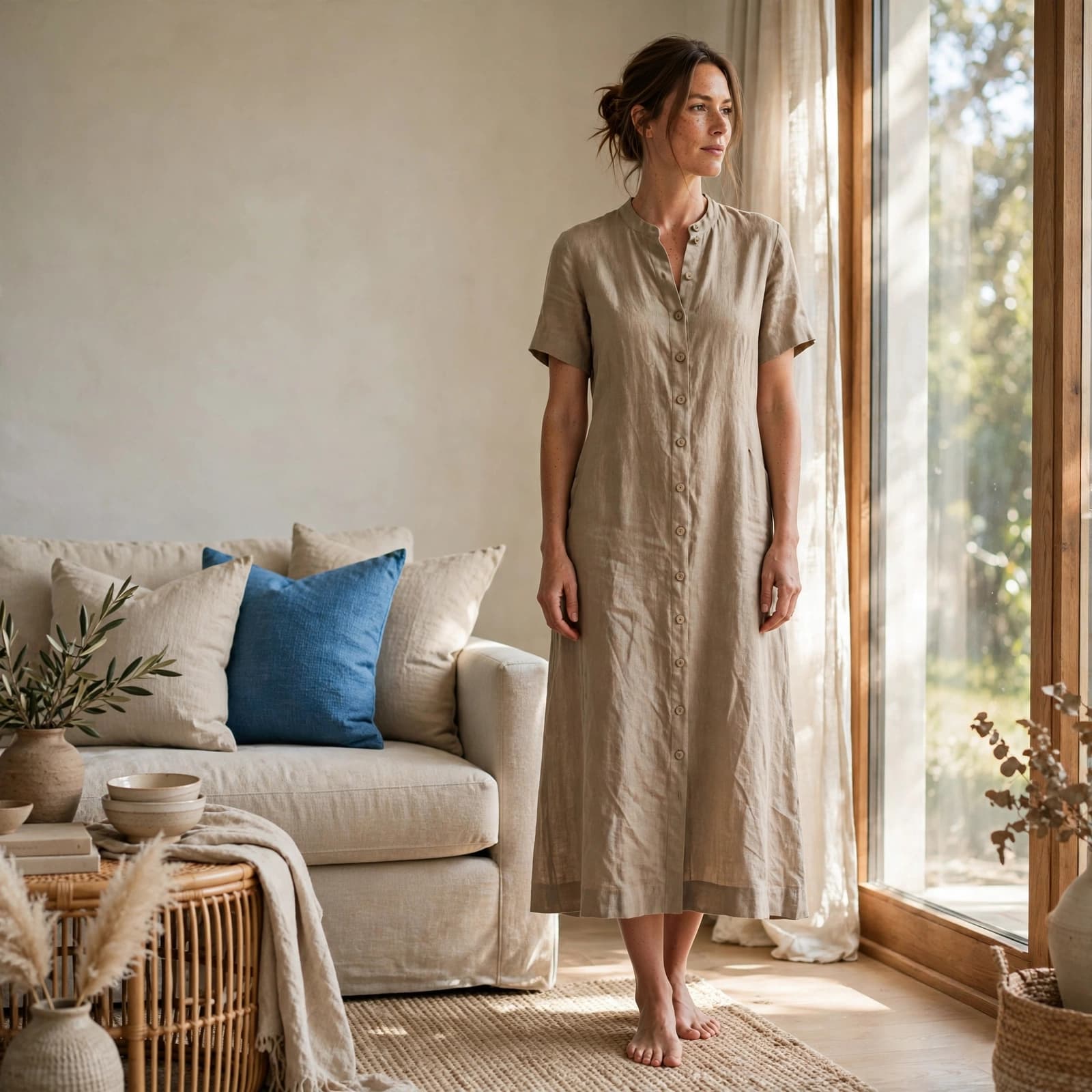
For everyday casual wear, try a relaxed shift dress with side pockets. Add comfortable sandals or trainers, a crossbody bag and a light cardigan.
A loose waist or removable belt gives you options without changing the dress. Choose a cut that lets you sit comfortably and walk at your usual pace. Rough seams and scratchy labels can outweigh an otherwise appealing design, so keep accessories simple for errands or meeting friends.
Make it work-ready with simple layers
A light blazer, neat cardigan or jacket adds structure without covering the whole dress. Try a waisted dress with a square neckline, then pair it with loafers or other practical shoes and understated jewellery.
However, workplace expectations vary. Check neckline coverage, skirt length and opacity against your dress code, especially with a white linen dress. If you spend much of the day sitting, accept that the skirt will crease. A dress you feel comfortable wearing throughout the day offers more value than one that needs constant attention.
Dress it up for dinner or an event
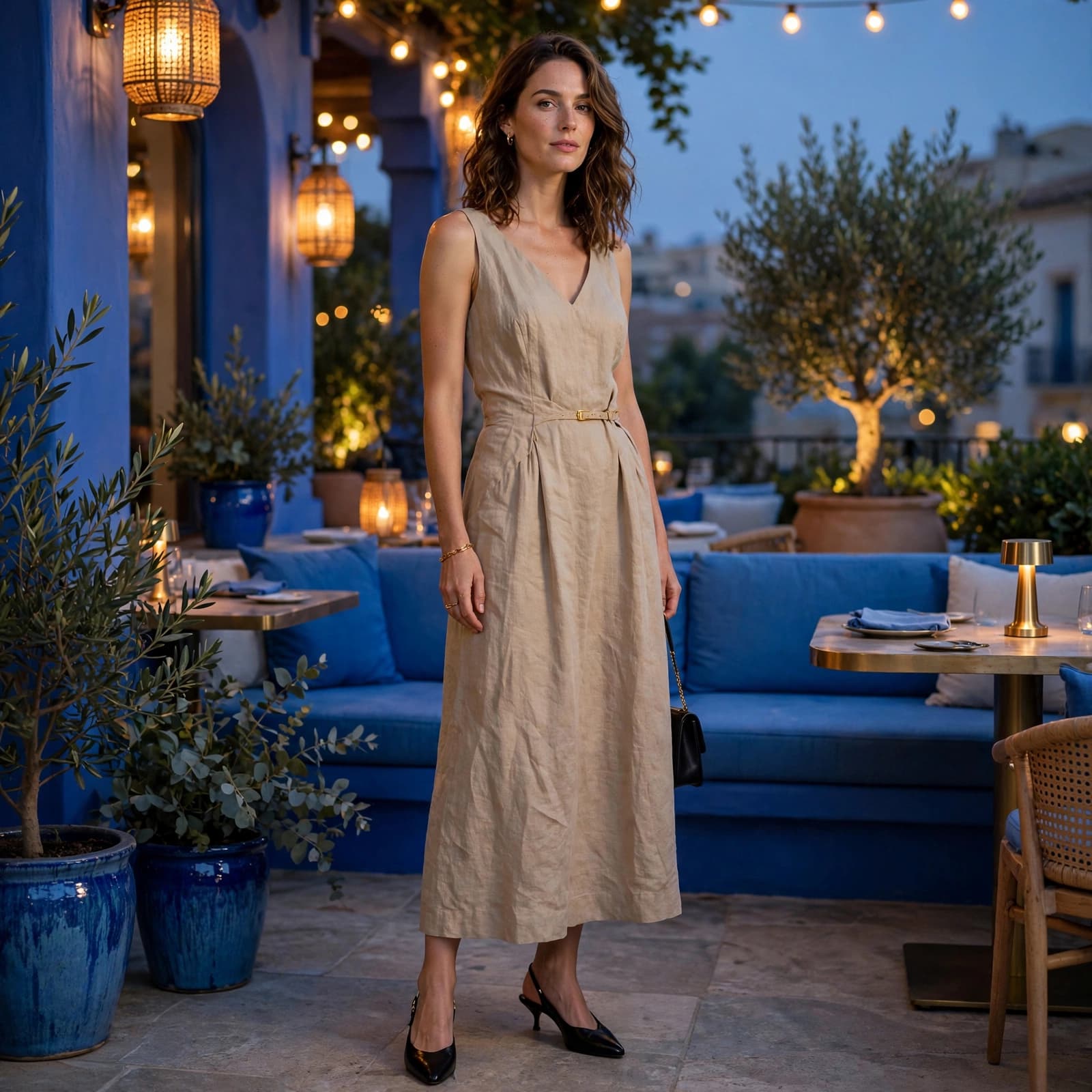
For dinner, add earrings, a structured bag and dressier flats or block heels. A defined waist and neatly finished neckline can make a simple style feel more polished.
Linen’s visible texture still gives it a relaxed character, so check the invitation before choosing it for formal occasionwear. Jewellery and shoes can change the outfit’s mood, but they won’t turn casual fabric into eveningwear.
Buy a Linen Dress Online with Confidence
Online shopping makes it easier to compare sizes, colours and prices. However, photographs can’t fully convey texture, opacity or fit, and screen settings can alter colour.
Consider these advantages and drawbacks together.
| Advantages | Drawbacks |
|---|---|
| Wider choice of cuts and sizes | You can’t feel the fabric |
| Easier price comparisons | Delivery charges affect savings |
| Convenient browsing | Returns may cost money |
Compare the total cost, rather than the headline price alone.
Compare listings, prices and return terms
When comparing linen dresses, check composition, measurements, lining, care instructions and whether side pockets are included. Filters can narrow the search by length, sleeve coverage or fabric, but confirm details such as a square neckline in the description.
Read recent reviews for repeated comments about sizing, transparency or texture. One review is less useful than a consistent pattern. Check product photos to see how side pockets affect the way the skirt hangs.
Before paying, check delivery charges, the return deadline and who pays return postage. Sale policies can differ, though statutory rights still apply.
Weigh linen against cotton and linen blends
Cotton is often soft and comfortable for everyday wear, whilst linen appeals to shoppers who enjoy its airy feel and visible texture. Either fabric can be lightweight or substantial.
A linen blend with cotton may feel different against the skin, whilst linen-viscose blends can alter the drape. Some blends crease less, but the result depends on composition and construction.
Linen isn’t automatically a sustainable fashion choice. Look for evidence about sourcing, production and how long the garment is likely to last.
Choose according to comfort, appearance and care requirements rather than treating pure linen as automatically superior.
Know when the price is worth paying
Assess fabric, construction and expected wear together. A well-made dress that works across several settings may justify a higher price. A lower-cost option can suit occasional wear if it meets your needs.
Buy it if the fit feels comfortable, construction looks sound and upkeep suits your routine.
Skip it if opacity, measurements or care details remain unclear, or you want a consistently crisp finish with minimal ironing.
Frequently Asked Questions
Does a linen dress crease easily?
Yes, creasing is a normal feature of linen, although the amount varies with the weave, cut and blend. Following the label’s ironing guidance and smoothing the dress whilst damp can help. Hanging it with room around it also limits storage creases, but won’t prevent wrinkles during wear.
Is a linen dress suitable for cooler weather?
You can wear one with tights, boots, a jumper or cardigan and a coat. A heavier fabric usually offers more coverage than a fine summer weave, though linen itself isn’t an insulating winter fabric. Judge comfort by the whole outfit, especially if you’ll spend time outdoors.
How should I wash and store a linen dress?
Follow the garment’s care label because dyes, linings and finishes can require different treatment. Where washing is permitted, use a suitable gentle programme and avoid unnecessary heat or harsh products. Air-dry if the instructions allow it, then hang or fold the dry dress according to its shape and storage space.
Will a linen dress become softer over time?
Many linen garments soften through use and careful washing, but the amount varies with the weave and finish. Pre-washed fabrics may already feel supple, whilst others retain more crispness. Avoid repeated aggressive washing to force softness, as it can damage the garment without producing the feel you want.
Choose the Dress You’ll Wear Regularly
A linen dress can be a worthwhile buy when its texture, fit and upkeep match your preferences. Prioritise wearable comfort, clear fabric details and sound construction over a tempting discount or style label.
Before ordering online, compare measurements and return terms as carefully as the price. Choose a shape that fits your actual routine, whether that’s relaxed days, office wear or dinners out. Natural creasing is easier to accept when the dress otherwise feels right.