The Republic of Malta fits an unusual amount into a small space. This Mediterranean archipelago packs beaches, old streets, fortress walls, seafood lunches, and boat trips into a compact area, which is why the islands keep drawing British travellers back.
For UK visitors, the appeal is practical as much as scenic. Flights are short, English is widely spoken, and airport transfers rarely eat half a day. That makes Malta work for a long weekend, but it also rewards a slower stay.
What follows is a grounded guide to the island’s major sights, its food, and the booking choices that make a trip easier to organise online.
Key Takeaways
- Compact Convenience: Malta packs a diverse mix of history, coastline, and culture into a small area, making it ideal for both quick weekend getaways and longer, more relaxed holidays.
- Accessible Travel: UK holidaymakers benefit from short flight times, widespread use of the English language, and easy logistics, including efficient public transport and short airport transfers.
- Cultural Depth: Beyond its beaches, the island offers significant historical sites, such as the UNESCO-listed Valletta, the Silent City of Mdina, and ancient Megalithic temples.
- Culinary Traditions: Maltese cuisine offers a unique Mediterranean fusion, featuring local specialities like pastizzi, fresh seafood, and rabbit, best enjoyed in traditional, family-run establishments.
Why Malta works so well for UK traveller’s
Malta has the rare advantage of feeling straightforward without feeling thin. It offers a glorious Mediterranean climate, sun, and sea, yet it also has enough weight in its streets, churches, museums, and harbour towns to fill days without constant beach time.
For British travellers, that balance matters. Some want a short break with culture and dinner by the water. Others want a family holiday with swimming, simple logistics, and little language friction. Thanks to the island’s history under British rule, there is a distinct sense of familiarity that makes visitors feel at ease. The English language is also widely used across the islands, removing the barriers often found in other European destinations.
Short flight, easy time difference, and simple planning
From much of the UK, flights are around three and a half hours. Malta is also only one hour ahead, so the journey does not carry the drag of long-haul travel. A Friday departure can still leave time for an evening walk, and a Monday return does not feel like a lost day.
That convenience shapes the whole holiday. The airport is close to the main resort areas, so arrivals are usually quick. Whether you are heading to Valletta, Sliema, St Julian’s, or the ferry points for Gozo, the local public transport network makes navigating the island straightforward and affordable.
Families benefit because transfers are short. Couples benefit because the island suits a compact city and coast break. First-time visitors benefit because planning does not feel like solving a puzzle.
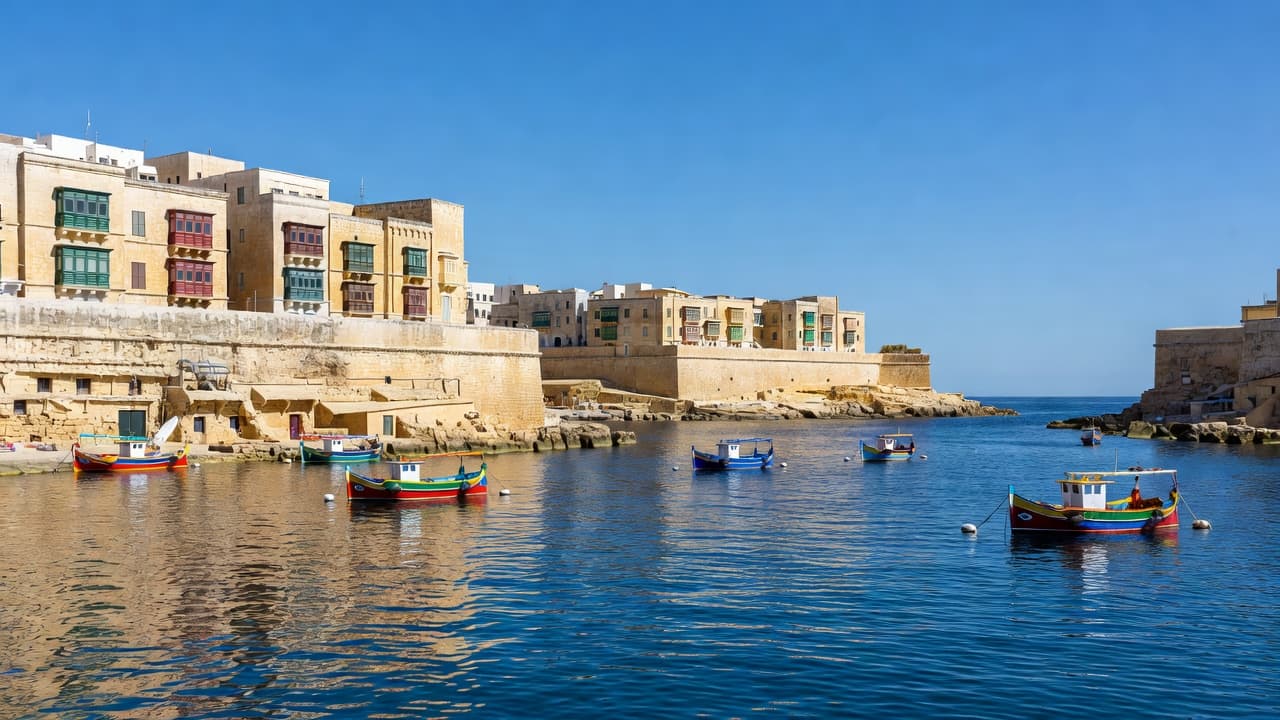
AI-generated image of Grand Harbour in Valletta.
A holiday that mixes history, coastline, and food
Malta’s strongest feature is proximity. A morning can begin in a baroque city, move to a swimming cove by lunch, and end over grilled fish at a harbour table. On larger islands, that kind of mix often needs a hire car and long hours on the road.
Here, the distances stay short. Valletta offers museums, bastions, and harbour views. A bus or ferry later, the coast takes over. Another short hop leads to Mdina or a fishing village.
The food also helps. Maltese cooking borrows from Sicily and the wider Mediterranean, but keeps its own character. As a result, the trip never feels split between culture days and holiday days. Much of Malta combines both.
The landmarks and places of interest that define Malta
A first trip usually turns on a handful of places. Some are famous for good reason, while others matter because they reveal how much history is packed into the islands.
Valletta, Mdina, and the island’s historic heart
Valletta is a UNESCO World Heritage Site that is small enough to explore on foot and dense enough to hold attention for days. Its honey-coloured streets rise and fall sharply, with balconies overhead and sea views opening at the end of lanes. St John’s Co-Cathedral, the Upper Barrakka Gardens, and the Grand Harbour give the capital its shape, a layout masterminded by the Knights of St John.
Across the island, Mdina feels more inward and more still. Known as the Silent City, it trades harbour drama for gates, walls, and narrow stone passages. At dusk, the town changes again. Day-trippers thin out, the light softens, and the place begins to feel almost theatrical.
Both towns reward slow walking. They also suit travellers who like photographs, churches, museums, and small details rather than big-ticket attractions alone.
The Blue Lagoon, Comino, and Malta’s coastal scenery
The sea around the Mediterranean Sea often does the heavy lifting in travel photography, and not without reason. The Blue Lagoon on Comino has clear, pale water that looks almost lit from below. For swimmers and boat-trip passengers, it is one of the island’s headline outings.
Timing matters, though. In peak periods, Comino can feel crowded by late morning.
Early departures and later afternoon sailings usually give the Blue Lagoon a calmer, more convincing version of itself.
Malta’s coast is broader than Comino alone. Golden Bay and Ghajn Tuffieha offer easier beach days on the main island. Dingli Cliffs bring the harder, rockier face of Malta, where the draw is the view rather than the swim.
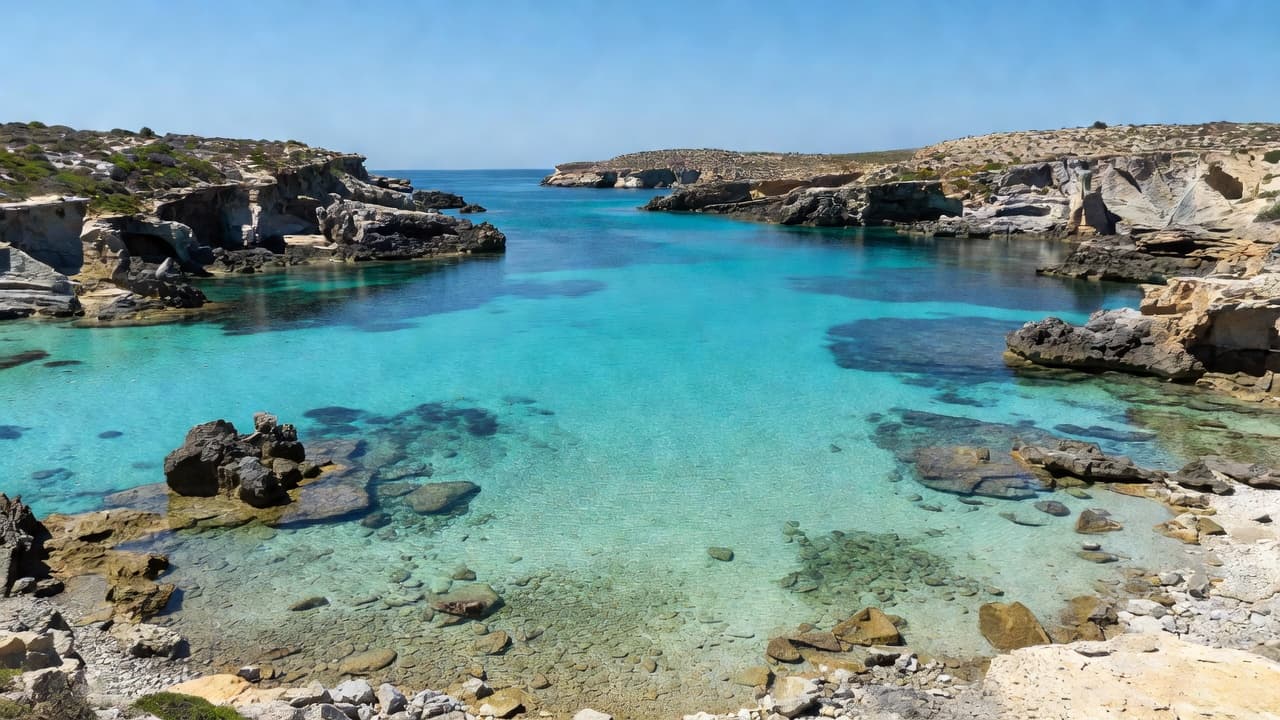
AI-generated image of the Blue Lagoon on Comino.
Megalithic temples, forts, and World Heritage sites
Malta’s past reaches far beyond its beach image. The Megalithic temples are among the oldest free-standing stone structures in the world, and sites such as Hagar Qim and Mnajdra give the islands unusual depth for a Mediterranean break.
The military story is just as strong. Fort St Elmo, the Three Cities, and the harbour defences explain why Malta mattered for so long to larger powers, including its strategic role during World War II. The Hal Saflieni Hypogeum, an underground prehistoric site, adds another layer, though tickets often need to be arranged well ahead.
That range is Malta’s real strength. A holiday can include churches, prehistoric ruins, fortress walls, and sea swims without feeling over-planned.
How to plan Malta for a long weekend, a week, or up to two weeks
The island’s size makes it adaptable. A short break can feel full, while a longer stay does not run out of road. Because Malta is a member of the European Union, UK holidaymakers will find that travel logistics, such as roaming and currency convenience, remain straightforward.
This quick guide shows what each trip length can hold.
| Stay length | What fits comfortably | Best rhythm |
|---|---|---|
| Long weekend | Valletta, Mdina, one boat or harbour trip | Fast but manageable |
| One week | Beaches, capital, Gozo, food-led evenings | Balanced |
| Two weeks | Split stays, quieter bays, smaller villages, slower meals | Unhurried |
The key is restraint. Malta rewards depth more than frantic box-ticking.
A short break built around Valletta and nearby highlights
For three or four nights, Valletta is the strongest anchor. It gives easy access to museums, harbour ferries, and evening dining without wasting time on transport. The Three Cities can fill half a day, and Mdina works as a clean second excursion.
A compact stay also leaves room for one coastal outing, either a harbour cruise or a half-day boat trip if the weather is settled. That keeps the trip varied without pulling it apart.
A week in Malta with beaches, food, and one or two day trips
Seven nights give Malta its best rhythm. There is time for Valletta, Mdina, and at least one day on the water, but there is also room for slower afternoons and meals that are not squeezed between attractions.
Many visitors add Gozo as a day trip, which works well if the goal is a first look at the island’s greener pace and the Cittadella in Victoria. Others choose Marsaxlokk for seafood and the south for temple sites. A beach day at Golden Bay or Mellieha keeps the week from turning into a march through landmarks.
Two weeks in Malta for slower travel and smaller discoveries
A longer stay changes the character of your trip. Malta becomes less about headline sites and more about pattern and place. One week can be based on the main island, with the second in Gozo, where the pace is slower and the evenings are quieter.
That extra time opens smaller bays, inland villages, and restaurants away from the busiest promenades. It also makes room for bad-weather flexibility, which matters on island holidays. Rather than trying to see everything, a two-week stay lets the islands settle into view.
Where to eat in Malta and what to expect from the local food scene
Food in Malta is broad rather than formal. Local dishes sit alongside Italian standards, seafood grills, pizza, pasta, and bakery food that works well for a cheap lunch between sights.
Traditional dishes and local specialities worth trying
Pastizzi are the obvious starting point. These flaky pastries, whose names are deeply rooted in the Maltese language, are usually filled with ricotta or mushy peas. They are inexpensive and easy to find. Ftira, a round Maltese bread often filled for lunch, is another useful staple.
For a fuller meal, rabbit remains one of the island’s best-known traditional dishes. Fresh fish appears widely, and seafood pasta is a safe and common order in coastal towns, reflecting the island’s proximity to Sicily. When available, lampuki, a local fish, is worth watching for on menus. Maltese bread, olives, capers, and local wine also appear often enough to give meals a distinct shape.
Better value often comes at lunch, in bakeries, cafes, and family-run places away from the busiest waterfront strips.
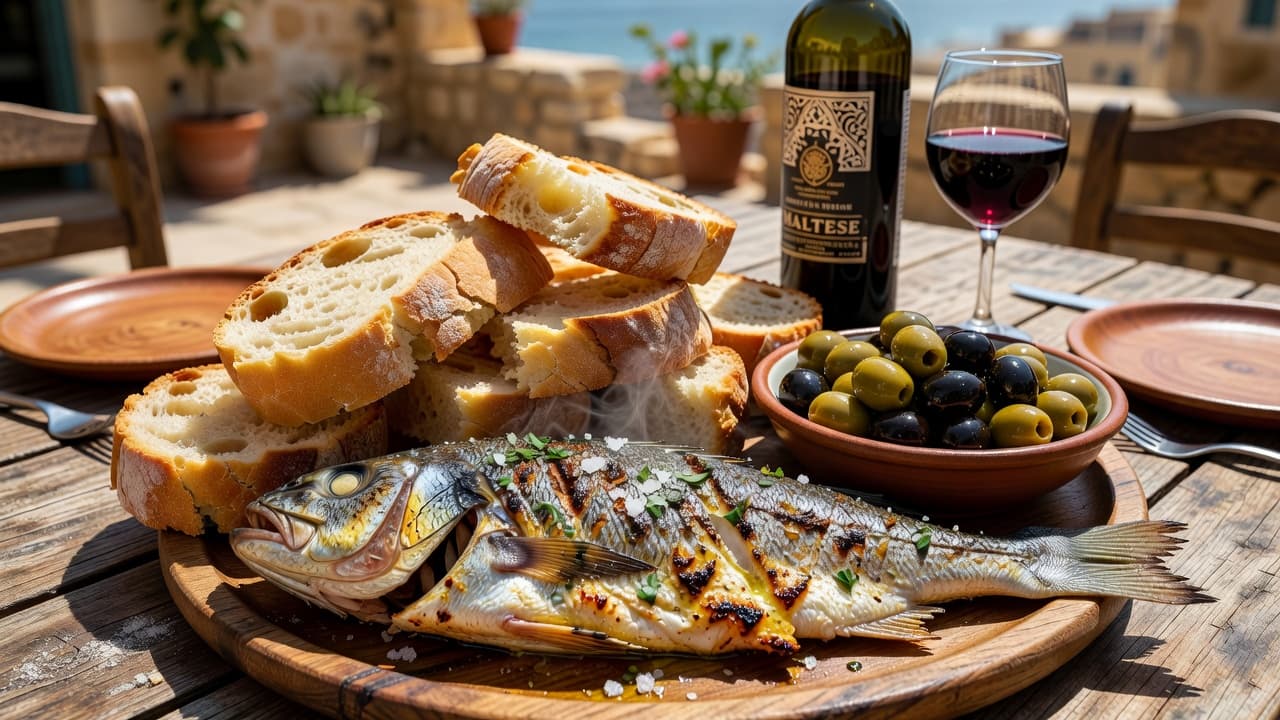
AI-generated image of a traditional Maltese seafood meal.
Best areas for relaxed meals, views, and evening atmosphere
Valletta suits diners who want old streets and a more intimate evening mood. You will often notice that the dining atmosphere is influenced by the strong presence of Roman Catholicism, as many villages host lively feasts and religious festivals that spill out into the squares. Sliema is easier and more practical, with waterfront options and broad choice. St Julian’s is busier and louder, which suits travellers who want late nights with plenty happening around them.
Marsaxlokk is the obvious seafood stop, especially for a long lunch by the boats. Gozo tends to offer the slowest meals of all, with a calmer pace and less pressure to turn tables quickly. In every area, reviews help, because views alone do not guarantee a strong kitchen.
Why booking Malta online can make the whole holiday simpler
Malta looks easy on a map, but small differences in location change the feel of a trip. Online booking is a vital part of the modern tourism industry, allowing travellers to compare the trip as a whole rather than simply focusing on the headline fare.
Comparing options without losing sight of the full cost
The cheapest flight does not always produce the cheapest holiday. Baggage fees, airport transfers, breakfast, ferry links to Gozo, and room type can shift the real cost quickly. Comparing those pieces side by side is often easier online than through scattered brochures or separate phone calls.
This is where a buyer’s guide habit helps. The first price matters less than the final price. A seafront room in Sliema may save time on buses, while a base in Valletta could cut transfer needs. Given Malta’s steady growth and strong GDP per capita, the island offers a stable environment for visitors, meaning that booking through reputable online platforms provides both value for money and peace of mind. A Gozo stay may simply require ferry planning from the start, which is best managed by securing your travel itinerary in advance.
Using reviews, maps, and cancellation terms to reduce risk
Recent reviews often reveal what glossy photos miss. Noise from nightlife, steep walks, tired rooms, or awkward bus links tend to show up in consistent guest feedback. Maps are equally useful because they show whether being near the centre means a short walk or a long uphill climb in the heat.
Cancellation terms deserve the same attention. Flexible bookings can matter when flight times change or when a split-island stay needs adjusting. Clear terms, recent reviews, and a close look at the map usually prevent the most common booking mistakes. By researching these details online, you ensure that your investment in a Maltese holiday remains secure and well-planned.
Frequently Asked Questions
Is Malta a good destination for a short break?
Yes, Malta is excellent for short breaks due to its compact size and short flight times from the UK. You can easily spend three or four days exploring Valletta and Mdina without feeling rushed or spending half your trip in transit.
Do I need to learn the local language to visit Malta?
No, you do not need to learn the local language. English is an official language in Malta and is widely spoken by locals, which helps remove common barriers found in many other European destinations.
What is the best time of year to visit the Blue Lagoon?
While the Blue Lagoon is stunning, it can become very crowded during the peak of the day. It is best to plan your visit for early morning or late afternoon to enjoy the water in a much calmer and more peaceful environment.
How does travel around the island work?
Malta has a well-connected public transport network that is both affordable and easy to navigate for tourists. Because the island is small, most major sights and resort areas are within a reasonable distance by bus or ferry, removing the need to hire a car.
Conclusion
Malta is much more than a simple sun break. Its appeal rests on the way harbour cities, ancient sites, swimming spots, and good-value food sit close together, with little wasted time between them.
That is why the islands work so well for UK travellers. A long weekend feels full, yet a two-week stay can still uncover quieter corners. The historic bond between the UK and Malta remains strong, symbolised by the George Cross awarded to the islands for their bravery. Whether you are exploring the legacy of the Knights Hospitaller or spotting the iconic Maltese cross carved into golden sandstone buildings, the archipelago offers a rich tapestry of history. In a Mediterranean market crowded with bigger names, Malta keeps its place by offering immense variety in a space that remains perfectly manageable.