Collagen sits in an awkward corner of the supplement aisle. These Collagen Supplements are sold for skin, joints, hair and healthy ageing, yet the products range from plain powders to sweet gummies, with prices that can jump from a few pounds to more than £40 a tub.
In plain terms, collagen is a structural protein found throughout skin, joints, bones and connective tissue; its levels decline as part of the aging process, and it’s often discussed alongside hair and nail health. Supplements may suit some shoppers, but the useful questions are simpler: are the claims supported, who may benefit most, what does the label reveal, and which add-on nutrients are worth the cost?
Those points matter more than glossy packaging, and they make a better starting point than trend language.
Key Takeaways
- Collagen supplements offer modest benefits for skin hydration, elasticity and joint comfort, backed by small studies, but they cannot target specific areas or replace diet, exercise, sleep or sun protection.
- Prioritise hydrolysed peptides with clear dosing (10g+ per serving), source (bovine for types I/III, marine for skin, type II for joints) and value per gram over glossy packaging or trendy add-ons.
- Format suits habits: powders for best value and dose, capsules for portability, avoiding sugary gummies if budget or sugar intake matters.
- Best for midlife/older adults, active people with joint strain or those with low protein diets; pair with vitamin C if fruit/veg intake is poor.
- Check labels for allergens, consult a GP or pharmacist if pregnant, allergic, or with kidney issues, as side effects like bloating can occur from sources or fillers.
What collagen does in the body, and why levels change with age
Collagen gives tissues strength and structure. In skin, it helps with firmness and elasticity. In joints, tendons and cartilage, it supports the framework that handles strain. Bone also contains collagen, which works with minerals to give it shape and flexibility.
Natural production falls as part of the ageing process. Sun exposure, smoking, poor diet and long-term stress can also affect skin and tissue health. That decline doesn’t happen on a birthday. It’s gradual, and it sits alongside changes in hormones, activity levels and recovery.
The most important types of collagen and where they are found
Type I is the main one in skin, bone, tendons and many connective tissues. Type III often appears beside it in skin and blood vessels. Type II Collagen is linked most closely with cartilage, so joint products tend to feature it.
Labels highlight these types because they hint at use cases. Still, the body doesn’t treat supplement marketing as a map.
What a supplement can, and cannot, replace
Most collagen products contain collagen peptides, which are hydrolysed into amino acids. They can add protein to the diet, and scientific evidence points to modest gains in skin hydration, skin elasticity or joint comfort after regular use. Results vary, and many studies are small.
After digestion, the body still decides how to use those amino acids. A scoop can’t tell the body to send them only to the face or knees. Collagen also doesn’t replace sleep, sun protection, strength training, a protein-rich diet or medical care for ongoing pain or skin disease.
Collagen is a protein supplement first, and a beauty claim second.
The different collagen supplement formats shoppers will see online
Format changes routine more than results. A daily powder stirred into porridge may suit one person; another will prefer capsules because they travel well and taste of nothing.
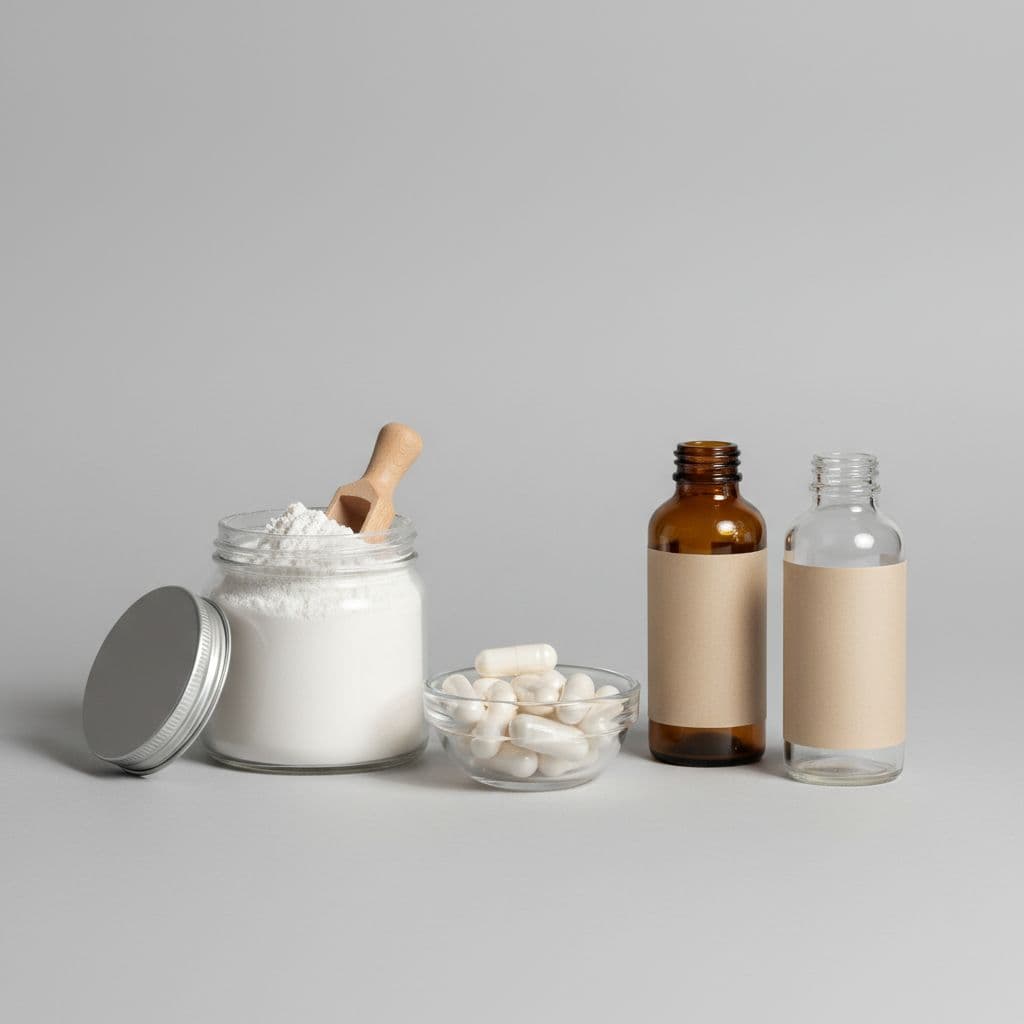 A quick comparison makes the trade-offs easier to see.
| Format | Main upside | Main drawback | Often best for |
|---|---|---|---|
| Powder Form | Higher dose, better £ per gram | Needs mixing, can have a taste | Regular home use |
| Capsules or tablets | Simple, portable | More pills for a useful dose | Busy routines |
| Liquid Collagen | Convenient | Highest daily cost | Occasional use |
| Gummies | Easy to take | Sugar, sweeteners, lower collagen dose | People who dislike powders |
The takeaway is plain: format is mostly about habit and budget. Powder Form and Liquid Collagen often offer the best value with higher doses and better bioavailability; capsules suit simplicity, and gummies make less sense if sugar matters.
Liquid Collagen often looks premium because the bottle feels tidy and fixed-dose. In practice, it often carries the highest markup and the smallest room for dose flexibility.
Marine, bovine, and vegan claims, what they really mean
Bovine Collagen usually comes from cattle and often supplies types I and III. Marine Collagen is sourced from fish and often appears in skin-focused products. Some shoppers pick Marine Collagen options for personal or dietary reasons, but fish allergies matter.
“Plant-based Collagen” needs closer reading. In many products, it isn’t collagen at all. It’s a blend of nutrients, amino acids or plant extracts sold to support the body’s own collagen production. Fermentation-based versions are emerging, but they remain less common on the UK high street.
How to judge whether a collagen supplement is worth the money
Shelf price tells only part of the story. A large tub can look like a bargain, yet the true value depends on collagen grams per serving, number of servings, source, and how much padding sits around the active ingredient.
 ### Label checks that matter more than glossy packaging
A useful label states the collagen amount per daily serving, whether it’s Hydrolyzed Collagen (the preferred absorbable form of processed peptides for better efficiency), and the source, such as bovine or marine. It should also list flavourings, sweeteners, sugar, allergens and any added vitamins. Halal, kosher, vegetarian and vegan suitability need to be stated clearly, not hinted at.
A longer ingredient list isn’t always better. Many formulas look busy because they add tiny amounts of trendy extras that don’t change the main value of the product.
How to compare cost per serving, not just the shelf price
Cost per day matters more than the sticker. A £24 tub with 20 servings at 10g works out at £1.20 a day. A £15 tub with 10 servings at 5g costs £1.50 a day and supplies half as much collagen. The cheaper tub isn’t cheaper in practice.
This is where many online listings mislead. The headline discount can distract from dose size, so gram-for-gram comparison is the only fair one.
Quality signals that suggest a more trustworthy product
Clear ingredient lists help. So do batch numbers, third-party testing, traceable sourcing and dosage guidance that doesn’t read like a miracle promise. When a brand hides the collagen type, clouds the serving size or fills the formula with fashionable extras, the value usually weakens.
Who is most likely to get value from collagen supplements
The people most drawn to collagen are older adults, those with dry or ageing skin concerns, and active adults who want a simple add-on for joints or recovery. Some also like it because one scoop is easier than a long beauty routine. Response varies, and plenty of users notice little.
People in midlife and older age often fall into this group because skin changes and joint stiffness become more noticeable. Those on calorie-restricted diets may also watch protein intake more closely.
Skin, hair, and nails, where expectations need to stay realistic
Skin-focused buyers often hope for fewer Skin Wrinkles, stronger nails to combat Brittle Nails or better Hair Growth. Evidence is mixed, and any change tends to be modest. Menopause can also change skin dryness and elasticity, which helps explain the category’s appeal.
Sun protection, enough protein, overall calorie intake and basic skincare still matter more than a supplement.
Joint support and recovery, especially for active adults
Runners, lifters and people with high weekly training loads often look at collagen for joint comfort and Joint Pain. Some studies suggest a small benefit in certain groups, especially those with Osteoarthritis or Rheumatoid Arthritis with regular use, but it works best as part of a wider routine that includes training load management and recovery.
Collagen isn’t a substitute for physio when pain has a clear cause.
Older adults and people with lower protein intake
Ageing can reduce appetite and total protein intake. In that context, a plain collagen powder may be easier to use than a heavily marketed beauty product. Yet the wider diet still sets the baseline, especially for muscle, Bone Health and general health.
Other supplements that can support skin, hair, and nails alongside collagen
Collagen is often sold as if it needs a whole stack beside it. That isn’t the case. Whole-food alternatives like bone broth can provide collagen naturally, but dietary supplements with a few nutrients still make sense when diet is poor, intake is low, or a GP or pharmacist has flagged a likely gap.
Vitamin C and why it is often paired with collagen
Vitamin C helps the body make collagen, so combined formulas are common. That doesn’t make it magical. It means the nutrient has a real role in collagen formation, and people who eat little fruit or veg may want to check intake first.
Biotin, zinc, selenium, and B vitamins, when they make sense
Biotin appears in many hair and nail products because low intake can affect hair and skin. Zinc and selenium are also linked to skin and hair health, while some B vitamins help normal cell function. Benefits are strongest when intake is poor or a deficiency risk exists.
A basic multivitamin may be more sensible than several separate pills. Where diet is mixed and risk is low, more pills rarely add much.
Omega-3s and vitamin D as part of a broader healthy-living routine
Omega-3 fats and vitamin D don’t boost collagen directly. They may, however, support general wellbeing, and omega-3s can help with skin comfort in some people. In the UK, vitamin D is already a common gap, especially in autumn and winter, so it often deserves more attention than boutique beauty blends.
Safety, Side Effects, and when to speak to a GP or pharmacist
Many adults tolerate collagen supplements well. Even so, Side Effects happen, and they often come from the source material or the add-ons rather than collagen itself. Pregnant or breastfeeding people, anyone with kidney disease, and those taking regular medication should check with a GP, pharmacist or specialist before adding a daily supplement.
People with a history of kidney stones or high-protein diet plans may also want personalised advice, because supplements add to the wider protein load.
Common side effects and simple ways to spot a poor fit
The usual complaints are bloating, mild nausea, aftertaste and digestive discomfort. Some people react more to sweeteners, flavourings or thickening agents than to the collagen. If a product tastes harsh or causes repeat stomach upset, that can point to a poor fit.
Ingredients that deserve extra caution
Fish or beef allergies matter because marine and bovine products are common. Added sugars, strong sweeteners and herbal blends can also complicate a simple formula. Where marine sourcing isn’t stated clearly, cautious shoppers have little reason to assume the label tells the full story. Labels that hide proprietary blends make that harder.
How collagen fits into a wider buying guide for health and beauty supplements
Collagen supplements make most sense when they match a clear goal and a realistic budget. For some shoppers, the better buy is a stronger overall diet, more total protein, Undenatured Collagen (often found in premium joint products), or a targeted nutrient such as vitamin D or iron when a deficiency has been identified. Someone looking for better skin after too little sleep and too much sun won’t solve the problem with collagen alone. Nor will a low-dose gummy fix a poor diet.
On a UK price-comparison site, the cleanest guides for collagen supplements keep dose, source and daily cost in full view. AI-generated images and comparison tables should sit at the same width as the text column on desktop and mobile, because that makes labels, prices and product differences easier to scan without clutter.
Frequently Asked Questions
Are collagen supplements worth the money?
They can be if you value a simple protein boost for skin or joints, but only when comparing cost per gram of hydrolysed collagen, not shelf price. Modest results from studies make them suitable for specific groups like older adults or active people, yet a protein-rich diet often matters more. Skip if expecting miracles, as the body uses amino acids broadly.
Which collagen type and source should I choose?
Type I and III (bovine or marine) suit skin and general use; type II targets joints. Marine appeals for skin but check fish allergies; ‘vegan collagen’ usually supports production via plants, not true collagen. Labels should state types clearly, as the body doesn’t follow marketing maps.
What side effects might occur, and who should avoid them?
Common issues include bloating, nausea or digestive upset, often from flavours, sweeteners or sources rather than collagen itself. Those pregnant, breastfeeding, with kidney problems, allergies or high-protein diets should consult a GP first. Start low and switch products if stomach trouble persists.
Do I need to pair collagen with other supplements?
Vitamin C aids collagen formation, so it’s useful if your diet lacks fruit and veg; biotin, zinc or omega-3s help if deficiencies exist. A basic multivitamin often covers gaps better than stacked beauty blends. In the UK, vitamin D deserves attention year-round, especially winter.
How do powders compare to gummies or liquids?
Powders give the highest dose and best £ per gram for home routines, while capsules suit travel and simplicity. Liquids look premium but cost more with less flexibility; gummies add sugar and lower doses, making them poor value unless powders taste off-putting. Match format to your habit, not hype.
Final thoughts on buying collagen supplements
Collagen supplements may suit people who want modest support for skin or joints (where Type II collagen targeting cartilage is often the priority for buyers), or a simple way to add protein via specific amino acids to a daily routine. The best products are rarely the loudest. They state the type, source, dose and extras in plain English.
The category keeps growing because it sits at the meeting point of beauty, ageing and uncertainty. That makes clear labels, fair cost per serving and realistic expectations far more useful than big promises.
Explore our Buyers Guides & Money Saving Tips
For a list of our main buyers guides use the drop-down menu at the top of the page. Topics related to this article are:
Designer Handbags Buyers Guides
–
Explore Our Blog Categories for Expert Buying Advice
- AI Powered Product Finder Tools
- Expert Buying Guides & Shopping Tips for UK Shoppers
- Brands & Designer Products (Men, Women & Electronics)
- Car Buying & Financing Made Easy | Expert Guides for the UK
- Clothing, Fashion & Accessories Buying Guides UK
- Electronics, Tech & Gadgets: Reviews, Deals & Buying Guides UK
- Furniture Buyer’s Guides | Home & Garden & Styling Tips
- Bedroom Furniture Guides UK | Expert Tips & Best Value Deals
- Garden Furniture, Landscaping & Garden Rooms Guides UK | Expert Tips & Best Value Deals
- Home Furniture, Décor & Interior Design Guides UK | Styling Tips & Inspiration
- Living Room Furniture, Design & Décor Guides UK | Styling Tips & Inspiration
- Holidays & Travel: Hotels, Villas, UK Breaks & Skiing
- Insurance & Protection: Travel, Landlord, Gadget & More UK
- Gifts for Everyone: Ideas for Every Occasion & Budget
- iPhone Buying Guides, Reviews & Comparisons for the UK
- Kitchen Appliance Brands: Buyer’s Guides & Reviews
- Laptop Brands & MacBooks Buyer’s Guides & Reviews
- Laptop Brands: Buyer’s Guides & Reviews
- Men’s Fragrance Brands: Perfume & Aftershave Reviews & Buyers Guides
- Perfume & Aftershave Brands: Reviews & Buyers Guides
- Pets: Guides, Tips & Inspiration
- Phone Brands & iPhones Buyer’s Guides & Reviews
- Phone Brands: Buyer’s Guides & Reviews
- Sportswear Brands: Reviews & Buyers Guides
- Women’s Designer Brands: Buyer’s Guides & Reviews
- Women’s Designer Shoe Brands: Buyer’s Guides & Reviews
- Women’s Perfume Brands: Reviews & Buyers Guides
Save Money and Shop Smarter – Join Our Free Newsletter!
Get expert buying advice, exclusive deals, and money-saving tips delivered straight to your inbox.