A crack in a wall can feel like a loud alarm bell. Sometimes it’s nothing serious, like plaster drying out. Other times it’s the first hint the ground under your home is moving, and that’s when subsidence cover starts to matter.
The tricky bit is that policies often talk about subsidence in a bundle with other ground movement, and the excess can be much higher than you expect. Add a survey report full of cautious wording, and it’s easy to panic or overpay.
This guide explains what subsidence cover usually pays for, what it often won’t pay for, the quote red flags to spot, how to check your risk before you buy or renew, and what to do if you think your home is shifting.
Subsidence, heave, and landslip, what they are (and what insurers mean)
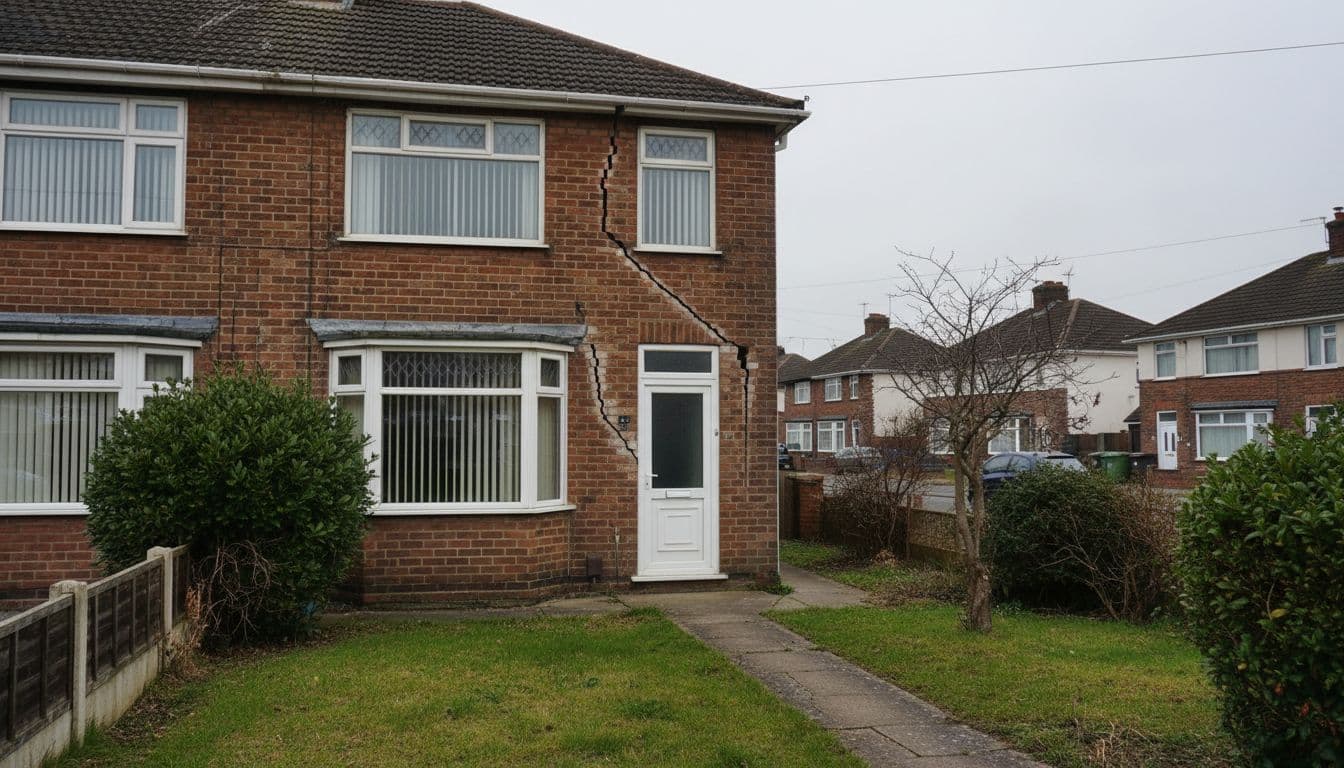 Diagonal cracking around openings is one common sign insurers investigate, created with AI.
Insurers usually separate ground movement into three plain ideas:
- Subsidence: “downward movement of the ground supporting the building”, the soil shrinks or is washed away, and the foundations drop.
- Heave: “upward movement of the ground”, often when clay swells as it gets wetter, or after trees are removed and the soil re-hydrates.
- Landslip: “sideways movement on a slope”, where ground slips downhill.
People often mix up subsidence with settlement. Settlement is the natural bedding-in of a building (common after building work or in newer homes). It can still cause cracks, but many policies treat it as normal and exclude it.
Also, cracks alone don’t prove subsidence. A door that slams, a ceiling crack, or rippled wallpaper might be structural movement, or it might be damp, poor plastering, or a past repair failing. The cause matters because it decides whether cover applies and what fix is sensible (stitching and redecoration, drain repairs, tree management, or in rare cases underpinning).
Common warning signs that are worth checking
These signs are worth a closer look, but each can have other causes too:
- Diagonal cracks around doors and windows (often running through brickwork).
- Cracks that widen over weeks or months, or reappear after being filled.
- Sticking doors and windows, especially if it’s new and localised.
- Ripped or bubbled wallpaper where the wall has moved.
- Slightly sloping floors or a “rolling marble” feeling.
- Gaps between skirting boards and floors, or between walls and ceilings.
A simple rule of thumb: if a crack is wider than a few millimetres, getting worse, or showing up in several places, treat it as a reason to investigate. A qualified surveyor or structural engineer is best placed to confirm the cause.
What subsidence cover usually includes, plus the exclusions that catch people out
Subsidence claims are rarely quick fixes. Think of it like finding a leak in a roof. You don’t just paint the ceiling, you find the leak, stop it, let things dry, then repair the damage. Subsidence works the same way: identify the movement, stop the cause, then repair.
What is normally covered (investigation, monitoring, repairs, and living costs)
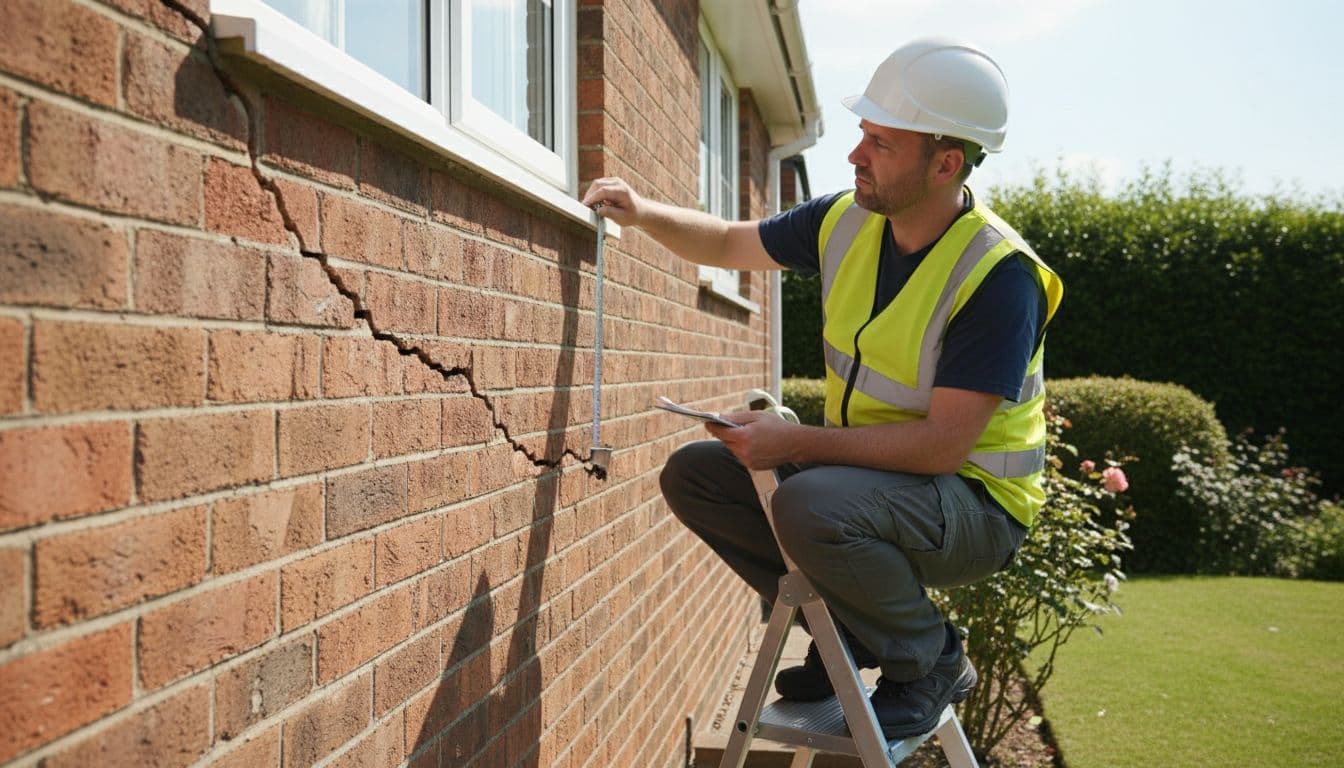 Insurers often use specialists to measure, monitor, and diagnose movement, created with AI.
With buildings insurance, subsidence cover typically focuses on the structure of the home (not your furniture). A “normal” path often looks like this:
1) Investigation and expert reports
Insurers may arrange a structural engineer’s visit, plus checks like a drain survey, soil testing, and crack measurement. Professional fees are often handled as part of the claim when they’re needed to diagnose and scope repairs.
2) Monitoring over time
If movement is suspected, the insurer may monitor cracks for months. It can feel slow, but monitoring helps confirm if the building is still moving, and avoids paying for repairs that would just crack again.
3) Fixing the cause
Common causes include leaking drains washing away soil, or trees drawing moisture from shrink-swell clay. Fixes can include repairing drains, improving water management, or controlled tree or root management. The aim is to stop ongoing movement, not just tidy the symptoms.
4) Structural repairs and making good
This may involve stitching cracks, replacing damaged brickwork, re-plastering, and redecorating. Underpinning is possible, but it’s not the default, it’s used when other options won’t stabilise the property.
5) Alternative accommodation and extra costs
If the home is unsafe or unliveable, many policies cover reasonable costs for temporary accommodation and extra expenses. Always check if there’s a limit and what counts as “reasonable”.
One cost that surprises people is the subsidence excess. It’s often £1,000 or more, far higher than a standard buildings excess. That’s important for budgeting, especially if you’re trying to keep household bills predictable.
Common exclusions and limits to spot before you buy or renew
This is where reading the policy schedule and wording can save you money later.
Wear and tear, poor maintenance, and defects: Insurers often won’t pay if damage stems from neglected upkeep (like broken gutters causing long-term saturation) or defective design or workmanship.
Gradual movement and historic cracks: If cracking is old, not worsening, or happened before the policy started, cover may be limited or refused. This is also why you should disclose known issues when you take out cover.
Normal settlement: Many policies exclude settlement, shrinkage, or expansion of the building or ground that isn’t true subsidence. Newer homes can have settling periods where cracking is treated as non-insurable.
Coastal or river erosion: Policies commonly exclude erosion, even though it can look like subsidence from the homeowner’s point of view.
Garden and external features: Damage only to patios, drives, garden walls, or retaining walls is often excluded unless the main house is also affected. If you have a sloped garden with retaining walls, check the wording carefully.
Trees, roots, and drains: Many policies will cover subsidence caused by trees or leaking drains, but conditions vary. Some set rules around maintenance, reporting, or the scope of what they’ll pay for (for example, stabilising the home but not “improving” old drainage beyond what’s needed).
Conditions and caps: Watch for requirements to notify the insurer promptly, prove ongoing movement, or limits on alternative accommodation costs. Missing a condition can cause delays, or worse, a dispute.
Red flags in subsidence cover, how to check your risk, and what to do next
 Shrink-swell clay is a known driver of ground movement in some areas, created with AI.
Subsidence cover can be solid, but small print and risk factors decide whether you’re paying for real protection or just a comforting heading in a document.
Policy and quote red flags that can cost you later
- Very high subsidence excess (check the exact figure in the schedule).
- Cover limited to certain causes only, with others excluded.
- An endorsement removing subsidence, heave, or landslip.
- Exclusions for prior movement, previous claims, or underpinning.
- Strict reporting or monitoring rules, with penalties if you don’t follow them.
- Exclusions for drains, trees, or retaining walls that are relevant to your property.
- Vague definitions that make it hard to tell what’s included.
Tip: ask for the full policy wording and your schedule, because endorsements and the exact excess often sit there, not in the headline summary.
How to check your subsidence risk before buying or renewing (quick DIY checks plus records to request)
A quick scan can stop you overpaying, or help you spot a real risk early:
- Check your local ground type and shrink-swell risk using British Geological Survey mapping tools.
- Look for slopes, banks, or signs of past ground movement, landslip is often linked to topography.
- Note large trees close to the house, especially near bays, extensions, and shallow foundations.
- Look for drainage issues: leaking gutters, cracked downpipes, sunken paving near drains, damp patches.
- Consider the building style: older solid wall homes, side extensions, and bay windows can be more sensitive to movement, and newer homes may show settlement cracks.
Paperwork to request or review:
- Seller disclosures and any past insurance claim history that’s available.
- Survey reports (a RICS Home Survey is a common choice).
- Conveyancing searches and local authority building control records for major works.
- Environment Agency flood information, because water and saturation can worsen ground instability.
If you suspect subsidence, what to do (and what not to do)
Start simple and stay organised:
Take dated photos, measure cracks, and note where they are. Check for obvious leaks and keep the area safe.
Contact your insurer early and follow their process. Avoid major repairs before approval, because it can complicate the claim and evidence.
Use a structural engineer or chartered surveyor for diagnosis, rather than relying on a quick builder opinion. And don’t hide known issues when buying or renewing, non-disclosure can cause claim problems.
How subsidence claims typically work, timelines, repairs, and what it means for selling
 Claims often run in stages from investigation to monitoring to repairs, created with AI.
A typical claim involves an insurer appointing a loss adjuster, arranging investigations, then monitoring if needed. Only after the cause is controlled do repairs usually begin. This can take months, sometimes longer, depending on movement and access.
Some insurers offer insurer-managed repairs, others may offer a cash settlement (not always). Keep all reports and completion notes, they can help later if you sell.
After a claim, premiums may rise, and you’ll usually need to declare past subsidence to buyers. If you hit a dead end in a dispute, the FCA rules shape complaint handling, and the Financial Ombudsman Service can review unresolved complaints. The ABI and RICS also publish general guidance on standards and good practice.
Conclusion
Subsidence is scary because it feels like the house is moving under your feet. The good news is subsidence cover can pay for the right investigations and repairs, but the wording, excess, and exclusions decide how helpful it really is.
Use this mini checklist before you buy or renew:
- Read the policy schedule for endorsements and the subsidence excess
- Check what “subsidence, heave, landslip” includes in your wording
- Confirm cover for drains, trees, and alternative accommodation limits
- Do a quick ground and slope check using British Geological Survey tools
- Look for drainage leaks and keep gutters and downpipes maintained
- Keep photos and notes of any cracks, even if they seem minor
Quick FAQs
- Buildings vs contents: subsidence cover is mainly under buildings insurance.
- Will DIY repairs void cover: major repairs before insurer approval can cause issues.
- Do I have to declare old cracks: declare known damage and past claims to avoid problems later.
Shop for More with Our Verified UK Insurance providers:
Landlords Insurance – Tenants Insurance – Home Buyers insurance – Home Emergency Cover Home Appliance Cover– Income Protection insurance
Travel Insurance – Gadget Insurance – Phone Insurance – Caravan Insurance – Cycle Insurance – E-Bike Insurance
Car Finance – Car Breakdown Cover – Van Breakdown Cover – Motorbike Breakdown Cover
–
Explore our Buyers Guides with Money Saving Tips
For a list of our main buyers guides use the drop-down menu at the top of the page. Topics related to this article are:
Laptop Insurance Buyers Guides
Gadget Insurance Buyers Guides
Tennant’s Insurance Buyers Guide
Landlords Insurance Buyers Guide
Home Emergency Cover Buyers Guide
Travel Insurance Buyers Guides
Car Breakdown Cover Buyers Guide
–
Explore Our Blog Categories for Expert Buying Advice
- AI Powered Product Finder Tools
- Apple Products Buyer’s Guides & Reviews
- Beauty, Health & Wellness | Perfume, Skincare, Makeup & Wellbeing Guides
- Bedroom Furniture Guides UK | Expert Tips & Best Value Deals
- Beds Buying Guides UK | Types, Tips & Best Deals
- Brands – Phones, Laptops, PC”s, Tablets | Buyer’s Guides & Reviews
- Brands & Designer Products (Men, Women & Electronics)
- Car Buying & Financing Made Easy | Expert Guides for the UK
- Car Rental Worldwide: Compare Prices for UK Travellers
- Christmas Essentials: Decorations & Gift Ideas
- Clothing, Fashion & Accessories Buying Guides UK
- Designer Fashion Brands: Buyer’s Guides & Reviews
- Diamond Jewellery Buyers Guides & Shopping Tips
- Electronic Brands: Buyers Guides & Reviews
- Electronics – Tablet & iPad Reviews and Buyers Guides
- Electronics, Tech & Gadgets: Reviews, Deals & Buying Guides UK
- Europe Holidays & Hotels: Destinations Guides & Flights
- Expert Buying Guides & Shopping Tips for UK Shoppers
- Flooring: Wood, Laminate, Carpets and Floor Tiles Buyers Guides
- Footwear Brands: Reviews & Buyer’s Guides
- Footwear: Trainers & Shoes Buyers Guides
- Furniture Buyer’s Guides | Home & Garden & Styling Tips
- Gadget Insurance UK | Expert Guides, Reviews & Smart Protection Tips
- Game Reviews — PlayStation, Xbox, Nintendo & PC
- Gaming Buyers Guides — Consoles, Games, Keys & More
- Garden Furniture UK: Expert Reviews, Deals & Buying Guides
- Garden Furniture, Landscaping & Garden Rooms Guides UK | Expert Tips & Best Value Deals
- Garden Rooms, Offices & Garden Buildings Guides UK | Expert Tips & Best Value Deals
- Garden Sofa & Sofa Sets Buyers Guides
- Garden Tables & Chairs: Sets, Individual Tables & Seating Buyers Guides
- Gemstone Jewellery Buyers Guides
- Gifts for Everyone: Ideas for Every Occasion & Budget
- Gold Jewellery Buyers' Guides & Shopping Tips
- Holidays & Travel: Hotels, Villas & Flights
- Home & Garden Improvements | Renovations & Outdoor Transformation Guides
- Home Décor, Interior Design & Styling Tips UK | Inspiration & Expert Advice
- Home Emergency Cover UK | Expert Guides, Reviews & Practical Protection Tips
- Home Furniture Guides UK | Expert Tips & Best Value Deals
- Home Furniture, Décor & Interior Design Guides UK | Styling Tips & Inspiration
- Insurance & Protection: Travel, Landlord, Gadget & More UK
- iPhone Buying Guides, Reviews & Comparisons for the UK
- iPhone Insurance UK | Expert Guides, Reviews & Smart Protection Tips
- Jewellery Rings Buyers' Guides & Shopping Tips
- Jewellery: Expert Reviews, Trends & Buying Guides
- Kitchen Appliance Brands: Buyer’s Guides & Reviews
- Kitchen Appliances UK: Buyers Guides, Reviews & Money Saving Tips
- Landlords Insurance UK | Expert Guides, Reviews & Smart Protection Tips
- Laptop Brands & MacBooks Buyer’s Guides & Reviews
- Laptop Brands: Buyer’s Guides & Reviews
- Living Room Furniture, Design & Décor Guides UK | Styling Tips & Inspiration
- Makeup – Expert Buyers Guides & Reviews
- Men's Clothes — Buyers Guides & Reviews
- Men’s Clothes, Fashion & Accessories Guides UK | Latest Trends & Smart Shopping
- Men’s Fragrance Brands: Perfume & Aftershave Reviews & Buyers Guides
- Perfume & Aftershave Brands: Reviews & Buyers Guides
- Perfume & Fragrance: Best Scents, Reviews & Buying Guides
- Pets: Guides, Tips & Inspiration
- Phone Brands & iPhones Buyer’s Guides & Reviews
- Phone Brands: Buyer’s Guides & Reviews
- Phone Insurance UK | Expert Guides, Reviews & Smart Protection Tips
- Skincare — Expert Buyers Guides & Reviews
- Sofa & Sofa Beds Buyers Guides
- Sofa Beds Buyers Guides
- Sofa Buyers Guides & Expert Advice
- Sportswear Brands: Reviews & Buyers Guides
- Supplements Buyers Guides — Expert Tips & Recommendations
- Trainer Brands: Reviews & Buyer’s Guides
- Travel Insurance UK | Expert Guides, Reviews & Money-Saving Tips
- UK Holidays & Hotels: Destinations Guides & Flights
- Women's Clothing Buyers Guides — Dresses, Tops & More
- Women’s Clothes, Fashion & Accessories Guides UK | Latest Trends & Smart Shopping
- Women’s Designer Brands: Buyer’s Guides & Reviews
- Women’s Designer Shoe Brands: Buyer’s Guides & Reviews
- Women’s Dresses | Online Shopping Guides, Style Tips
- Women’s Perfume Brands: Reviews & Buyers Guides