A small dog crate should give your dog a comfortable resting place without taking over your home. Choose by your dog’s measurements, age and behaviour, rather than the size label or breed pictured on the packaging.
The right fit matters more than decorative finishes, but cleaning, construction and portability affect a small dog crate’s long-term value too. Start with usable space, then compare how each design will work in your household.
This post may contain affiliate links. If you make a purchase through these links, I may earn a small commission at no extra cost to you.
Key Takeaways
- Measure your dog and compare internal dimensions, rather than trusting size labels or breed recommendations.
- Prioritise stable construction, secure latches, smooth edges and enough ventilation for the intended location.
- Match materials to your dog’s temperament, chewing habits and your cleaning routine.
- Compare the delivered price, included accessories, replacement parts and returns terms when buying online.
- Introduce the crate gradually as an optional resting space, never as punishment or a substitute for daily care.
The Quick Verdict
A small dog crate suits dogs who settle comfortably in an enclosed resting space and households needing a manageable footprint. A good one provides room to stand, turn and lie comfortably, alongside secure construction, ventilation and straightforward cleaning.
Crate training should be gradual and positive. A crate is a resting space, not somewhere to shut a dog away for long periods or replace exercise, company and toilet breaks.
Key Specifications & Features
Size labels vary between manufacturers. Compare written internal dimensions when choosing crate size, because the external footprint includes the frame, handles and other parts your dog cannot use.
Measure your dog before choosing a small dog crate
With your dog standing naturally, measure nose to tail base and floor to the highest point of the head, including upright ears. Then choose enough space for standing without crouching, turning freely and lying comfortably.
Bedding reduces usable height, so include its thickness when judging fit. Measure the intended position at home too, allowing clearance for the door to open fully.
For a puppy, an adult-sized crate with a secure divider can support crate training and house training whilst avoiding an early replacement. Adjust the divider as they grow, without leaving an oversized area they can use as a separate toilet. Keep up frequent toilet breaks; even a housebroken dog shouldn’t be expected to tolerate prolonged confinement.
Compare materials, doors and cleaning features
A metal crate with an open wire frame offers visibility and airflow; plastic provides more enclosure; fabric reduces carrying weight. Their strengths depend on your dog’s behaviour and where the crate will sit.
A removable tray makes the crate easy to clean after accidents, whilst rounded edges reduce snagging and injury risks. Door position matters in narrow rooms: a side opening may offer easier access than an end door.
Check safety features such as secure latches and gaps that won’t trap paws, along with folding mechanisms and assembly requirements. A folding frame saves storage space, but its joints still need to lock firmly when erected.
Performance & Build Quality
Daily durability depends on joints, latches and surfaces as much as the main material. Even a small dog can repeatedly paw, chew or lean against a barrier.
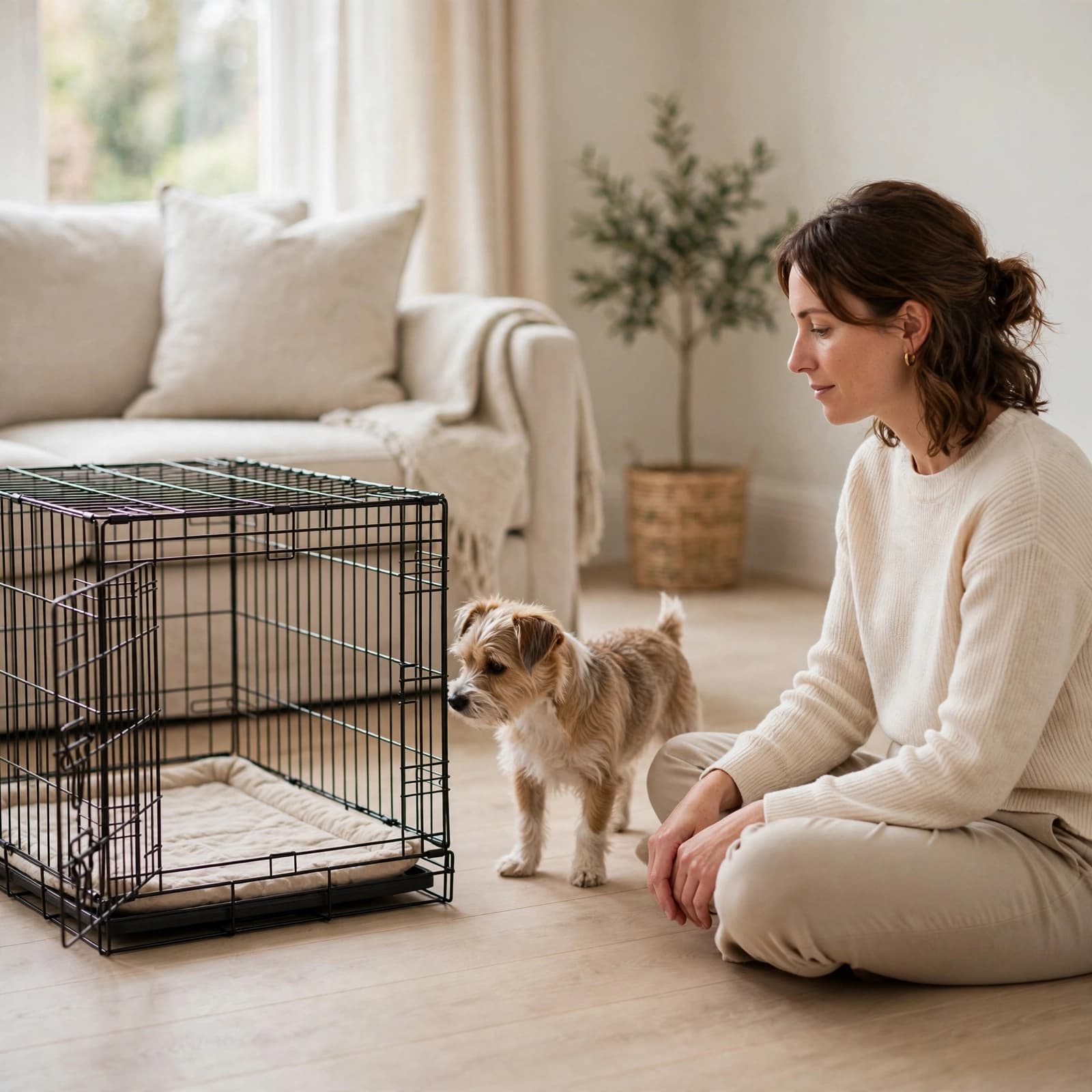
Check stability, comfort and safe ventilation
The assembled crate should sit level without wobbling. Look for smooth wire ends, properly joined panels and doors that align without force. Loose components and gaps that could trap paws are warning signs.
Remove collars and harnesses during crate use to reduce snagging risk. Choose washable bedding suited to your dog’s chewing habits, and remove it if they shred or swallow pieces.
Keep ventilation openings clear and position the crate away from radiators, strong sunlight and draughts. A non-slip protective layer underneath can reduce movement, rattling and floor scratches.
Match the crate to how and where you will use it
For home use, consider whether you can reach every corner after muddy walks or accidents. Smooth trays are easier to wipe than awkward seams, and a tray-retaining catch helps stop the base sliding out.
Wire may rattle when a dog moves; plastic can scratch; fabric can retain odours. None is indestructible.
A household crate also isn’t automatically crash-safe. Car use needs a suitable, properly secured travel solution installed according to the vehicle and crate manufacturers’ instructions. If vets recommend a crate for a specific recovery need, follow your vet’s individual guidance. Persistent escape attempts require attention to the dog’s distress, rather than simply stronger containment.
What to Look For: How to Compare with Similar Products
Our priority is long-term usefulness. Compare the same usable dimensions and included equipment before deciding whether one model offers better value.
Weigh price against durability and useful extras
A simple, durable frame may outlast a more decorative design. Dividers help with puppy growth, whilst replacement trays can extend useful life after damage. Carry handles matter mainly if you regularly move the empty crate.
If storage matters, check whether a folding crate locks securely at its joints when set up. Compare safety features such as latch strength and frame stability.
Online shopping offers a wider selection and makes dimensions, specifications and delivered prices easier to compare. Savings disappear if delivery or return charges are high, so include both in your budget.
Read warranty exclusions and replacement-part information before ordering. Recent owner feedback can reveal repeated reports of bending doors, cracked trays or awkward cleaning, although individual dogs behave differently. Treat eco-friendly claims cautiously and look for substantiated material or recycled-content details.
Choose a style that suits your dog’s temperament
Wire may suit dogs who relax when they can see the household. Others prefer some privacy, which solid sides or a partial cover can provide without blocking ventilation.
Fabric styles suit some calm dogs, but offer less resistance to determined scratching and chewing. Supervise introductions and leave the door open initially. A crate is optional equipment; a suitable dog-proofed area may suit a dog who cannot relax inside one.
What to Avoid
Reject sharp wire ends, weak latches, unstable frames and inaccessible dirt traps. Avoid cramped interiors, restricted ventilation and gaps that could catch paws or jaws.
A low price alone doesn’t indicate poor quality. Equally, “heavy-duty” wording doesn’t prove escape resistance or travel safety. Never use a crate as punishment, or allow prolonged confinement to replace normal care.
Top Alternative Options to Consider
These three styles meet different needs. Choose according to your dog’s behaviour and intended use, rather than appearance alone.
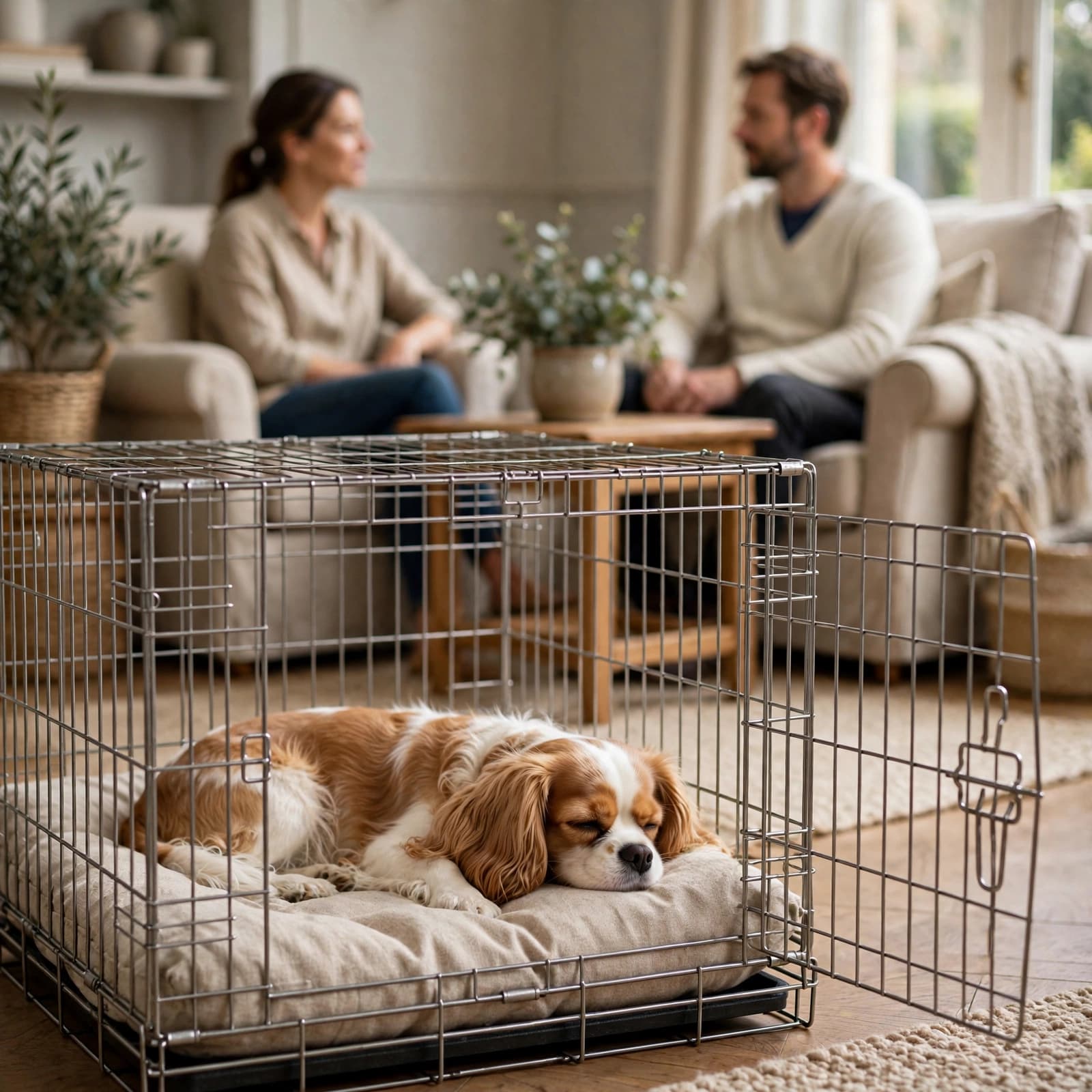
Foldable wire crate for everyday home use
A collapsible wire crate offers airflow, visibility and compact storage when not needed. Removable trays are practical during puppy training, and multiple doors can improve positioning.
However, wire provides little privacy or protection from draughts. Metal panels may also rattle on hard flooring. A partial cover can reduce visual stimulation, provided it stays out of chewing reach and leaves adequate airflow.
Plastic travel crate for contained transport
A rigid plastic crate gives a more enclosed, den-like feel, and its smooth lower shell usually wipes clean easily. That can suit dogs who settle better with less visual activity.
Compare ventilation openings, door construction and carrying weight. Interior space may narrow near the roof, so external dimensions can mislead. Airline requirements vary, so check the relevant airline’s rules rather than assume a crate is airline approved.
Soft-sided crate for light, occasional use
A collapsible fabric crate folds down for storage and is generally easier to carry. It may suit an already crate-comfortable dog during supervised visits or quiet stays away.
However, mesh panels and zip fastenings can give way to scratching or escape attempts. Fabric also needs more drying time after washing. Choose this style for calm, occasional use rather than as a universal replacement for a sturdy home crate.
Frequently Asked Questions
Can a small dog sleep in a crate overnight?
Some dogs sleep comfortably in a crate after a gradual introduction. Toilet needs vary by age and health, even for a housebroken dog, so house training doesn’t rule out night-time breaks. Puppies, older dogs and dogs with health conditions may need toilet breaks during the night. Ongoing distress, including frantic scratching or repeated escape attempts, warrants advice from your vet or a qualified behaviour professional. If your vet advises crate rest for a medical reason, follow their individual guidance; vets recommend plans based on the dog’s condition.
Should I leave the crate door open during the day?
An open door lets your dog choose the crate as a resting spot when the surrounding area is safe. Secure the door so it cannot swing unexpectedly, and let your dog rest without visitors reaching inside. Supervise access if they might chew bedding or crate components.
How do I help my dog get used to a new crate?
Start crate training with the door secured open and let your dog investigate freely. Reward calm approaches and voluntary entry with suitable treats, then build comfortable resting time gradually. Only introduce brief door closures once they are relaxed, and never force them inside or continue through distress.
Can I use a small dog crate in the car?
Only when it is suitable for vehicle travel and can be secured as instructed by the vehicle and crate manufacturers. Rule 57 of the Highway Code says animals should be suitably restrained so they cannot distract the driver or cause injury during sudden braking. Published crash-test evidence is more informative than an unsupported “travel-safe” label.
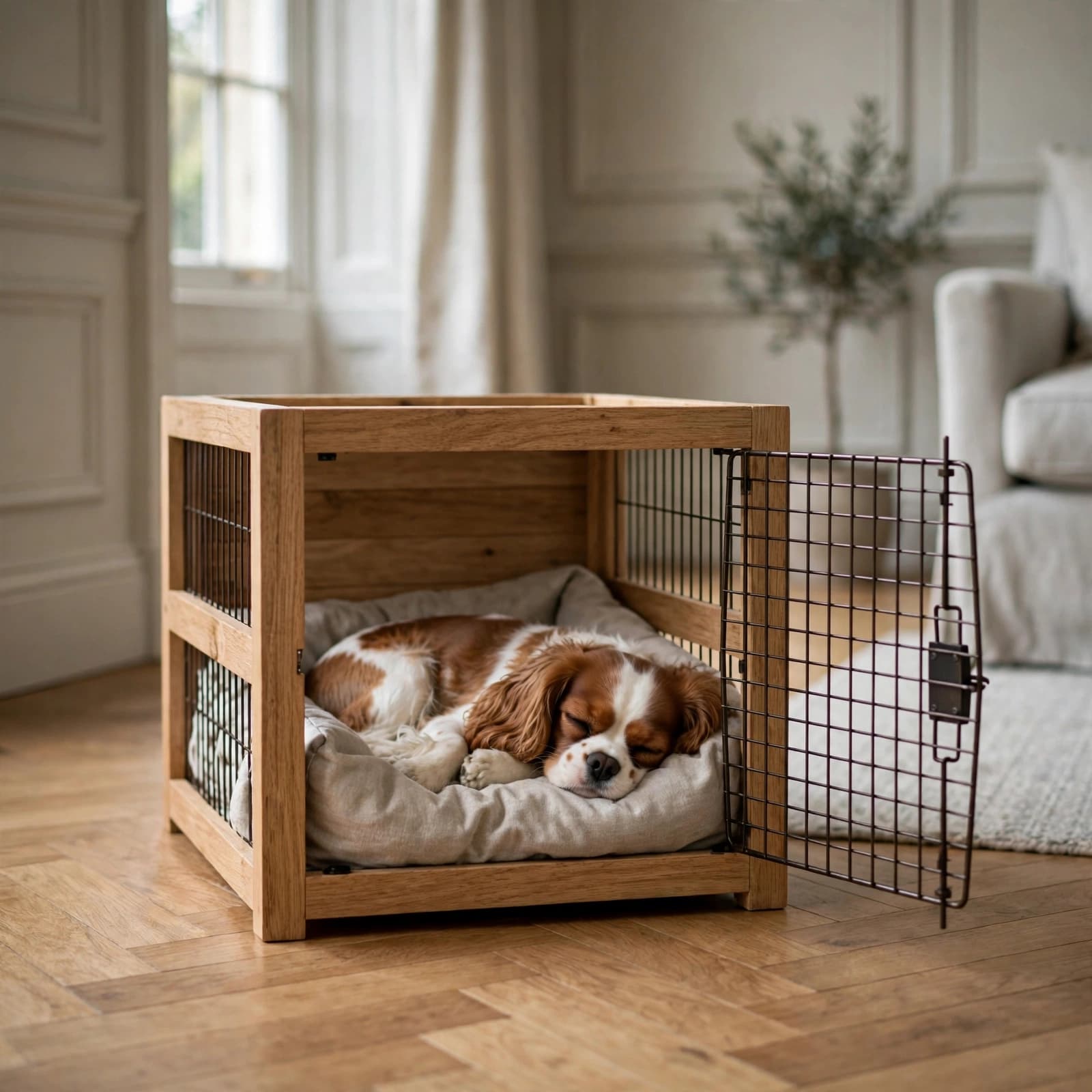
Choose for Comfort Over the Label
The right small dog crate starts with accurate measurements and safe, stable construction. Easy cleaning and materials suited to your dog’s temperament make it more practical over time.
Introduce it patiently and judge success by comfortable, voluntary rest. When comparing prices, include useful accessories, delivery and replacement parts. A well-chosen crate earns its place through comfort and lasting usefulness, rather than a size label or the lowest initial price.