This Panasonic Microwave buying guide recommends choosing by cooking functions and kitchen fit rather than brand alone. The range includes straightforward solo models, microwaves with grills and combination ovens, so there’s no single specification that suits every household.
Your cooking habits, available space and budget should decide which type earns its place on the worktop. Useful featuresmatter more than a long programme list, and technologies such as Inverter aren’t standard across the range.
Start with the meals you prepare most often, then compare models that can handle them without adding unnecessary cost or complexity.
Key Takeaways
- Choose a solo microwave for reheating, a grill model for browning, or a combination appliance for additional oven-style cooking.
- Panasonic offers Inverter technology on selected models, with the aim of delivering steadier power at lower settings.
- Compare usable interior space and dish clearance alongside the advertised litre figure.
- Online shopping broadens your selection, but delivery charges, accessories and returns affect overall value.
- Judge each model against equivalent Sharp or Samsung alternatives rather than assuming brand-wide superiority.
Panasonic Microwave: what the range offers UK buyers
Panasonic is a Japanese electronics manufacturer with a microwave range for basic reheating and more involved cooking. Its selection includes different cavity layouts, control systems and cooking options.
Solo, grill or combination: the main differences
A solo microwave handles reheating, defrosting and basic cooking, including porridge and vegetables. It’s the sensible starting point if your main oven already covers baking and roasting.
Grill models add surface browning, useful for cheese-topped dishes. However, a grill doesn’t provide the same cooking environment as a fan oven.
Combination microwaves add further functions, often including convection. For concrete reference, Panasonic’s NN-SD27HS is a 23-litre, 1,000W solo Inverter model, whilst the NN-CT56JB offers a 27-litre combination format. These are different propositions despite sharing a brand. If you prepare large meals, check usable interior dimensions as well as the stated capacity: even 32 litres may not fit every dish.
Turntable, flatbed and Inverter technology explained
A turntable rotates food during cooking. Its diameter and surrounding clearance matter because a rectangular container can catch against the walls even when it fits through the door.
Flatbed designs remove the rotating plate, which can accommodate awkwardly shaped dishes more easily. The unobstructed base also simplifies wiping up spills, although usable dimensions still limit cookware.
On selected models, Panasonic’s Inverter technology regulates microwave power more continuously. Conventional designs often achieve lower settings by switching full power on and off. Steadier delivery gives you more control for precision cooking at lower power, including gentle cooking and defrosting. You still need to choose suitable settings.
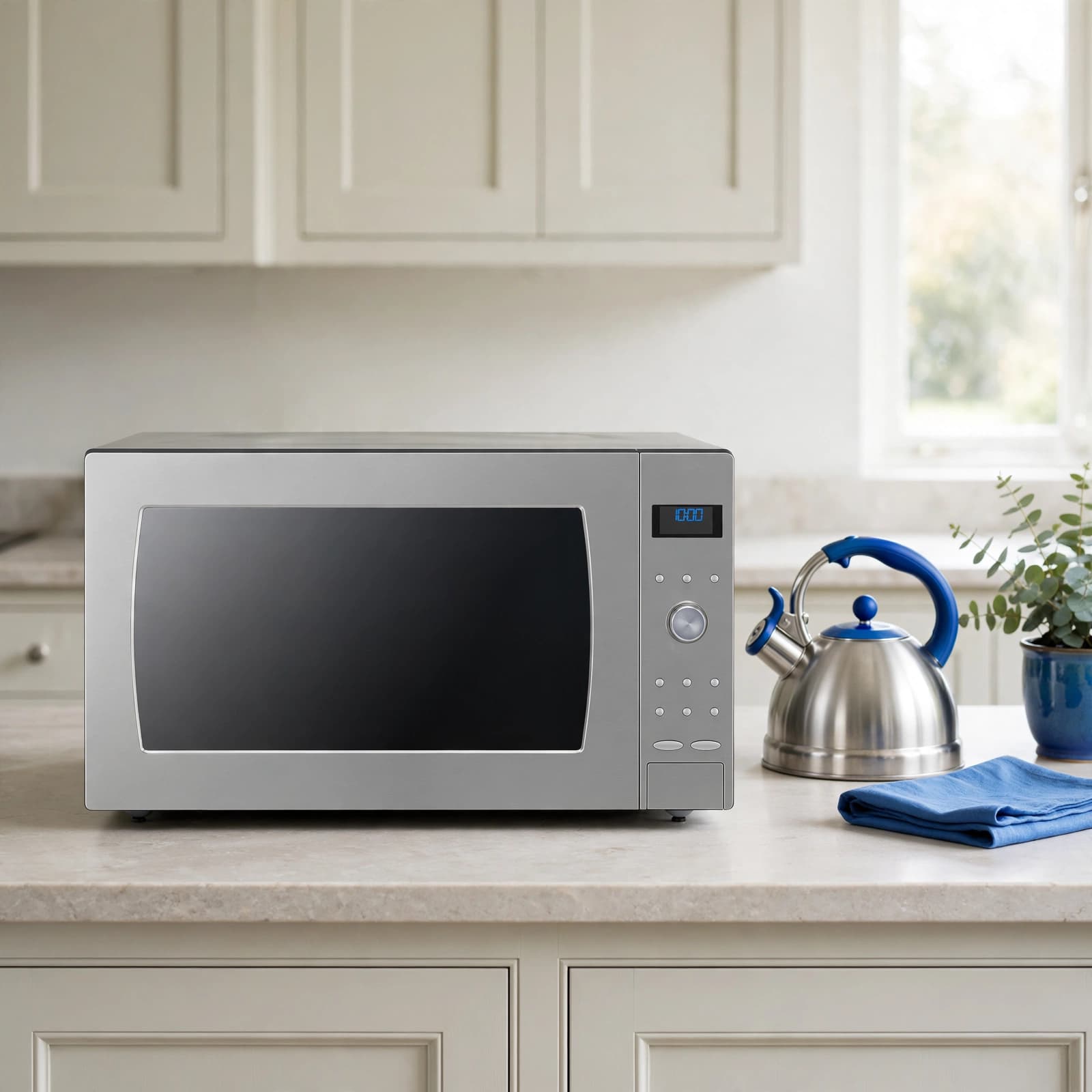
How Panasonic microwaves handle everyday cooking
Everyday performance depends on the individual appliance, the food and the settings. Panasonic’s name alone doesn’t establish heating consistency, speed or ease of use.
Power, capacity and cooking results
Compare microwave output in watts separately from cavity dimensions. The 23-litre NN-SD27HS and 27-litre NN-CT56JB both offer 1,000W microwave output, despite their different sizes and functions.
Higher wattage can shorten heating times, but it doesn’t guarantee even results. Stirring, turning and standing time still matter, especially with dense leftovers or a mixed plate of food.
Defrosting deserves equal attention. Meat with cooked edges and a frozen centre indicates poor results for that task, whatever the headline specification. Useful performance reviews describe food outcomes, portions and settings rather than repeating the programme list.
A cavity’s height also matters for tall jugs, whilst racks can reduce available clearance during combination cooking.
Controls, cleaning and build quality
Readable displays, clear buttons and quick access to power settings make daily use easier. Presets help only when their portions and food types match what you cook.
For build quality, assess door alignment and latch operation in demonstrations or detailed reviews. A door should close securely without needing a forceful shove. Plain finishes and clearly marked controls are also easier to live with than styling that sacrifices legibility.
Cleaning access matters around the grill and door seals, where splashes collect. Meanwhile, noise-sensitive households should consider fan sound, alert volume and any cooling-fan operation after cooking.
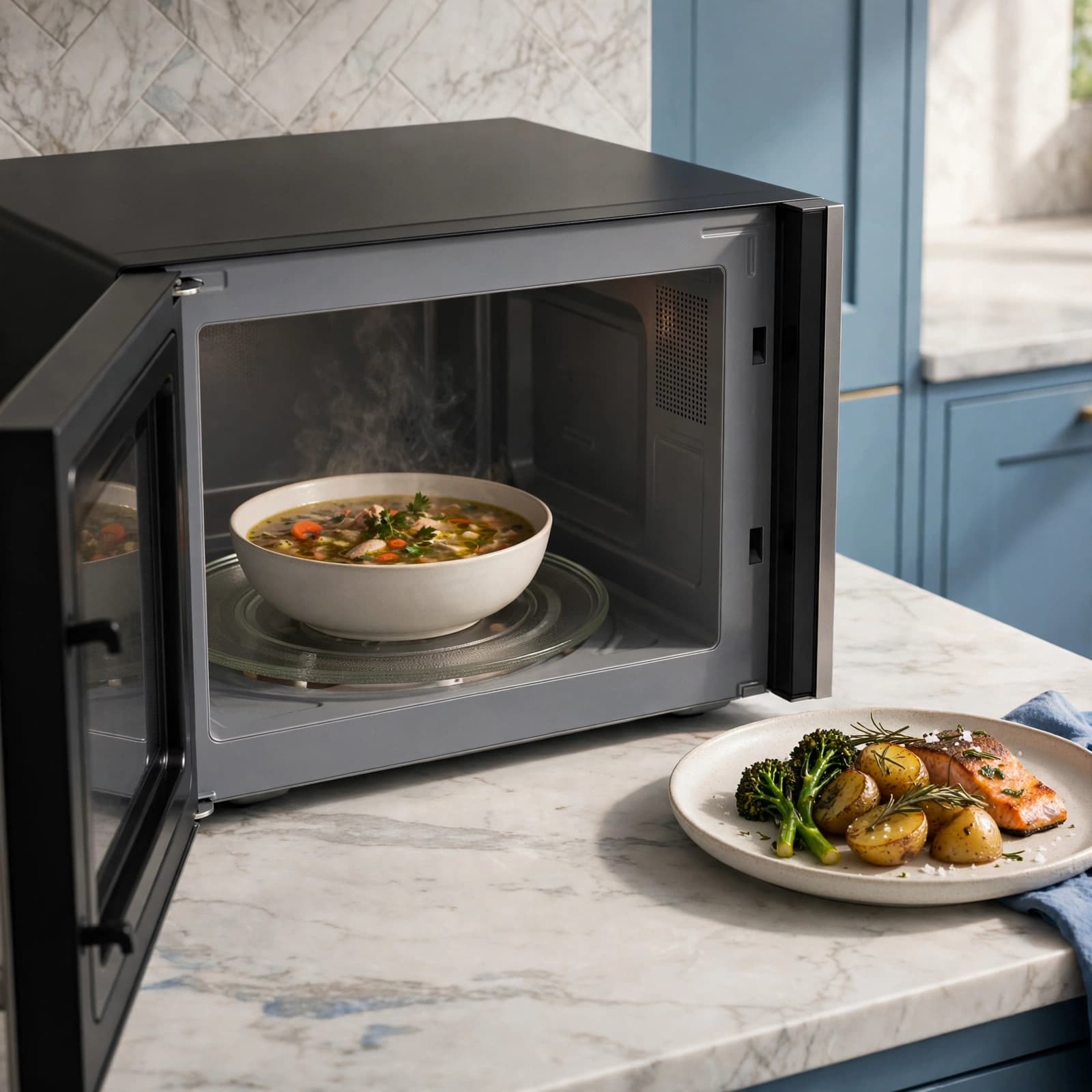
Choose the right Panasonic microwave for your home
Online shopping gives you access to a wider selection of sizes, finishes and cooking modes, including Panasonic freestanding microwaves. It also makes it easier to compare deals, although the lowest headline price may exclude delivery or useful accessories.
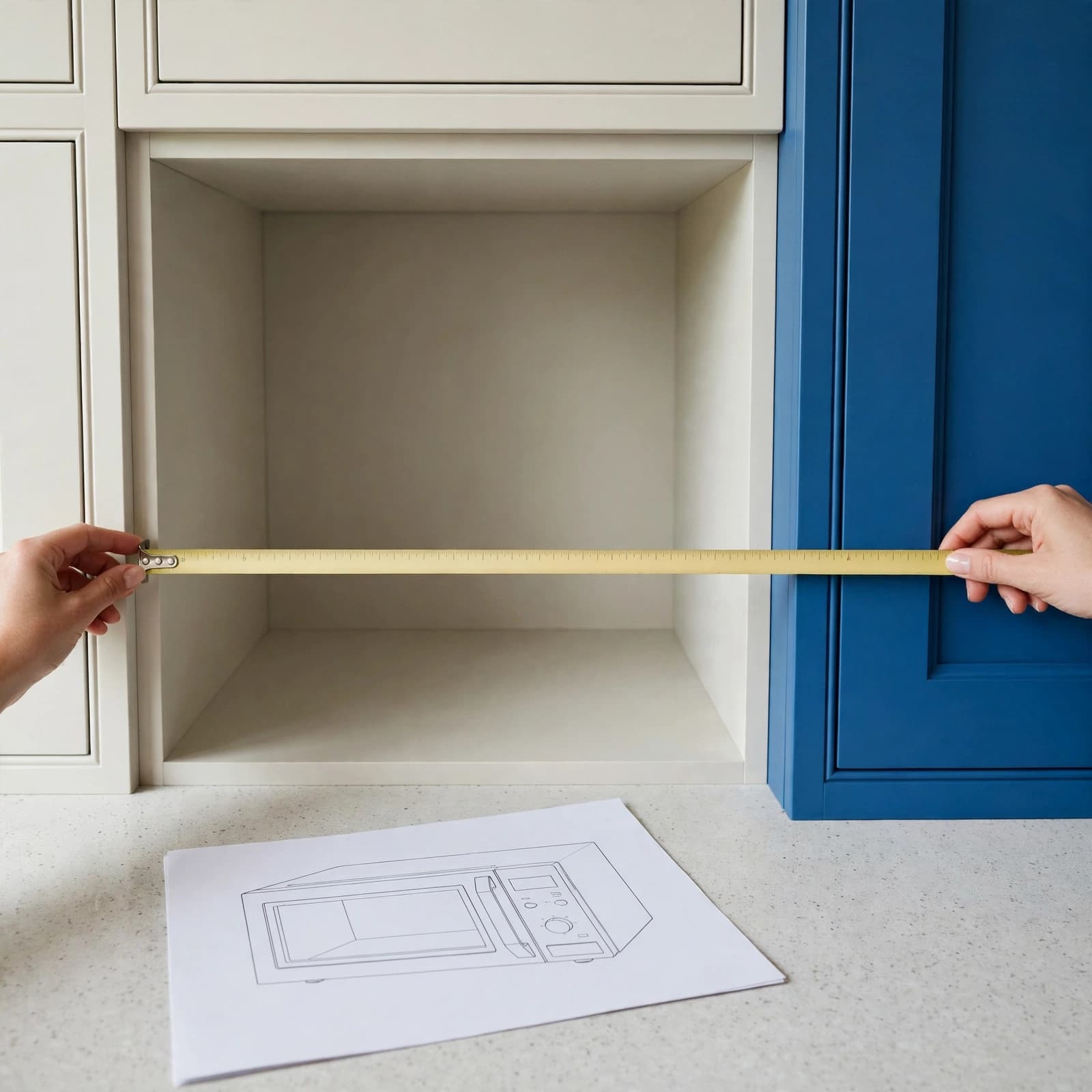
Check the dimensions, capacity and installation needs
Measure the available counter space, then check the microwave’s width, height and depth. Allow the ventilation clearances stated in the appliance manual, and include space behind the unit for its cable and plug.
Door movement matters too. A microwave beside a wall can be awkward to load if the door cannot open far enough.
Freestanding and built-in appliances have different installation requirements. A freestanding microwave doesn’t become suitable for enclosure simply because it fits inside a cabinet. Built-in installations need the specified housing, ventilation and any required fitting kit.
Match useful features to your cooking routine
For occasional reheating, prioritise simple controls and space for your dinner plates. Larger households may need room for broad serving dishes rather than merely a higher litre figure.
Sensor programmes can reduce manual timing for supported foods. Where fitted, weight sensors can tailor supported automatic programmes to a portion’s weight. Auto-defrost suits frequent freezer use, whilst a child lock helps prevent unintended operation. Grill and convection functions justify extra spending when they’ll replace regular cooking tasks.
Set your budget around those priorities. Then compare the total delivered cost, included racks or trays, return arrangements and warranty cover.
Replacement turntables and other user-replaceable accessories also affect ownership costs. Warranty length alone doesn’t describe the cover: exclusions, collection arrangements and responsibility for carriage matter.
Panasonic microwave pros, cons and value compared with alternatives
Panasonic’s appeal is the choice of cooking formats and selected power-control features. However, value depends on what a particular model includes and how often you’ll use it.
Pros
- Solo, grill and combination options let you choose an appliance around your cooking habits.
- Selected Inverter models offer steadier low-power delivery for tasks that benefit from gentler heating.
- Flatbed options provide an alternative for households using dishes that don’t suit a rotating plate.
Cons
- Functions vary across the range, so similar-looking appliances can have different capabilities.
- Combination models add controls, accessories and cleaning demands that occasional users may find unnecessary.
- Larger cavities can require more worktop space, and advertised litres don’t establish whether your favourite dish fits.
Sharp and Samsung are sensible alternatives for comparison. Compare internal dimensions, functions and cavity layout before weighing up prices and available deals. A cheaper solo model isn’t a direct substitute for a combination appliance you intend to use for baking.
Running costs also deserve context. Microwave output describes cooking power, whilst electrical input determines consumption. Total energy use depends on cooking duration, mode and any preheating.
A 1,000W microwave output rating doesn’t mean the appliance draws exactly 1,000W from the socket.
Buy it if a Panasonic model provides the space and cooking modes you need at a competitive total price.
Skip it if an equivalent alternative offers better usability or cover, or the premium mainly buys functions you’ll leave untouched.
Frequently Asked Questions
Are Panasonic microwaves reliable?
Reliability varies by model, workload and care; a brand-wide lifespan claim would be misleading. Recent owner feedback is most useful when it identifies recurring faults, repair experiences and length of ownership. Keeping vents clear and promptly removing food residue supports normal operation.
Is a Panasonic Inverter microwave worth paying more for?
The premium makes most sense for frequent defrosting or cooking that needs controlled, lower power. However, a lightly used reheating appliance may not justify extra spending on that feature alone. Give greater weight to evidence of good results on the exact model than to the Inverter badge.
Can a Panasonic combination microwave replace an oven?
Some combination models can handle selected baking, roasting and grilling tasks. Their capacity, temperature range and cookware restrictions determine how much oven work they can take on. One-dish cooking is a different demand from preparing a roast dinner with several trays, so an oven replacement needs enough space for your usual meals.
What should I check before buying one online?
A complete listing should identify the exact model, external dimensions, electrical requirements, ventilation needs and whether it’s freestanding or built-in. It should also state included accessories, delivery charges, returns arrangements and warranty terms. For most UK online purchases, you normally have 14 days after receiving goods to notify the seller of cancellation, although handling beyond reasonable inspection can affect the refund.
Conclusion: buy for the meals you make
The right Panasonic microwave earns its price through useful capability and a comfortable kitchen fit. Compare the exact appliance with similarly equipped alternatives, including the delivered cost and cover.
Buy it if its cavity suits your cookware and its cooking modes match meals you prepare regularly. Inverter or combination functions deserve extra spending when they address those needs.
Skip it if the appliance crowds your worktop or adds complexity without useful extra cooking capacity. A simpler model can be the better purchase, even when a more expensive option carries the same badge.