An outdoor corner sofa can be a smart buy for comfortable, sociable seating, provided its size, materials and care needs suit your garden. The strongest choice balances everyday comfort with weather resistance, storage and price.
A well-proportioned corner sofa can still restrict outdoor living if it blocks the patio. You may also have to carry seat pads indoors each day. Start with the layout, then compare construction and ownership costs before choosing a style.
Key Takeaways
- Measure the complete footprint, delivery route and walking space before choosing a corner configuration.
- Aluminium, steel, wood and synthetic rattan have different maintenance needs; no material is completely weatherproof.
- Supportive seat padding and stable frames matter more than advertised seat counts or decorative extras.
- Compare delivered prices, included accessories, assembly requirements and returns when shopping online.
- Plan dry cushion storage and a material-appropriate cleaning routine before buying.
Outdoor Corner Sofa: What to Check Before You Buy
An outdoor corner sofa combines seating along two adjoining sides, usually in an L-shaped arrangement. Its wraparound shape brings people together and can make a patio feel like an outdoor sitting room.
However, an attractive photograph doesn’t reveal how much usable space the set needs. Tables, footstools and pulled-out seats all extend its footprint.
Choose a layout that works for the way you sit
Fixed designs keep their shape, whilst modular sets use separate sections that can sometimes be rearranged. Connectors help prevent those sections drifting apart.
For a left-handed or right-handed layout, check the return direction from the stated viewing position, not the name alone. The long side and return must face the intended direction. A reversible return offers flexibility, but a modular sofa doesn’t automatically have one.
Weigh the benefits against the drawbacks
Corner outdoor seating works particularly well for relaxed conversation and stretching out. A low table suits drinks, whilst a footstool adds lounging space.
- The advantages include efficient seating around a corner, shared lounging space and fewer separate chairs to arrange.
- The drawbacks include a substantial footprint, awkward access to inner seats and potentially difficult moving or winter storage.
A dining-height table changes how the set works, but only if the seat height also suits eating upright.
Measure Your Garden and Plan the Sofa Layout
Measure the usable patio or balcony, rather than the whole garden. When planning a garden corner sofa, check that the complete corner sofa set, including its table and footstool, fits the available space. Allow for opening doors, planters and the space people need to pass seated guests.
Leave around 90 cm along main walking routes where practical. This is a planning allowance, not a guarantee that every layout will feel spacious. Keep furniture at the distance from a fire pit specified by its manufacturer, with a clear route around it.
Check the footprint, seat depth and access route
Record the sofa’s overall width, depth and height. Product dimensions may describe the complete arrangement, whilst individual module dimensions describe something smaller.
Mark the footprint with string or masking tape, including the table and footstool. Then walk around it and open nearby doors.
Measure gates, doorways and narrow passageways against the largest delivered section. Tight turns matter as much as the narrowest opening. On lawns, small feet can sink into soft ground, so a firm, level base is preferable.
Match the configuration to your household
Advertised seat counts don’t guarantee comfortable space for every adult. Broad armrests, thick seat pads, limited back support and a tight corner can reduce useful seating.
Family lounging favours room to stretch out; frequent entertaining needs accessible seats. For occasional use, a compact two-piece arrangement may leave more garden available than a large fixed sofa.
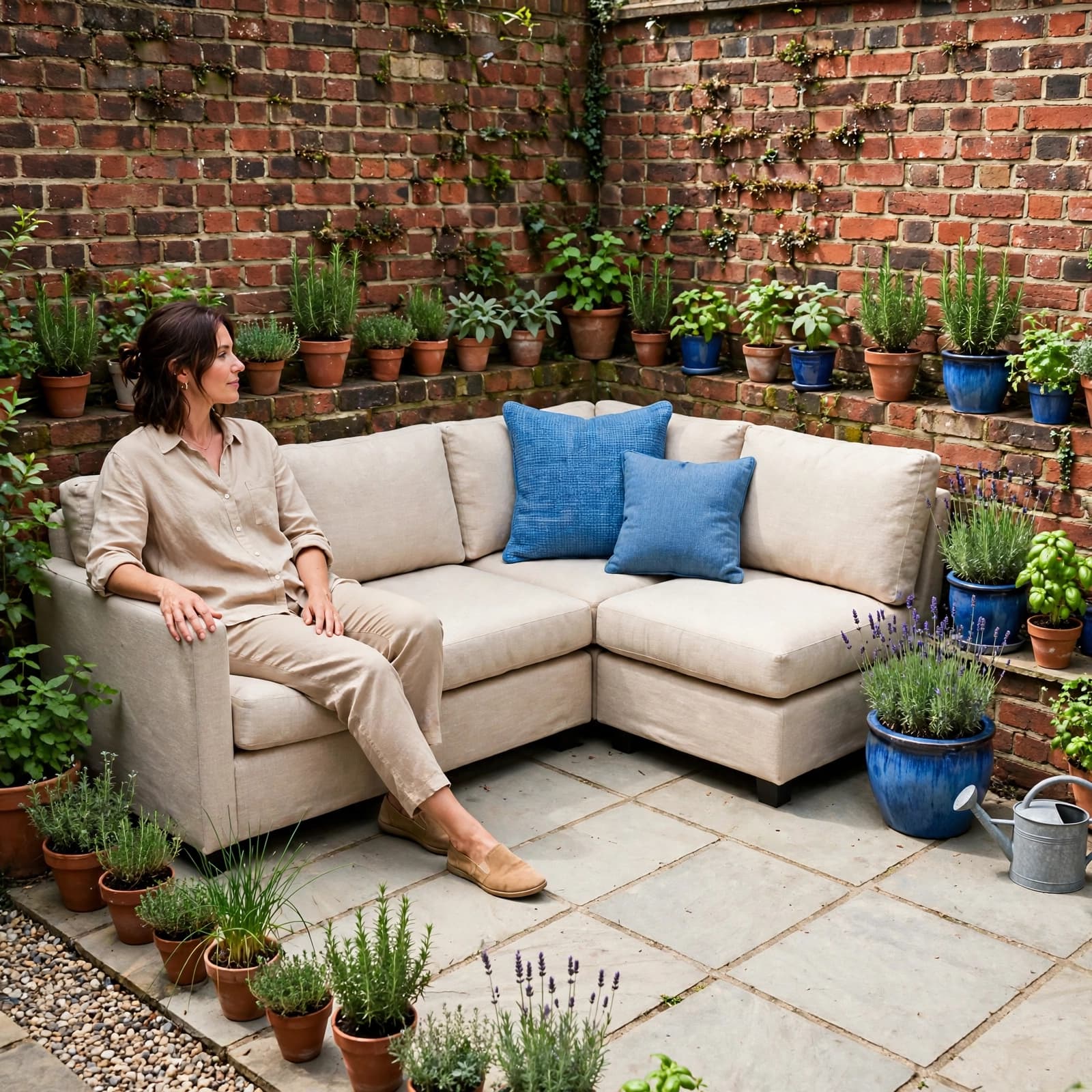
Compare Frame, Weave and Cushion Materials
An outdoor corner sofa needs suitable materials throughout. An attractive weave can conceal a poorly protected frame, and thick seat padding can still retain rainwater.
Know the strengths and care needs of each frame
Aluminium is relatively light and doesn’t rust like steel, making it convenient for furniture you move regularly. However, joint quality and the protective finish still matter.
Steel often feels substantial, but damaged coatings can expose it to corrosion. Pay attention to welds, bolt holes and feet, where moisture can collect.
Hardwoods such as teak and acacia offer a natural finish, although their care requirements differ. Some wood can weather to silver-grey; preserving its original colour may require suitable treatment. For garden furniture, apply oils or coatings only where the manufacturer’s care instructions recommend them.
Look beyond the weave and cushion colour
Synthetic rattan is woven plastic, often polyethylene, rather than natural cane. For a rattan corner sofa, weave thickness, UV resistance and the underlying frame all affect durability.
Moulded plastic and resin are also low-maintenance options. However, poorly formulated materials can fade or become brittle after prolonged exposure.
For cushions, favour UV-resistant fabric, removable covers and clear washing instructions. A zipped cover isn’t necessarily machine-washable. Also distinguish water-resistant fabric from quick-drying cushion construction: water can enter through seams, whilst dense foam may dry slowly.
Drainage and ventilation help prevent trapped moisture. Neither a weather-resistant label nor an expensive finish removes the need for dry, breathable storage.
Test Comfort, Build Quality and Useful Features
Comfort depends on proportions and support, not seat padding thickness alone. When viewing furniture, sit in the corner and end seats because they can feel different.
Assess comfort from dimensions and customer feedback
Deep seats suit reclining, but shorter users may need extra back support. For upright dining, your feet should rest comfortably and the table shouldn’t force you to reach forwards.
Seat padding should recover after pressure without letting you feel the frame underneath. Armrests should feel smooth, and feet should sit securely without rocking on level ground.
Online, look for repeated comments about sagging seat padding, wobble, difficult assembly or early wear. Several consistent reports carry more weight than one enthusiastic review.
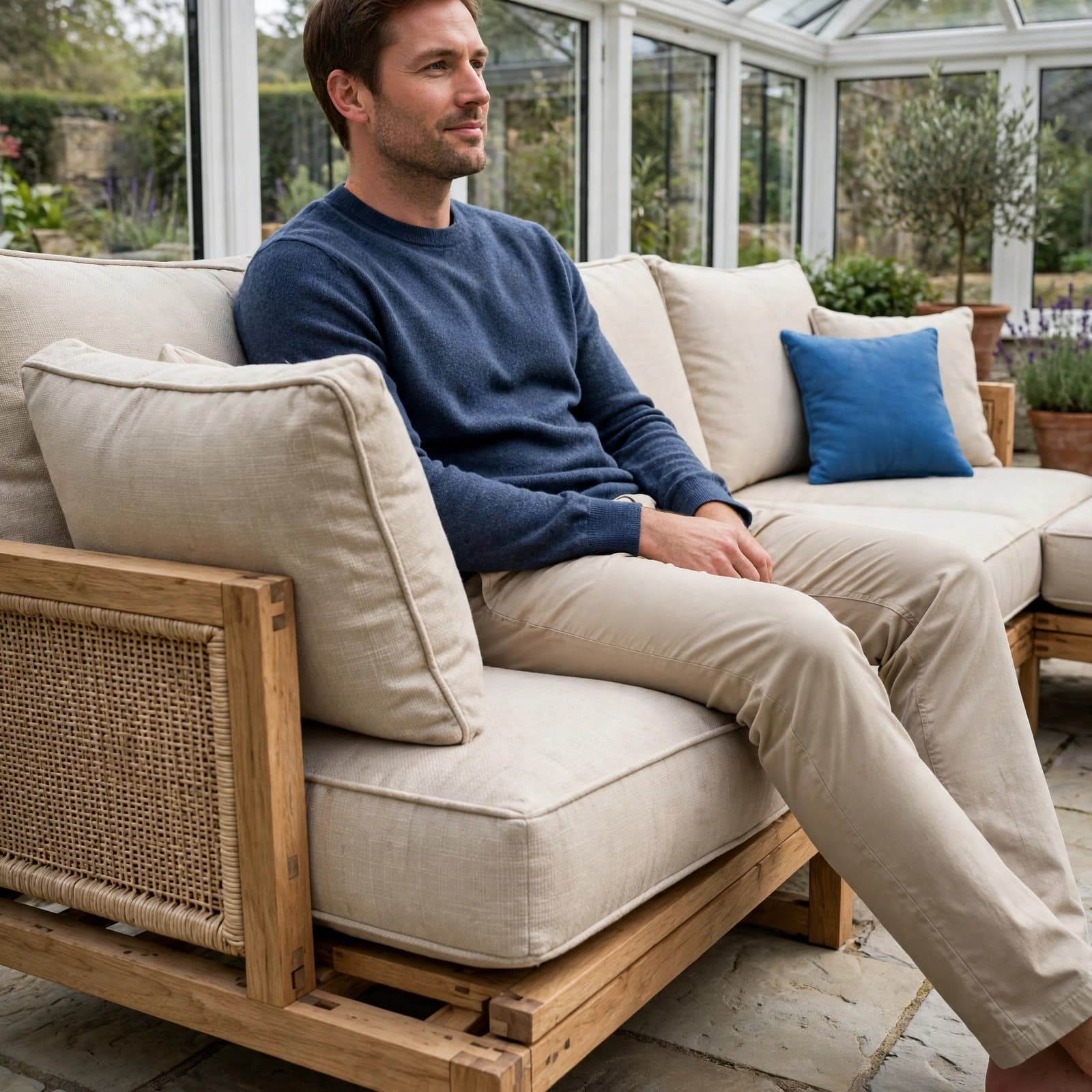
Check what the set includes and how it arrives
Compare the contents list with the photographs. Loose decorative pads, protective covers and tables may be optional, whilst module connectors can be essential.
Assembly instructions reveal whether you’ll be joining large panels or simply attaching feet. Published weight limits and warranty exclusions also help distinguish construction promises from appearance.
Storage boxes and adjustable tables are useful when they solve a genuine problem. However, extra mechanisms introduce more joints and fittings, so they shouldn’t outweigh basic stability and seating support.
Compare Prices, Alternatives and Online Buying Options
Price reflects size, frame material, upholstery and construction, alongside included accessories. A larger set isn’t automatically better value if several seats rarely get used.
Decide whether the price reflects lasting value
Our buying priority is a sturdy frame with seat pads you can maintain or replace. Washable covers and available replacement pads can extend useful life more than decorative additions.
Compare complete packages, including delivery, assembly and any cover or storage box you’ll need. Warranty length matters less when its exclusions remove cover for the parts most likely to deteriorate.
For flexibility, consider a modular configuration. Separate garden chairs and a bench can suit a smaller footprint or budget, whilst making individual pieces easier to replace.
Shop online with fewer surprises
Buying online broadens your choice of dimensions, finishes and configurations. It also makes it easier to compare garden furniture specifications and prices side by side, although the lowest advertised price may exclude useful accessories.
Compare like-for-like corner sofa set contents and materials. Then account for delivery charges, collection costs for returns and whether delivery reaches the garden or stops at the kerb.
Check availability and lead times before you buy, especially if you need to pre-order. For most standard online purchases, UK distance-selling rules allow 14 days after delivery to notify the seller of cancellation. Goods made to your specifications or clearly personalised can be exempt.
Save the product description and buying terms when ordering. That gives you a record of the agreed dimensions, materials and included items.
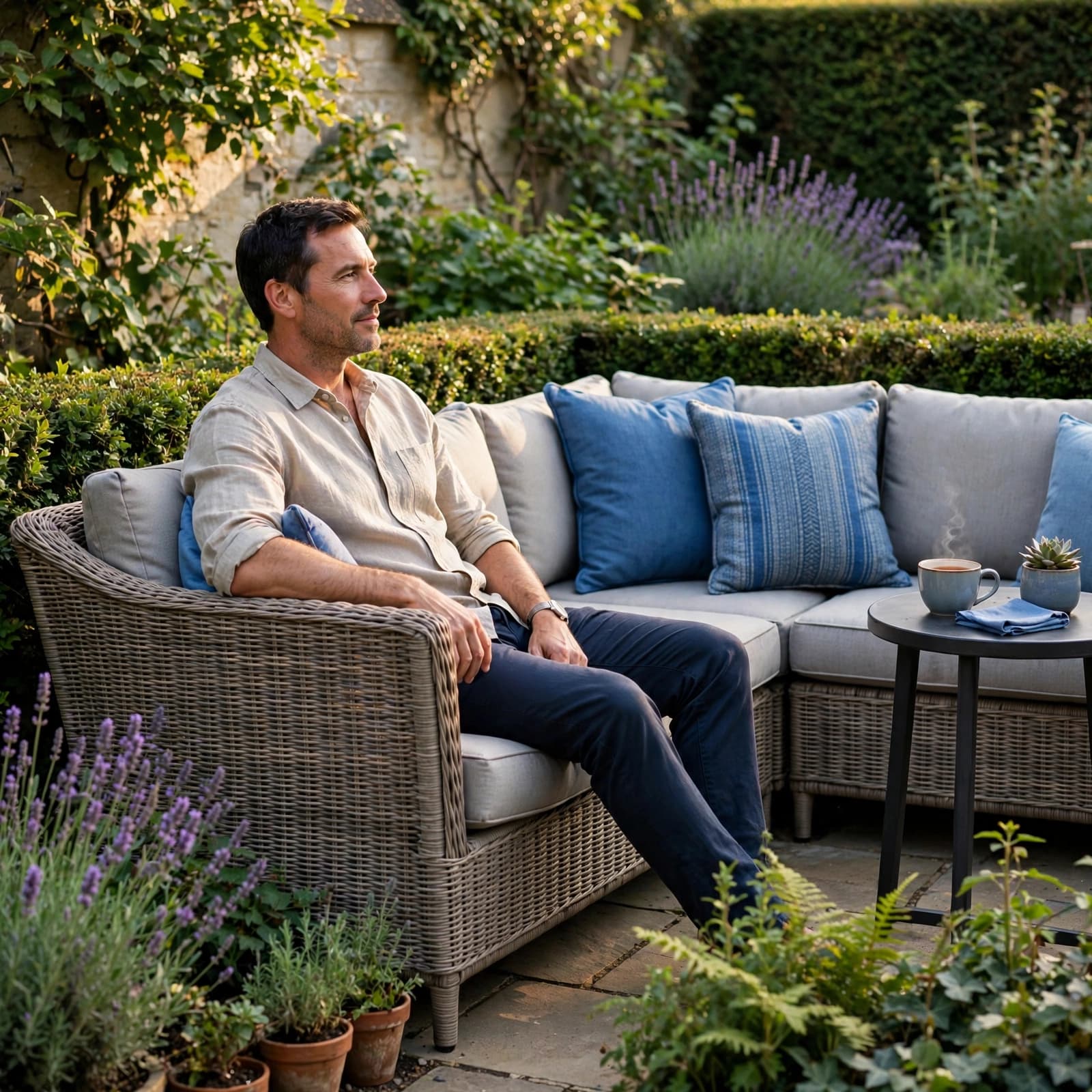
Keep Your Garden Sofa Looking Good Through the Seasons
British weather makes moisture management part of ownership. Plan a routine you can realistically maintain, particularly if indoor storage is limited.
Clean the frame without damaging its finish
Brush away leaves and grit before cleaning. Use material-approved methods, and avoid abrasive pads that scratch coatings or roughen plastic.
A soft cloth and mild soapy water suit many synthetic surfaces, followed by rinsing and drying. Wood and specialist finishes may need different products. Avoid pressure washing unless the care instructions permit it.
Protect cushions from rain and fading
Choose UV-resistant fabric and put seat pads away during prolonged rain or strong sun. Let them dry completely before storage, including their undersides and inner filling.
A breathable furniture cover can reduce exposure, but it won’t prevent all condensation. Fit it securely without trapping pools of water, and air the furniture during dry spells.
Before winter, clean the set and protect vulnerable frames and seat pads according to their care requirements.
Frequently Asked Questions
Can an outdoor corner sofa stay outside all year?
Some frames can remain outdoors with suitable care, but seat pads often need separate protection. Exposed steel, damaged finishes and moisture-retaining components need particular attention during prolonged rain, frost and winter weather.
Is synthetic rattan a good choice for a UK garden?
Yes, provided the weave and frame are suitable for outdoor exposure. Polyethylene weave over a well-built aluminium frame is a practical combination, although construction quality still varies. Natural rattan is a different material and generally needs shelter.
How do I stop outdoor sofa cushions fading?
UV-resistant fabric and reduced sun exposure slow colour changes, but they won’t prevent fading indefinitely. Store seat pads when they’re not needed, especially in strong sunlight. Fabric quality and the amount of exposure affect how quickly colours change.
What should I do if my garden is too small for a corner sofa?
Base the decision on the usable area after allowing for movement. A compact modular set may work, but separate chairs or a bench are better if a corner arrangement would obstruct access. Keep room for everyday garden tasks as well as seating.
Choose the Sofa That Fits Your Garden Life
Buy it if a garden corner sofa fits your available space, you want sociable lounging room and can manage its care needs. For a corner sofa, prioritise supportive seating and suitable materials over styling extras.
Skip it if the return blocks movement, the seat pads exceed your storage space or the maintenance routine feels unrealistic. Separate chairs may make a garden sofa setup more practical.
Before ordering an outdoor corner sofa, compare complete specifications and buying terms alongside the delivered price. The right purchase stays comfortable without making your garden harder to use.
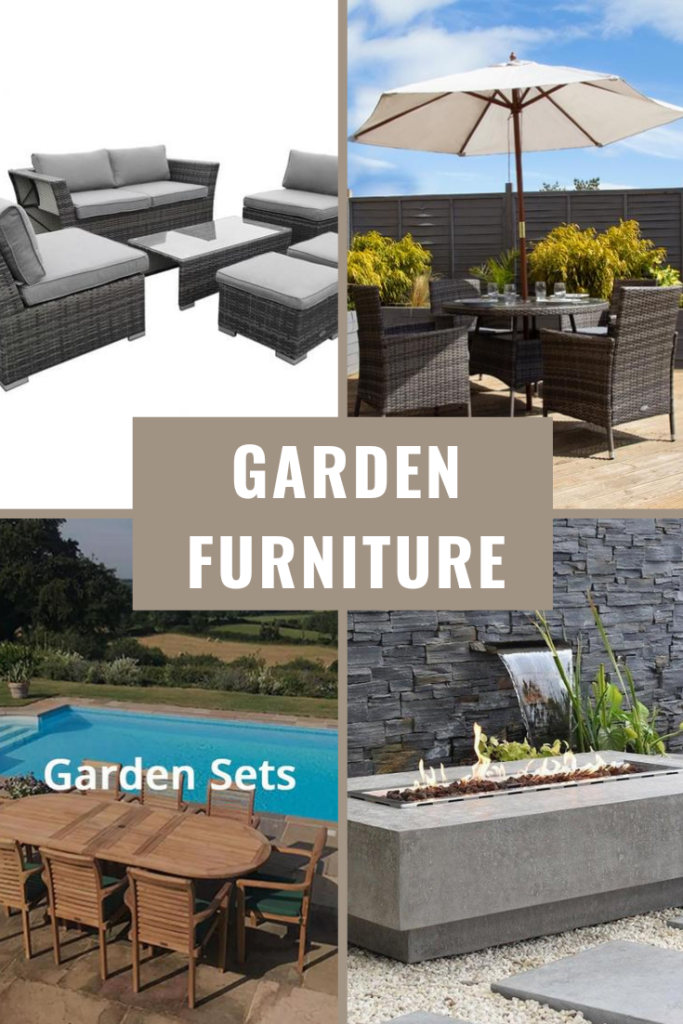
Explore our Buyers Guides and Reviews
View all Garden Furniture here_>>