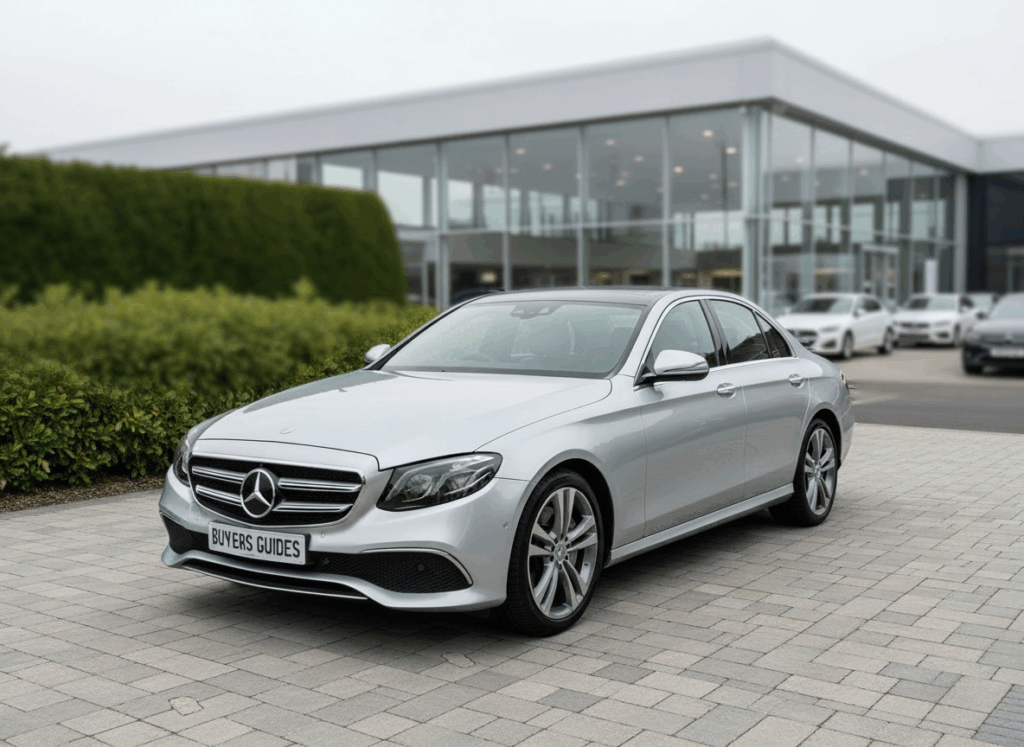
If your week involves long A-roads, busy motorways, and the odd cramped car park, the Mercedes-Benz E-Class, a mid-size luxury sedan, makes a lot of sense. It’s a luxury executive car that puts comfort first, while still feeling modern and well-built.
This guide focuses mainly on Mercedes-Benz E-Class models from 2020 onwards (including the popular facelift), with just enough older context to help you shop with confidence on starting price and value. You’ll learn what the E-Class is like to live with, which trims and engines suit UK driving, what to check before you buy, what running costs catch people out, and why buying from a reputable dealer and sorting finance early can make the whole process calmer.
It’s a strong fit for commuters, families who want an Estate, and drivers who want a premium badge without going full flagship.
What you actually get with an E-Class, comfort, tech, and quiet motorway cruising
The Mercedes-Benz E-Class feels like a good pair of noise-cancelling headphones for the road. It’s calm at speed, refined over rough surfaces, and designed to take the stress out of longer drives. That matters in the UK, where you might go from broken town tarmac to fast motorway lanes in one journey, especially with options like 4MATIC all-wheel drive helping maintain composure.
Ride comfort is one of the big reasons people choose it. Even on larger wheels, the Mercedes-Benz E-Class usually stays composed, with a settled feel over bumps. Cabin noise stays low too, especially at motorway speeds, so phone calls and podcasts don’t turn into a shouting match.
Inside, the seating position suits most body types, and the front seats often feel supportive on longer trips. Rear space is generally generous for an executive car, so adults don’t feel folded up. Up front, the layout is clearly aimed at daily ease, with a premium finish featuring Nappa leather upholstery that still stands up well on used examples if they’ve been cared for, plus a touchscreen display for intuitive access.
In the UK, you’ll mainly see the Mercedes-Benz E-Class as a Saloon or Estate. The Estate has a loyal following because it adds real practicality without looking like a van. Either way, the Mercedes-Benz E-Class is built for people who want comfort and quiet, not constant drama.
Saloon vs Estate, which body style makes most sense for your life?
The Saloon works well if you mostly carry people rather than things. As a mid-size luxury sedan, it’s also the easier shape to place on the road, especially in narrow streets, and it can feel that bit tidier in tight multi-storeys.
On the other hand, the E-Class Estate is the one to pick if your boot needs change week to week. Dogs, buggies, sports kit, pushchairs, work gear, and holiday bags are simply easier to load, thanks to its superior cargo capacity. The wider opening and more usable space make a difference on rainy nights, when you just want to shut the tailgate and get home, with cargo capacity that outshines the Saloon for family hauls.
Rear-seat space tends to be strong in both, although the Estate’s roofline, often with a Panorama roof, can make the back feel airier. Visibility is usually decent, but the Estate’s extra length can make parking more of a thought. Luckily, many cars come with sensors and cameras, so don’t treat size as a deal-breaker if the tech is there.
Cabin and infotainment basics, what the screens and driver aids are like day to day
Most buyers notice the screens first. Even on older cars, the E-Class often feels modern, with an intelligent digital cockpit, clear displays, and a well-finished dashboard. The MBUX infotainment system makes phone pairing typically straightforward, and built-in navigation is useful as a backup, even if you prefer your mobile apps. Premium touches like Burmester surround sound elevate the experience further.
Voice control and steering-wheel controls can be brilliant when they work well, but they’re also areas where some drivers feel a learning curve. Try them on a test drive, because a system that annoys you in the first 10 minutes won’t improve over time.
Driver assistance can be a big part of the E-Class appeal for motorway miles, with driver-assistance features like adaptive cruise control, lane support, and speed sign recognition reducing fatigue, especially in heavy traffic. Parking cameras, 360-degree view systems, and automatic parking features can also take the edge off town driving.
The best E-Class feels relaxing, not just plush. Test the features you’ll use every day, not the ones that sound impressive.
E-Class model years and variants worth knowing, with a focus on 2020 to 2026 cars
Used Mercedes-Benz E-Class shopping gets easier when you understand the recent timeline. In simple terms, many UK buyers start with the 2020 facelift models, then decide if the newer generation is worth the extra money.
The facelifted cars (from 2020) brought a fresher look, updated cabin controls, and improved driver assistance. They often feel “new enough” for most drivers, which helps values and keeps demand strong. If you want a premium car that still looks current on your drive, these cars hit a sweet spot.
A newer Mercedes-Benz E-Class generation arrived later (the W214), bringing a bigger focus on software, a more digital cabin with the Superscreen package, and more turbo hybrid power across the range. These cars can feel more like a rolling tech hub, with a different interior style and a stronger emphasis on screens.
You’ll also come across performance versions. Mercedes-Benz E-Class AMG models with AMG body styling exist across these years, and they range from quick and refined to properly fast. That said, most used buyers in the UK end up in the mainstream trims, often with AMG body styling, because they balance comfort and costs better.
Plug-in hybrids (often called EQ Power on older cars) also sit in the mix. They can be a smart buy in the right routine, but only if your charging setup and driving pattern suit them.
2020 facelift cars, why many used buyers start here
The 2020 facelift matters because it improves the bits you touch every day. You get updated styling, revised steering wheel controls, and a cabin that feels closer to newer Mercedes models. Safety and driver-assistance features also moved on, which can be a real benefit for motorway commuters.
Efficiency improved too, depending on engine choice, and some models gained turbo hybrid power. As a result, facelift cars often feel newer than their number plate suggests, especially if the spec includes modern lighting, better audio, and strong driver assistance.
For value, these cars can be the sensible middle ground. You avoid the steepest depreciation of a newer model, but you still get a car that feels current and premium.
Newer generation models, what’s different and who should pay the premium
The newer E-Class leans harder into digital design. The cabin can feel more screen-led, and the car relies more on software features and connected services. If you love tech and want a more modern interface, this generation may be worth paying extra for.
Company car drivers and high-mileage users may also like the newer electrified options with turbo hybrid power, depending on their work pattern and charging access. In addition, the latest driver aids and lighting tech can be a genuine comfort and safety win.
However, if you want the best value, a late facelift car can still be the smarter choice. You get the classic E-Class strengths, and you may avoid paying extra for features you’ll rarely use.
Engines and trims made simple, picking the right E-Class for your budget and driving
Mercedes-Benz E-Class engines can look confusing on paper, but the decision gets simpler when you start with your weekly routine. The big split is between petrol, diesel, mild-hybrid versions of both, and plug-in hybrid models.
For frequent motorway miles, many UK drivers still choose diesel, because it tends to feel relaxed at speed and can return strong real-world economy on long runs. Petrol often suits mixed driving and shorter journeys better, especially if you do not want the risks that come with repeated short diesel trips.
Mild-hybrid systems usually aim to smooth stop-start driving and help efficiency in everyday use. They are not the same as a plug-in hybrid, because you do not charge them. Plug-in hybrids can be very cost-effective for the right owner, but they only pay off if you can charge regularly and use the electric range often.
Trims and options matter more than many people expect. Two Mercedes-Benz E-Class cars with the same engine and year can feel very different. One might have great headlights, parking tech, and comfort seats, while another feels oddly basic.
Petrol, diesel, mild hybrid, or plug in hybrid, how to match the engine to your weekly routine
A simple way to decide is to think about your longest “normal” drive.
If you do lots of motorway miles each week, a diesel Mercedes-Benz E-Class often makes sense. It suits steady speed driving, and it tends to feel effortless on hills and slip roads. For mostly short trips, petrol can be a safer bet, because it avoids the issues that can come from repeated cold starts on a diesel. The E 350 sedan stands out here with its responsive petrol power and solid 0-60 mph acceleration for everyday use, while the E 450 4MATIC delivers even stronger performance from its turbocharged inline-six engine.
Plug-in hybrid models can be ideal if you can charge at home or at work; consider them as a performance hybrid option. Without regular charging, you carry extra weight for little benefit, which can push fuel use up. Temperature and speed also change real-world electric range, so treat official figures as best-case rather than a promise. While EPA fuel economy ratings offer an international benchmark, expect variations based on UK conditions.
Mild-hybrid versions sit in the middle. They will not transform running costs, but they can make the car feel smoother in traffic. The 4MATIC all-wheel drive system enhances traction for UK drivers facing wet or slippery roads.
Trim levels and options that are worth paying for, and the ones you can skip
Some options hold value because they improve daily life. Good headlights (often upgraded LED systems) can make night driving less tiring. Adaptive cruise control and lane support can take the strain out of long motorway runs. A 360-degree camera helps too, because repairing scuffed bumpers and wheels gets expensive quickly.
Heated seats are a simple win in winter. Better audio is worth it if you spend hours in the car. Comfort seats can be a deal-maker on long trips, especially if you have back issues. The Pinnacle trim level bundles many of these as standard features for a premium feel.
Bigger wheels can look great, but they can also make the ride firmer; AIRMATIC air suspension helps maintain comfort instead. The E 350 sedan with 4MATIC all-wheel drive and the E 450 4MATIC both benefit from this setup, offering brisk 0-60 mph acceleration alongside better handling via their turbocharged inline-six powertrains. EPA fuel economy figures can guide expectations here too, though real-world results depend on your drives. If comfort is your priority, do not assume the largest alloys are the best choice for UK roads.
What to check before you buy, reliability, servicing, and real world running costs
A used Mercedes-Benz E-Class can be a wonderful thing, but condition matters more than the badge on the boot. Start with the basics: a full service history, tidy paperwork, and signs the previous owner didn’t cut corners.
Look closely at tyres. Premium cars often need premium tyres, and mismatched budget rubber can hint at penny-pinching elsewhere. Brake wear matters too, because heavier cars can go through discs and pads faster, especially in town.
On a test drive, listen for suspension knocks over broken surfaces. Some Mercedes-Benz E-Class models with 4MATIC all-wheel drive have more complex suspension setups, and repairs can cost more than you’d expect. Also check for warning lights, because modern cars can throw up faults linked to sensors, batteries, or modules affecting driver-assistance features like automated emergency braking or blind-spot monitoring.
Common niggles on used executive cars can include infotainment glitches, parking sensor issues, and battery-related problems. Plug-in hybrids add extra complexity, so check charging behaviour and any fault messages. If the car has air suspension, make sure it sits level and doesn’t drop after being parked.
A quick test drive checklist that catches most expensive problems
Use this as a simple routine, because it’s easy to miss things when you’re distracted by a nice cabin:
- Start from cold, listen for rattles, and check the idle feels smooth.
- Drive at low speed, test steering lock, and listen for clunks.
- Accelerate firmly, the gearbox should shift cleanly and smoothly; test DISTRONIC cruise control if fitted.
- Brake from different speeds, it should stop straight without shudder.
- Try cameras, sensors, parking aids, and blind-spot monitoring, including the 360 view if fitted.
- Test climate control, heated seats, audio, LED headlamps, then check every window switch.
- Look for dashboard warnings, then confirm both keys are present.
- For plug-in hybrids, check charging cables and confirm the flap and port work.
Servicing and tyres, the costs people forget to budget for
The Mercedes-Benz E-Class isn’t usually ruinous to run, but it’s rarely “cheap”. Tyres for larger wheels cost more, and premium-rated options can be pricey. Brake parts can also add up, especially on higher-powered models. Upgraded lighting systems like LED headlamps are worth checking too, as they enhance safety and visibility.
Servicing matters because modern Mercedes systems are sensitive to skipped maintenance. A car with missed services, cheap tyres, or half-finished repairs can become a slow drain on your budget.
A practical approach is to keep a monthly buffer for tyres, brakes, and unexpected electrical issues. That way, the first warning light doesn’t feel like a crisis.
Why buying from a reputable dealer and arranging finance first can save you stress
Buying a Mercedes-Benz E-Class should feel exciting, not risky. A reputable dealer helps because you usually get clearer paperwork, proper vehicle preparation including standard features, and stronger consumer protection than a private sale. If something goes wrong early on, having a business to go back to can make a big difference.
Dealers also tend to handle the boring but essential parts better. That includes history checks, mileage verification, and making sure the car is roadworthy and presentable. Warranties and add-on cover vary, but the option to have support is valuable on a tech-heavy Mercedes-Benz E-Class.
Arranging finance before you shop can also keep you in control. When you already know your budget, deposit, and preferred term, you can focus on picking the right Mercedes-Benz E-Class, not just chasing a monthly figure. It also helps you negotiate based on the car’s starting price, which is where the real savings usually sit.
Dealer vs private sale, what protection and checks you are really paying for
Private sales can be fine, especially with a careful seller and great paperwork. Still, the risk rises if the history is unclear or if faults appear after the sale. In most cases, you have far less comeback.
With a reputable dealer, you’re often paying for:
- Clearer vehicle history checks and admin
- Better standards of preparation and inspection
- More transparent paperwork and invoices
- Options like part exchange
- Aftersales support if a fault shows up quickly
In short, you’re buying more than a car, you’re buying a process with less guesswork.
Getting your finance plan sorted before you view cars, a simple step by step
PCP and HP are the most common dealer finance types in the UK. Here’s a simple way to prepare before you view cars:
- Set a monthly payment ceiling you can live with year-round.
- Choose PCP if you want lower payments and flexibility at the end.
- Choose HP if you want a clearer path to owning the car outright.
- Decide your deposit, then pick a term length that fits your budget.
- For PCP, estimate annual mileage honestly, because it affects the deal.
- Get a pre-agreed quote, then compare total amount payable, not just the monthly figure.
The calmest buyers walk in with a plan. The best deals usually go to the people who aren’t rushed.
Conclusion: choosing the right E-Class, then buying it the smart way
For many UK drivers, a late facelift Mercedes-Benz E-Class (from 2020 onwards) offers the best mix of modern tech and value. If you want the newest cabin design and the latest software-led features, the newer generation Mercedes-Benz E-Class can be worth the premium. Choose diesel for frequent motorway miles, and only pick a plug-in hybrid if you can charge regularly.
Before you commit, keep it simple: pick Saloon, Estate or All-Terrain wagon for more versatility, shortlist the right engine type like the E 350 sedan or E 450 4MATIC, prioritise the standard features and options you’ll use, verify history, and test everything. Most importantly, buy from a reputable dealer and sort finance before you shop, so you can move quickly when the right luxury executive car, be it a mid-size luxury sedan or estate, shows up.
Shop for More with Our Verified UK Insurance providers:
Home Emergency Cover Home Appliance Cover – Income Protection
Travel Insurance – Gadget Insurance – Phone Insurance – Caravan Insurance – Cycle Insurance – E-Bike Insurance
Car Finance – Car Breakdown Cover – Van Breakdown Cover – Motorbike Breakdown Cover
–
Explore our Buyers Guides with Money Saving Tips
For a list of our main buyers guides use the drop-down menu at the top of the page. Topics related to this article are:
Laptop Insurance Buyers Guides
Gadget Insurance Buyers Guides
Tennant’s Insurance Buyers Guide
Landlords Insurance Buyers Guide
Home Emergency Cover Buyers Guide
Travel Insurance Buyers Guides
Car Breakdown Cover Buyers Guide
–
Explore Our Blog Categories for Expert Buying Advice
- AI Powered Product Finder Tools
- Apple Products Buyer’s Guides & Reviews
- Beauty, Health & Wellness | Perfume, Skincare, Makeup & Wellbeing Guides
- Bedroom Furniture Guides UK | Expert Tips & Best Value Deals
- Beds Buying Guides UK | Types, Tips & Best Deals
- Brands – Phones, Laptops, PC”s, Tablets | Buyer’s Guides & Reviews
- Brands & Designer Products (Men, Women & Electronics)
- Car Buying & Financing Made Easy | Expert Guides for the UK
- Car Rental Worldwide: Compare Prices for UK Travellers
- Christmas Essentials: Decorations & Gift Ideas
- Clothing, Fashion & Accessories Buying Guides UK
- Designer Fashion Brands: Buyer’s Guides & Reviews
- Diamond Jewellery Buyers Guides & Shopping Tips
- Electronic Brands: Buyers Guides & Reviews
- Electronics – Tablet & iPad Reviews and Buyers Guides
- Electronics, Tech & Gadgets: Reviews, Deals & Buying Guides UK
- Europe Holidays & Hotels: Destinations Guides & Flights
- Expert Buying Guides & Shopping Tips for UK Shoppers
- Flooring: Wood, Laminate, Carpets and Floor Tiles Buyers Guides
- Footwear Brands: Reviews & Buyer’s Guides
- Footwear: Trainers & Shoes Buyers Guides
- Furniture Buyer’s Guides | Home & Garden & Styling Tips
- Gadget Insurance UK | Expert Guides, Reviews & Smart Protection Tips
- Game Reviews — PlayStation, Xbox, Nintendo & PC
- Gaming Buyers Guides — Consoles, Games, Keys & More
- Garden Furniture UK: Expert Reviews, Deals & Buying Guides
- Garden Furniture, Landscaping & Garden Rooms Guides UK | Expert Tips & Best Value Deals
- Garden Rooms, Offices & Garden Buildings Guides UK | Expert Tips & Best Value Deals
- Garden Sofa & Sofa Sets Buyers Guides
- Garden Tables & Chairs: Sets, Individual Tables & Seating Buyers Guides
- Gemstone Jewellery Buyers Guides
- Gifts for Everyone: Ideas for Every Occasion & Budget
- Gold Jewellery Buyers' Guides & Shopping Tips
- Holidays & Travel: Hotels, Villas & Flights
- Home & Garden Improvements | Renovations & Outdoor Transformation Guides
- Home Décor, Interior Design & Styling Tips UK | Inspiration & Expert Advice
- Home Emergency Cover UK | Expert Guides, Reviews & Practical Protection Tips
- Home Furniture Guides UK | Expert Tips & Best Value Deals
- Home Furniture, Décor & Interior Design Guides UK | Styling Tips & Inspiration
- Insurance & Protection: Travel, Landlord, Gadget & More UK
- iPhone Buying Guides, Reviews & Comparisons for the UK
- iPhone Insurance UK | Expert Guides, Reviews & Smart Protection Tips
- Jewellery Rings Buyers' Guides & Shopping Tips
- Jewellery: Expert Reviews, Trends & Buying Guides
- Kitchen Appliance Brands: Buyer’s Guides & Reviews
- Kitchen Appliances UK: Buyers Guides, Reviews & Money Saving Tips
- Landlords Insurance UK | Expert Guides, Reviews & Smart Protection Tips
- Laptop Brands & MacBooks Buyer’s Guides & Reviews
- Laptop Brands: Buyer’s Guides & Reviews
- Living Room Furniture, Design & Décor Guides UK | Styling Tips & Inspiration
- Makeup – Expert Buyers Guides & Reviews
- Men's Clothes — Buyers Guides & Reviews
- Men’s Clothes, Fashion & Accessories Guides UK | Latest Trends & Smart Shopping
- Men’s Fragrance Brands: Perfume & Aftershave Reviews & Buyers Guides
- Perfume & Aftershave Brands: Reviews & Buyers Guides
- Perfume & Fragrance: Best Scents, Reviews & Buying Guides
- Pets: Guides, Tips & Inspiration
- Phone Brands & iPhones Buyer’s Guides & Reviews
- Phone Brands: Buyer’s Guides & Reviews
- Phone Insurance UK | Expert Guides, Reviews & Smart Protection Tips
- Skincare — Expert Buyers Guides & Reviews
- Sofa & Sofa Beds Buyers Guides
- Sofa Beds Buyers Guides
- Sofa Buyers Guides & Expert Advice
- Sportswear Brands: Reviews & Buyers Guides
- Supplements Buyers Guides — Expert Tips & Recommendations
- Trainer Brands: Reviews & Buyer’s Guides
- Travel Insurance UK | Expert Guides, Reviews & Money-Saving Tips
- UK Holidays & Hotels: Destinations Guides & Flights
- Women's Clothing Buyers Guides — Dresses, Tops & More
- Women’s Clothes, Fashion & Accessories Guides UK | Latest Trends & Smart Shopping
- Women’s Designer Brands: Buyer’s Guides & Reviews
- Women’s Designer Shoe Brands: Buyer’s Guides & Reviews
- Women’s Dresses | Online Shopping Guides, Style Tips
- Women’s Perfume Brands: Reviews & Buyers Guides